
Back in March, I had the pleasure of curating and moderating the event “Cool Japan 2025 – Japanese Theater from Nō to Kabuki” at the Museum am Rothenbaum – Kulturen und Künste der Welt (MARKK) in Hamburg.
The one-day event offered a rich, multi-sensory exploration of historical and contemporary Japanese performing arts. With a diverse programme tailored to both children and adults, visitors could take part in creative workshops, guided exhibition tours, academic talks, and live performances which were all designed to bring Japanese theater traditions closer to a broad audience.

Stories in Masks and Makeup
The programme opened with a lecture by Prof. Annegret Bergmann titled “An Introduction to Japanese Theater.” In this talk, she offered valuable historical and aesthetic context for Nō and Kabuki, giving the audience a solid foundation for understanding the performances and objects featured throughout the day.
Later, she returned with a second, more focused lecture on the symbolism and staging of Kabuki makeup, known as kumadori (隈取). Far from being mere decoration, these bold lines and colours communicate essential traits of a character – strength, virtue, rage, or deception – and are deeply intertwined with the dramatic rhythm and emotional charge of Kabuki theater. Her insights made it clear that makeup in Kabuki is not just worn; it is performed.
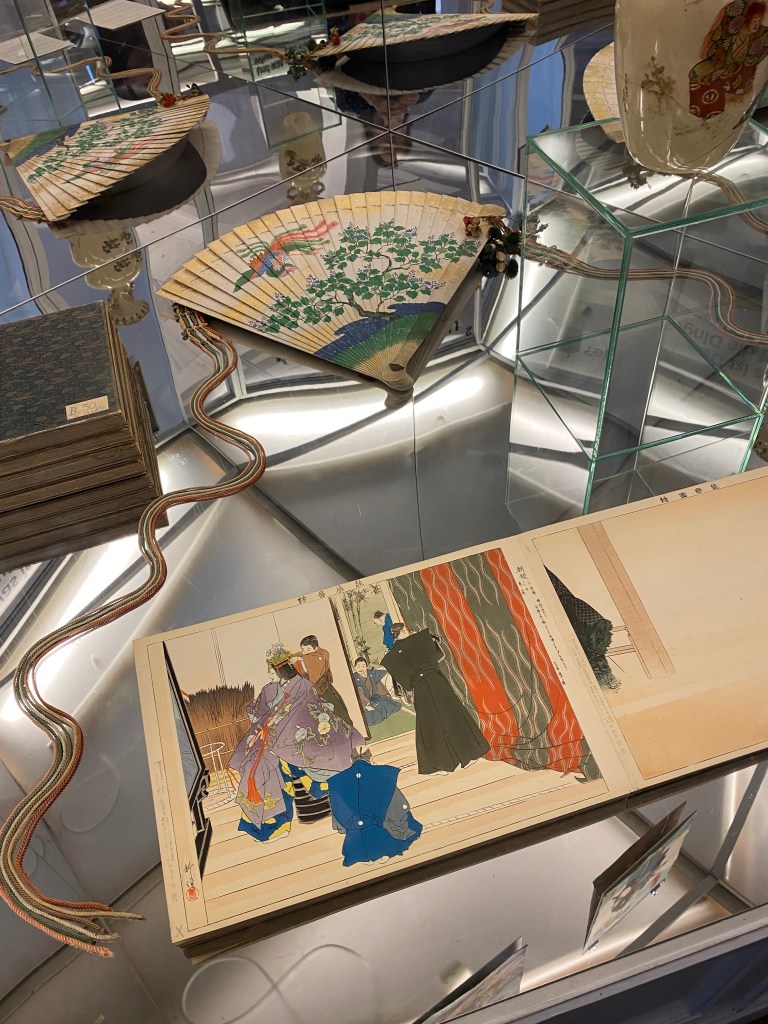
Complementing her talk was a display of curated objects from the MARKK’s own collection, giving attendees a rare glimpse into the material culture of Japanese theater. Items on view included authentic nō masks, makeup utensils, decorative accessoires such as hair pins, and kabuki-themed ukiyo-e prints. Together, they offered a tactile connection to performance traditions that have shaped Japanese cultural identity for centuries.

Another key moment in the program was the screening of the Kabuki classic Yoshitsune and the Thousand Cherry Trees (義経千本桜, Yoshitsune Senbon Zakura), a beloved tale of loyalty, disguise, and fate. Before the screening, Mr. Shinsuke Toda, Consul General of Japan in Hamburg, addressed the audience with warm words that reflected on the richness of Japanese stage tradition and its resonance far beyond Japan’s borders.
Contemporary Echoes: Chihoco Yanagi’s Journey Through Dance
Dancer and choreographer Chihoco Yanagi performed twice during the event, showcasing two distinct forms of Japanese dance and offering the audience a powerful glimpse into both tradition and innovation.
Her first performance was a traditional Nihon Buyō (日本舞踊) piece, an elegant, stylised form of Japanese stage dance that draws from classical theater traditions of Kabuki and Nō. Performed in kimono and often accompanied by shamisen music, Nihon Buyō combines graceful movement with storytelling gestures that reference nature, seasonal change, and human emotion. Chihoco’s precise, flowing choreography and expressive presence brought this refined tradition vividly to life.
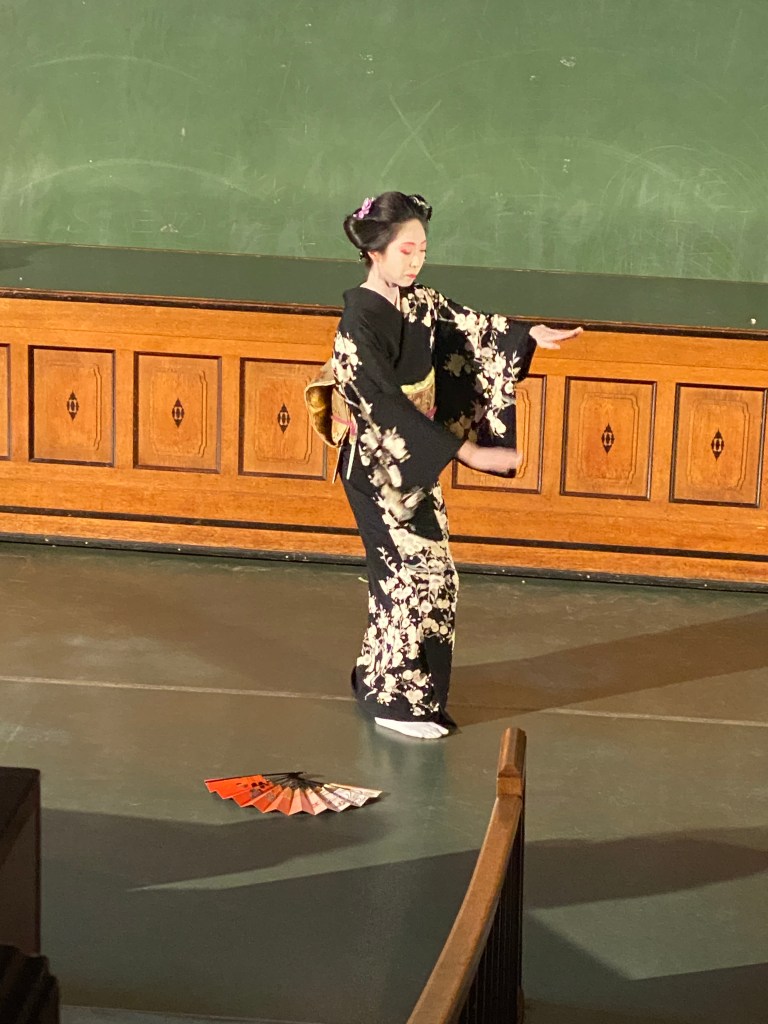

Later in the day, Chihoco returned to the stage with a series of contemporary Shin Buyō (新舞踊) pieces. Shin Buyō, or “new dance,” emerged in the 20th century as a modern evolution of traditional Japanese dance forms. While it often preserves the structure and vocabulary of classical styles, it embraces greater freedom, allowing for modern music, expressive experimentation, and personal themes.
One of these pieces was set to live music performed by musicians from the Laeiszhalle Akademie, featuring Antonín Dvořák’s American Quartet. This particular performance stood out for its deeply autobiographical tone. Drawing on her own experience of leaving Japan and adapting to a new cultural environment, Chihoco expressed themes of longing, excitement, disorientation, and liberation through a nuanced choreography.
As someone who has lived in several countries myself, I found this piece especially moving. Her gestures, at once searching and composed, articulated a kind of emotional geography I knew well: the shifting terrain between memory and discovery, between where we come from and where we imagine ourselves becoming.

Dressing for the Kabuki
To mark the occasion, I chose to wear a vintage purple komon kimono I had found during a trip to Japan the previous November. It was the first time I wore it, and together with my fellow kimono nerd and illustrator friend Sophie, we had previously experimented with different obi styles to find one that reflected the spirit of kabuki: expressive, playful, a little bold.


Unfortunately, I couldn’t quite recreate the knot on the day of the event as beautifully as we had done together but it was still fun to experiment, and it added a personal layer of creativity to the day. In its own small way, it was also a performance: a gesture of cultural appreciation, memory, and imagination folded into fabric.
It felt especially meaningful to share the day with friends who are also engaged with Japanese textile culture in their own ways. My friend Mana, for instance, recently founded Hansa Kimono, a small business through which she curates and sells vintage haori (kimono jackets) here in Hamburg. Our shared passion for making traditional Japanese garments accessible and wearable in everyday life adds yet another layer to how these textiles continue to live, travel, and evolve across cultures.

Final Reflections
“Cool Japan 2025” was more than a themed event; it was an exploration of cultural expression across generations, media, and stages. Through movement, music, objects, and storytelling, the day offered a window into the deep roots and evolving forms of Japanese theater.
From Nō masks to Kabuki fans, from classic dance to modern choreography, each element provided a different point of entry into a living tradition. For me, it was not only an opportunity to help shape the programme, but also to participate in it through dress, dialogue, and shared appreciation.
The museum’s historic lecture hall offered a fitting stage for it all: its wood paneling, raised platform, and slightly timeworn elegance lent the performances a quiet grandeur; one that mirrored the layers of history embedded in the art forms themselves.
And like any good performance, the echoes of the day continue to resonate… but more on this another time 😉


 DR CAROLIN BECKE