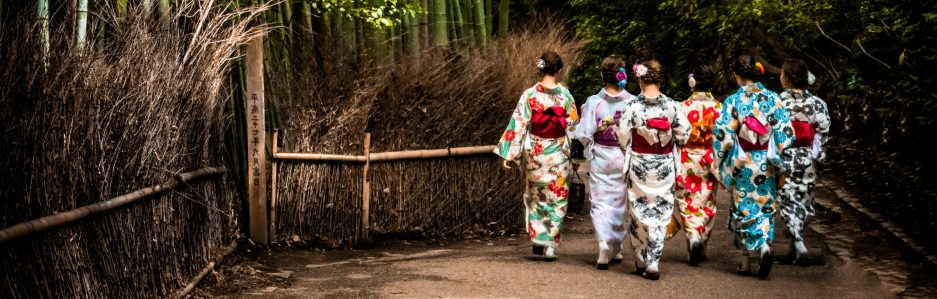
In February, I had the incredible opportunity to curate “Japan in Transition: Everyday Life and Clothing in Historical Photographs”. The exhibition explored the Meiji era (1868–1912). This was a period when Japan was rapidly modernising, yet continuing to hold onto its deep-rooted traditions. I selected twenty historical photographs from German museum archives. These images reveal the tension between old and new in a way that still feels relevant today.
In this post, I’d love to introduce you to five key images from the exhibition. Each tells its own story of change, resilience, and the beauty of everyday life in Meiji-era Japan.
City Scapes of Meiji Japan
This lively street scene captures a typical shopping district likely in Edo (modern-day Tokyo). The scene takes place on a warm summer day. This image is fascinating because it shows the cultural shift of the era, highlighting the details of everyday life.
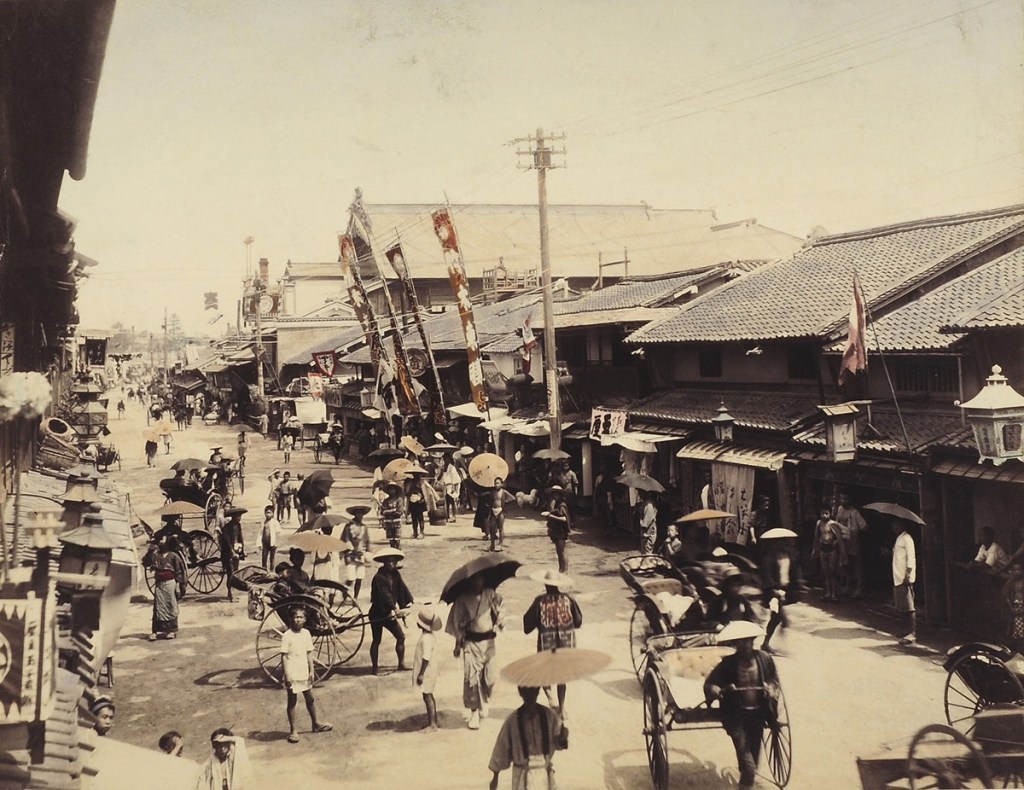
Look closely at the umbrellas: The round, paper-covered wagasa (和傘, traditional Japanese parasols) stand alongside dark, European-style umbrellas. They offer a clear sign of Western influence seeping into daily routines. The headwear tells a smilar story: we see Japanese kasa (笠, straw hats) but also Western-style rounded hats.
In just one frame, this photograph reveals the Meiji era’s duality. The picture shows a society embracing modernity while, at the same time, it holds onto its traditions; one sunshade, one hat at a time.
Staged Traditions: The Art of Crafting ‘Exotic Japan’
This portrait by the Italian photographer Adolfo Farsari captures a young woman in a patterned kimono. She is delicately holding a temari toy (手毬), a traditional Japanese handball originally crafted from scrap fabric.
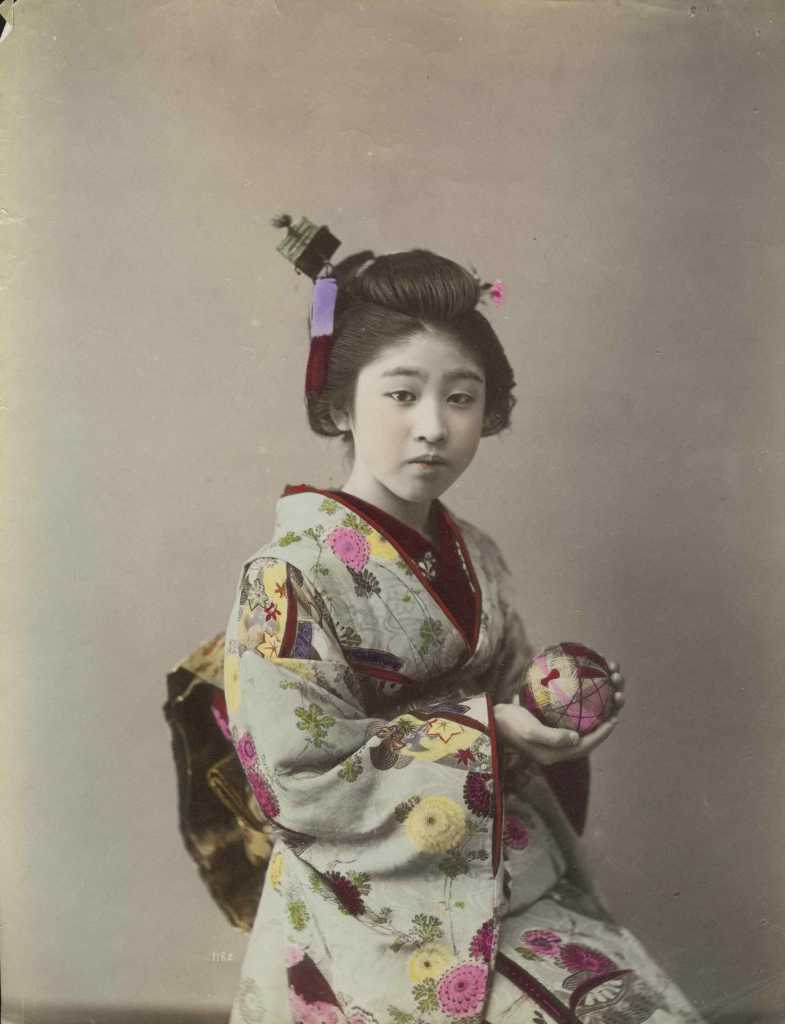
Farsari’s work gained renown for its blend of Western portrait aesthetics with Japanese motifs. This blend shaped an image of “exotic Japan” that fascinated European audiences. In this artwork, the temari ball, initially a humble children’s toy, becomes a symbol of craftsmanship and elegance. It represents the artful staging that defined much of Meiji-era photography.
Farsari’s approach mirrors that of other photographers of the time, like Kusakabe Kimbei, who similarly staged scenes to cater to Western tastes. Their studio portraits often featured stereotypical figures like ‘the geisha’ in an elaborate kimono.
These portraits preserved a romanticised vision of Japan even as country rapidly modernised. It was a play between documentation and cliché, between reality and the myth of “exotic Japan.”
Working Worlds: The Real Everyday
T. Enami “Fan Factory” offers a glimpse into the authentic working life of Meiji-era Japan. Unlike his earlier, more staged compositions, this photograph captures a family-run workshop.
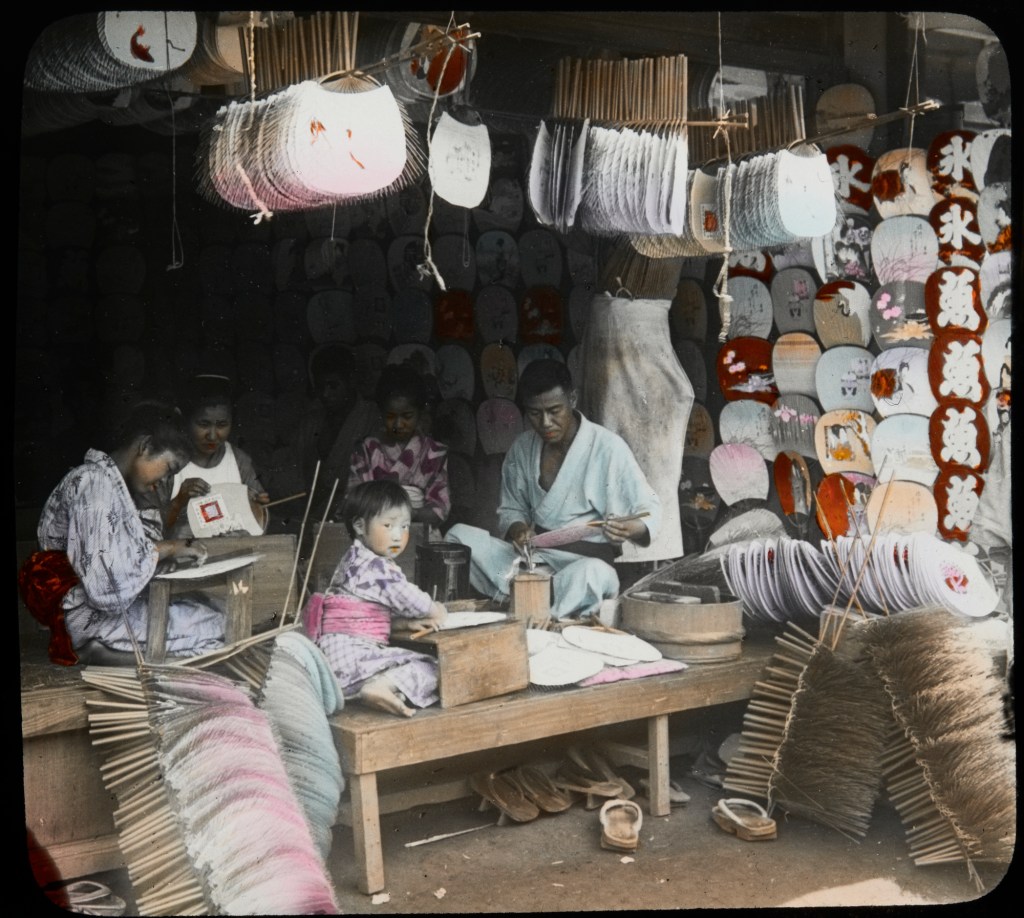
The father, mother (both dressed in white), and three children collaborate in crafting uchiwa fans (団扇). These flat, rigid hand fans were practical everyday items, as well as also popular souvenirs and advertising tools. They were often adorned with landscapes, celebrities, or lucky symbols.
What makes this image so compelling is its unfiltered realism, highlighting the family’s collective labor. This effort was a hallmark of small businesses during the Meiji period, with every member contributing to the craft.
Many households blended established conventions with the practical demands of survival while Japan underwent sweeping social changes. These included school reforms that began to reshape education and labour dynamics. Children were increasingly encouraged to attend school. However, many families, particularly in rural areas or small workshops, still depended on their helping hands to sustain the household.
Moments of Leisure and Joy in a Changing World
This photograph of the banks of the Hozugawa River in Arashiyama, Kyoto, transports us to a place of timeless tranquility. It was a retreat that drew people from all walks of life during the 19th century.
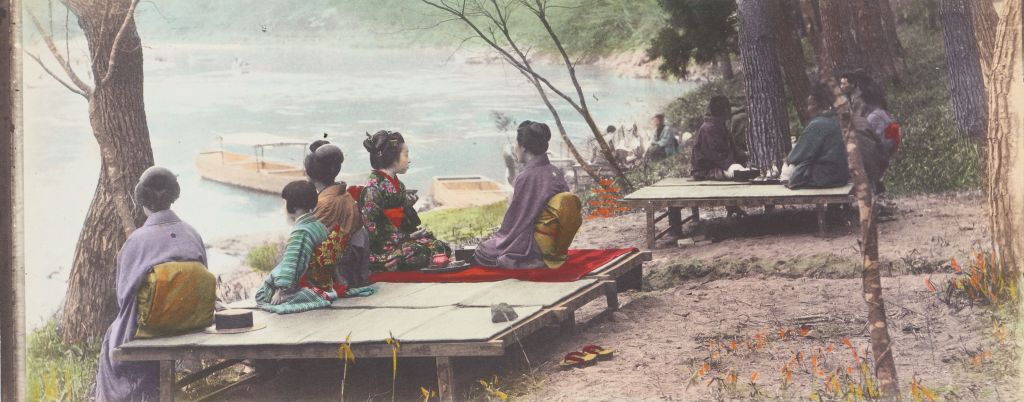
The image captures the serene atmosphere of the riverbanks. Gentle hills and clear waters provide respite from the hustle of daily life. Arashiyama was more than just a scenic spot. It was a social gathering place, particularly in spring and autumn. Here, the beauty of nature seamlessly blended with Kyoto’s slower way of life.
While cities like Tokyo were rapidly modernising, places like Arashiyama remained sanctuaries of community and continuity. These areas allowed people to escape the pressures of change, providing an opportunity to reconnect with the rhythms of nature.
This final image is my favourite photograph from my research. I see it as a symbol of the curiosity and positivity with which people in Japan embraced photography as part of their daily lives.
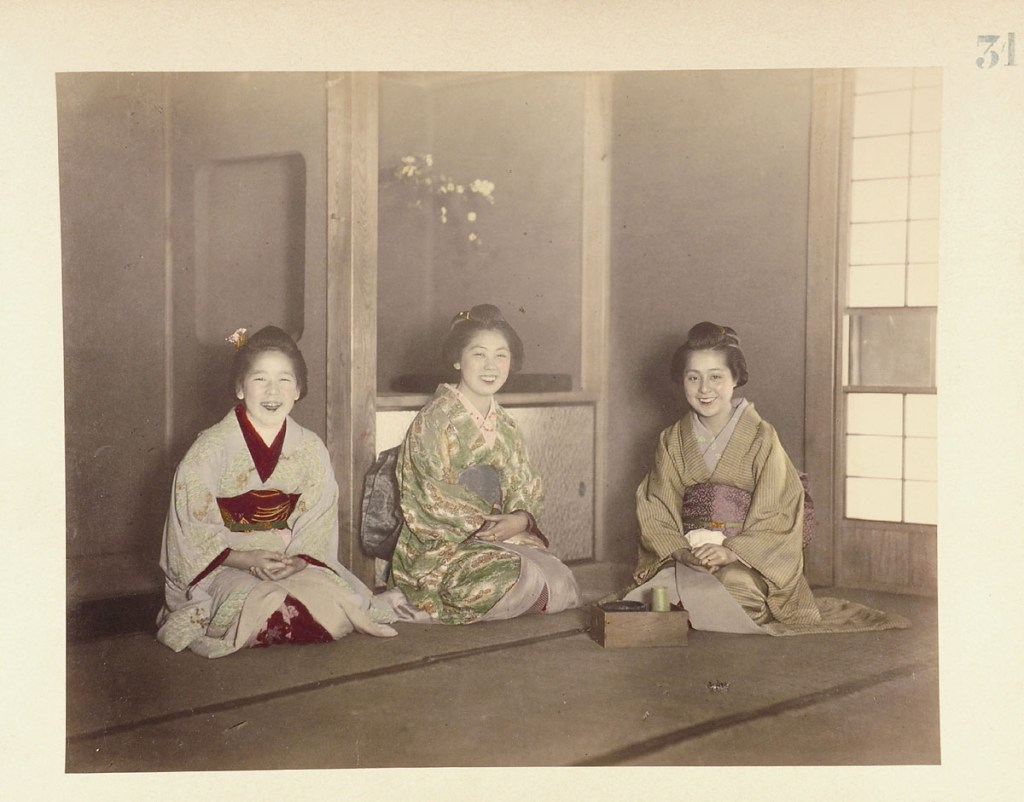
The three young women radiate an uninhibited cheerfulness. This is a reminder that even in an era of rapid change, moments of lightness and connection defined human interaction.
There’s also an intriguing detail that sets this image apart. All three women are wearing rings on their left hand. Rings were not historically part of Japanese dress. These subtle accessories hints at the growing influence of Western fashion and the blending of cultures during the Meiji era. This is a small sign of Japan redefining its identity, with people absorbing new trends while staying rooted in conventions.
In this single frame, we see the essence of the Meiji period. It was a society in transition, where old and new coexisted. Even the simplest moments carried the weight of history. It’s a beautiful note to end on, capturing the spirit of resilience, adaptability, and joy that defined the era.
“Japan in Transition: Everyday Life and Clothing in Historical Photographs” (original title: “Japan im Wandel: Alltag und Kleidung auf historischen Fotografien”) was exhibited at the Japan Pop-Up at Ars Japonica in Hamburg. The exhibition curated by Dr. Carolin Becke explored the cultural shifts of the Meiji era through historical photographs from six German museum collections.
Le Chat (Mistral AI), as well as the WordPress AI Assistant, powered by OpenAI’s GPT technology, assisted in writing this blog post.

 DR CAROLIN BECKE