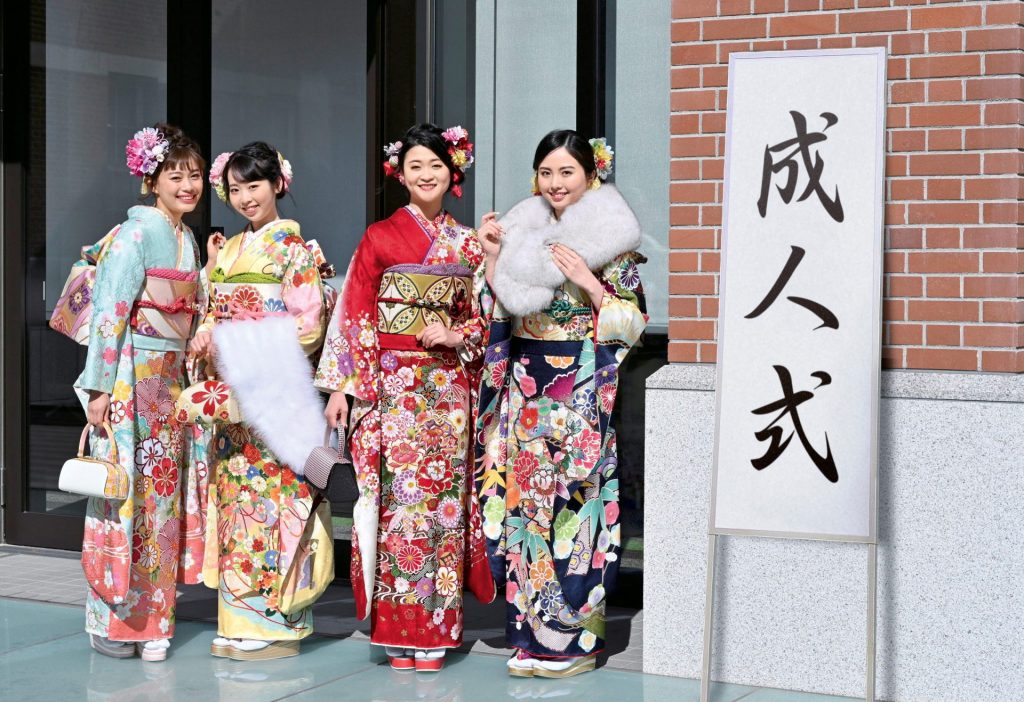
This thesis is a study of kimono in contemporary Japan. It builds on and extends the literature on kimono by evaluating the garment’s role at the coming-of-age day. The coming-of-age day is a significant celebration aiming to inspire young women and men to become ‘good and upright adult citizen[s]‘ (Hendry 1981: 206). Being of immense importance to the construction of Japanese identity and culture, this thesis aims to explore how normative ideas, values and meanings surrounding coming-of-age dress are (re)framed in a contemporary setting.
On May 6th, I spoke about my research on mental wellbeing and kimono at the Fashion Objects and the Changing Landscape of Fashion conference which was part of the Fashion Festival Debrecen. This research is inspired by a short, investigative article I wrote for the ‘Collecting Covid-19’ project initiated by the Centre for Digital Anthropology at University College London which encouraged scholars to collect responses to the unfolding covid-19 pandemic in early 2020.
During this time, I noticed a particular activeness of some of the kimono designers and enthusiasts I follow on Instagram; while life as we know it was drastically changing, members of the community reached towards kimono to provide them with a sense of stability and belonging in these challenging times. Imaginative challenges and exercises were set up to engage each other in creative endeavours, with individuals sharing images of affectionately coordinated kimono outfits which incorporated some of their newly learned kitsuke (kimono dressing) skills. I became fascinated by the ways in which the community took care of their mental health through an engagement with the garment, and decided to conduct some further research into the topic.
Besides the presentation at the conference, I am currently preparing a manuscript summarising my findings which I hope will become a published journal article titled ‘Sustaining Wellbeing through Kimono: Responses from the kimono fashion network to the covid-19 pandemic’.
The slow but steady lifting of restrictions in regards to COVID-19 in the last couple of weeks here in the UK means that, alas!, museums and exhibition spaces are opening their doors to the public again! I am more than thrilled about this – visiting museums and exhibitions form an important part of my life, providing me with inspirational insights into the practices of various artists and cultures … and, I have to admit, the experience is one that cannot be easily re-produced online (although there are definitely some mention-worthy attempts!).
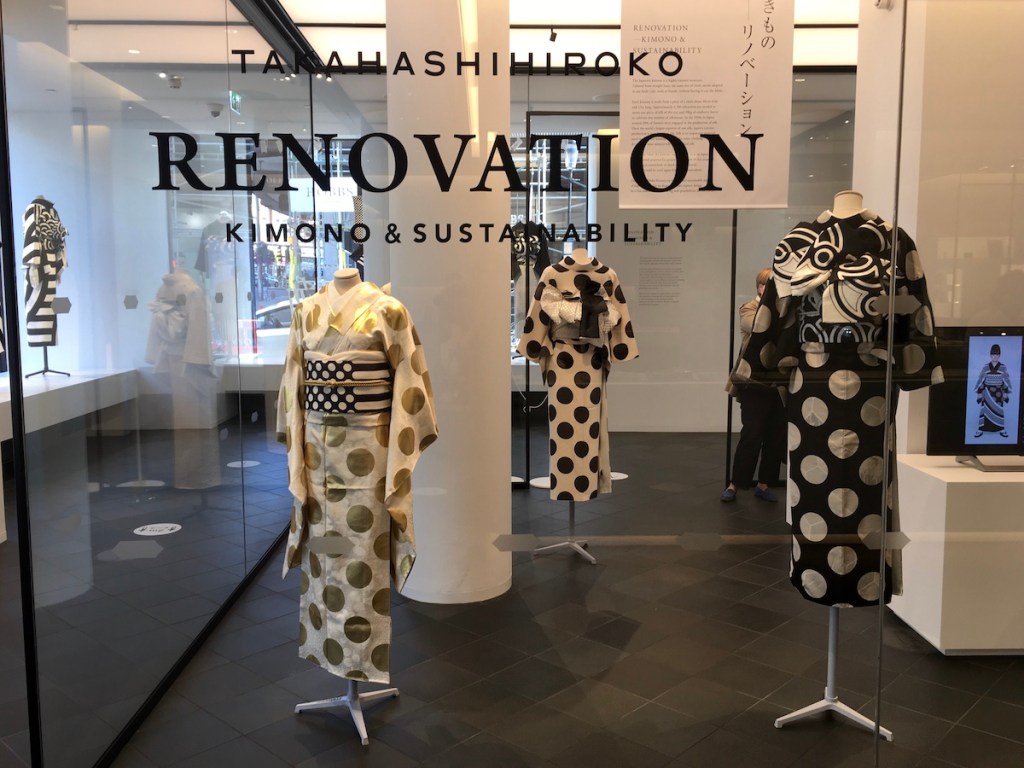
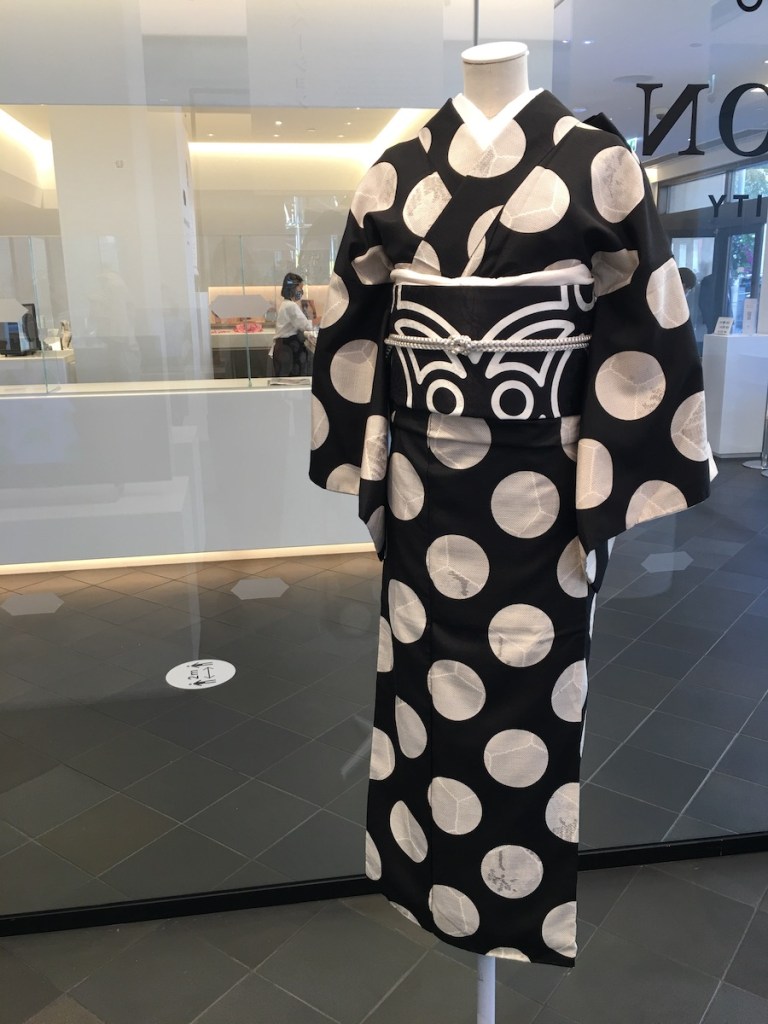
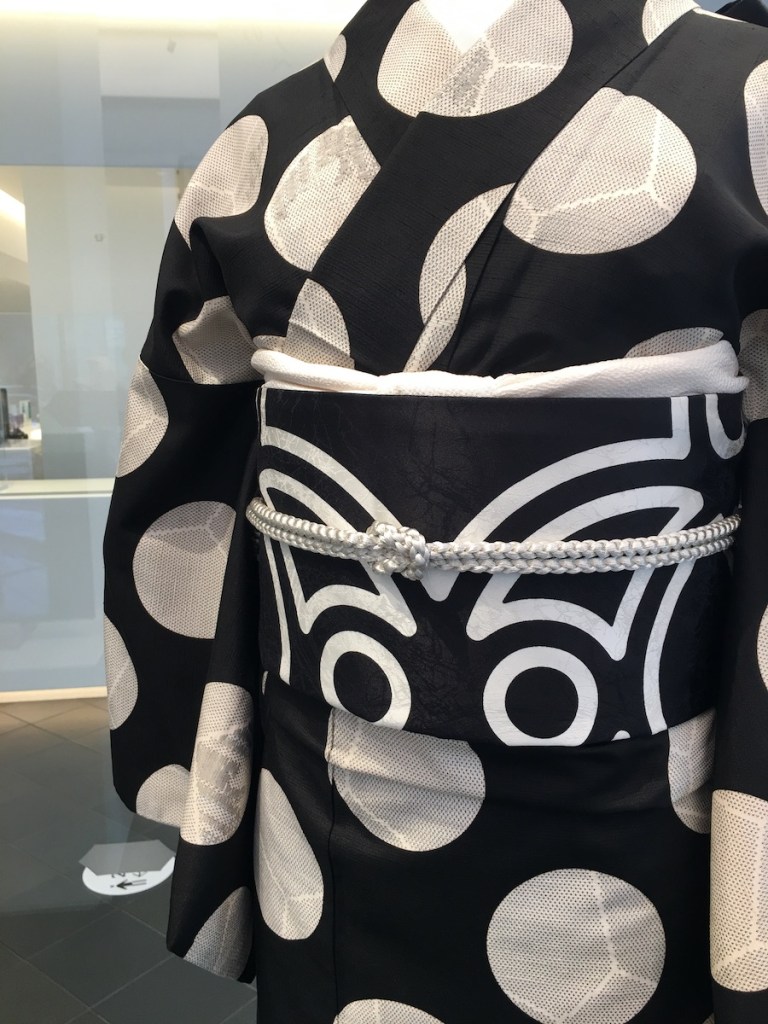
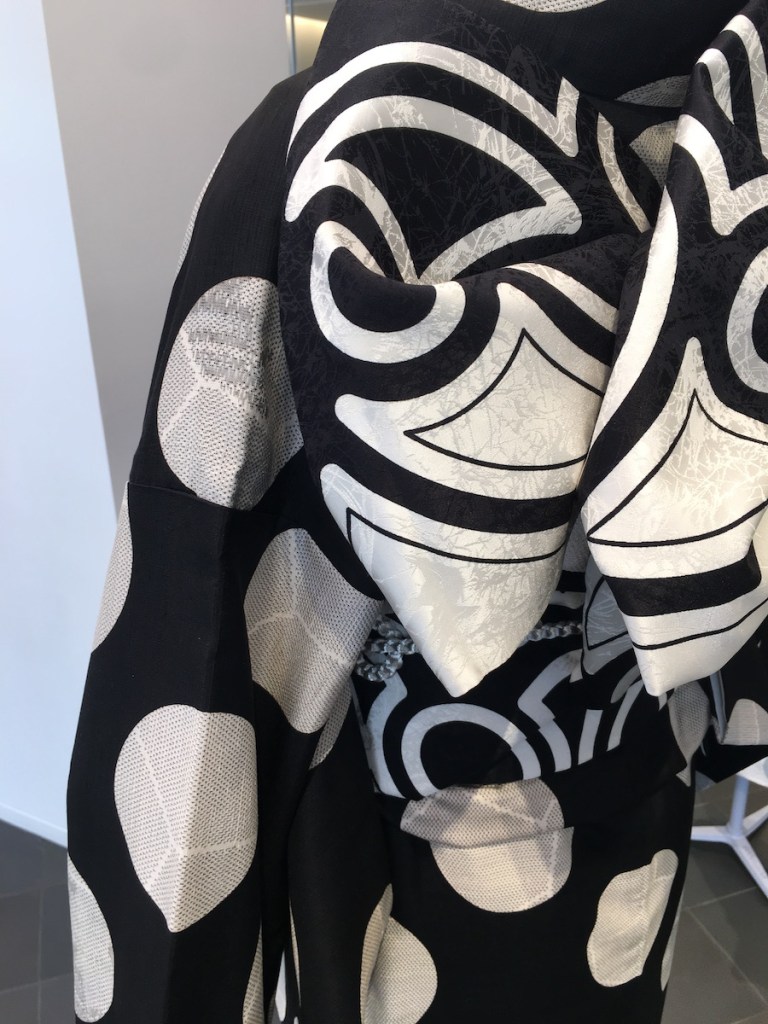
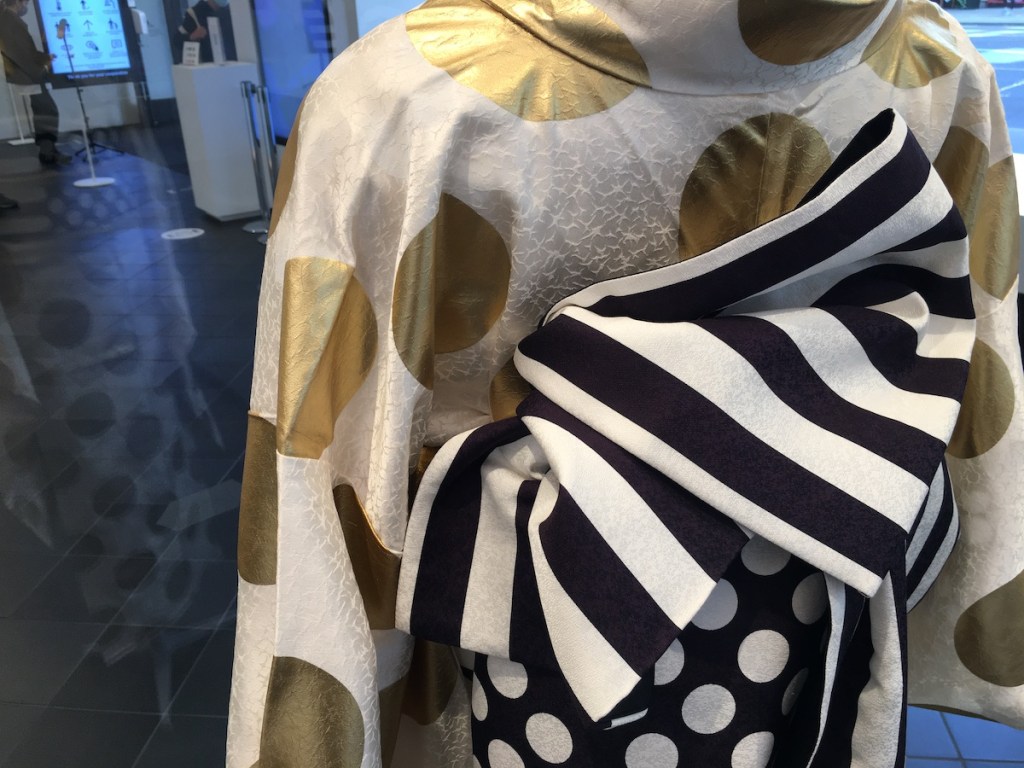
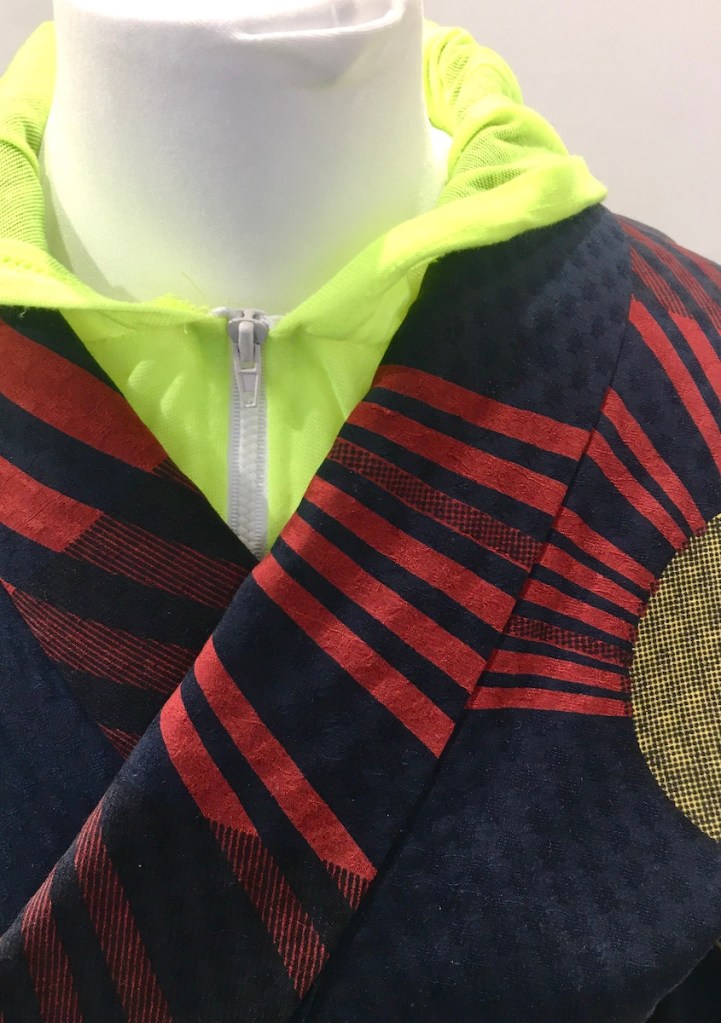
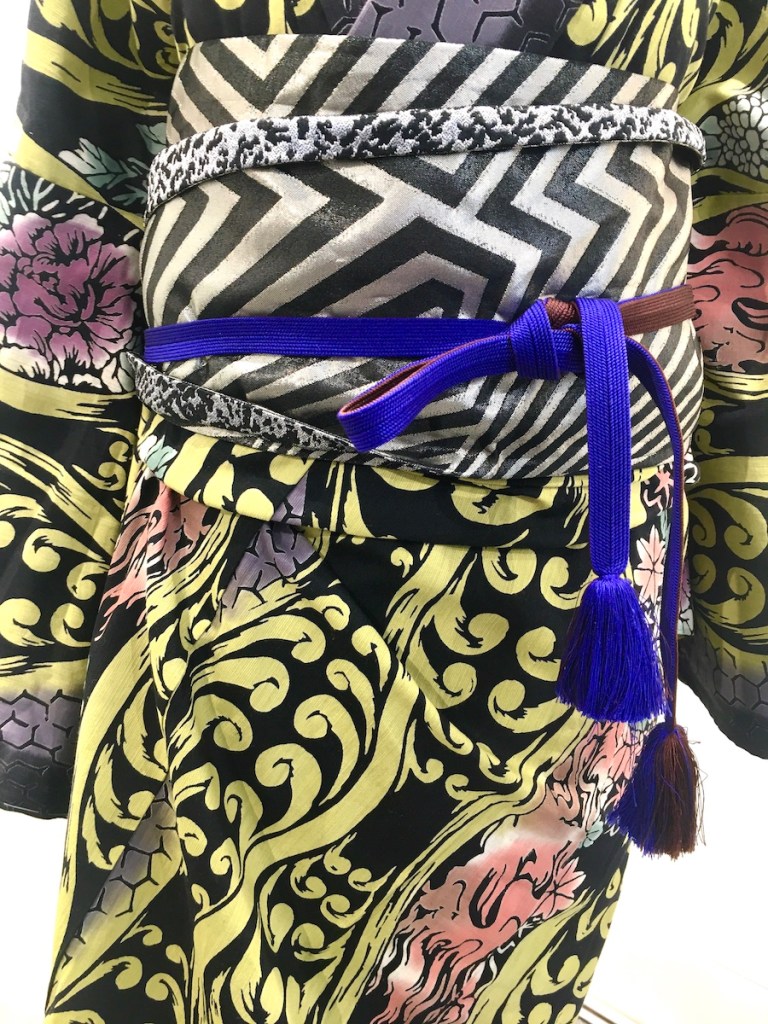
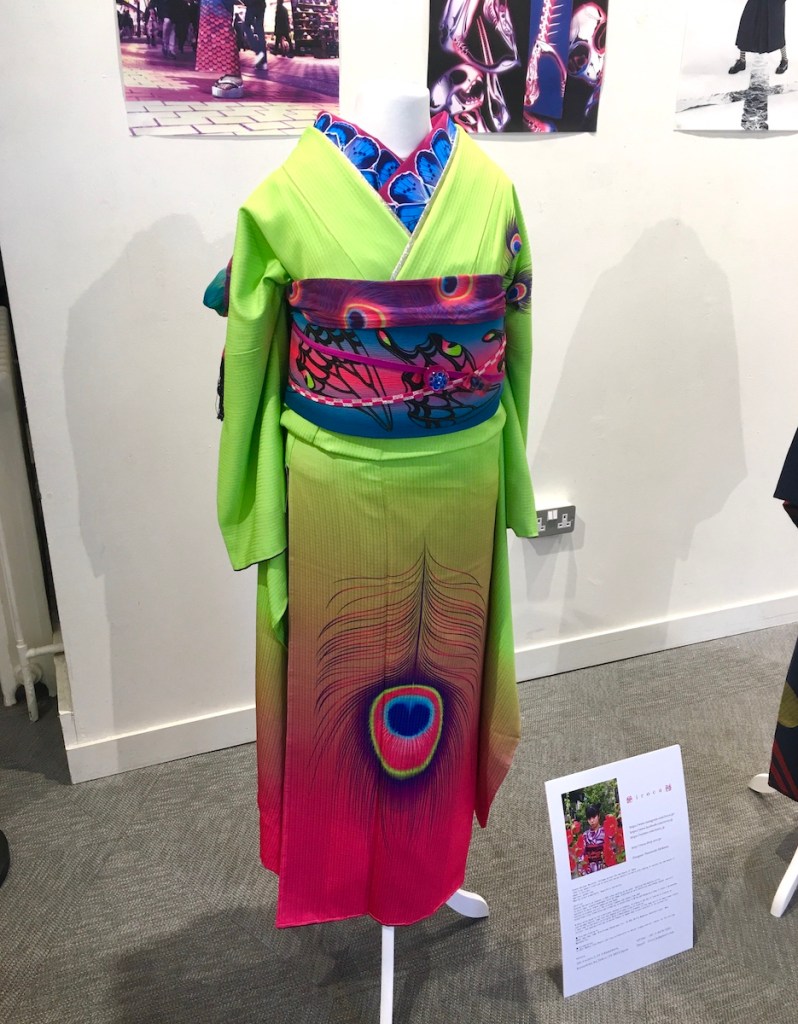
Hiroko Takashashi is the founder of kimono brand HIROCOLEDGE which aims to blend ideas of art and fashion. The artist’s signature bold graphics consisting of geometric patterns such as circles and straight lines form part of most of her designs, representing the infiniteness found in the universe. There is a big focus on sustainability within the brand as well, and this is showcased through the kimono which are part of the ‘RENOVATION’ project displayed at Japan House.
As part of the project, Takahashi sourced old kimono and unstitched, de-colourised, and then re-dyed them with her signitaure geometric patterns. In the past, a significant aspect of everyday kimono culture was the continued re-use of the precious materials, which included the taking apart and re-tayloring of garments to make them into new pieces. This practice is mainly lost now, but Takahashi would like to re-engage consumers with this form of appreciation and usage.
This is a truly inspiring display, so I encourage anyone with an interest in fashion, textiles and design to visit Japan House and study the garments in close detail themselves!
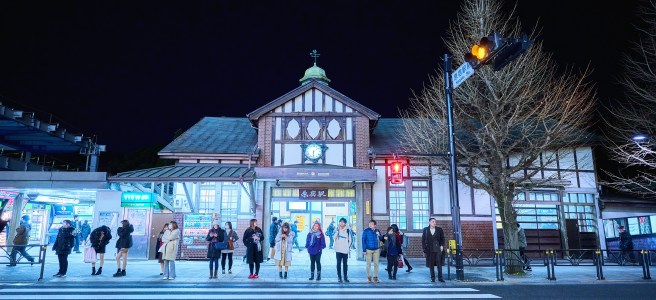
Harajuku is the epicenter of Japanese street fashion, where young people express their individuality through unique outfits and extravagant styles. This lively Tōkyō district, situated between Shibuya and Shinjuku, has transformed from a modest residential area into a global symbol of creativity and youth culture. Harajuku is not only a shopping paradise but also a cultural melting pot, constantly evolving and setting new trends.
I first visited Harajuku in December 2007, at the beginning of my six-month language exchange stay. This was before the wide availability of Google Maps, so I had little idea of what the district would look like. The area has changed significantly since then, but at its heart, it remains the same vibrant and eclectic hub of creativity and culture I fell in love with back then.
Let’s first dive into the history of Harajuku, which dates back to the late 19th century. The name ‘Harajuku’ (原宿) literally means “meadow lodging” and refers to the area’s rural past, originally known for its Shinto shrines. During World War II, Harajuku was almost entirely destroyed by bombings. After the war, reconstruction began, and the district became home to many American military personnel and their families, which increased the influence of Western culture. In the 1960s, facilitated by the 1964 Tōkyō Olympics, Harajuku began to develop into a meeting place for creative and fashion-conscious youth. This transformation continued over the following decades, shaping it into the vibrant center of youth culture and street fashion that it is today.
The magazine FRUiTS, founded in 1997 by Japanese photographer Aoki Shoichi, has captured the diversity and creativity of Harajuku fashion for years. Through the publication, Harajuku’s fashion became not only a local but also an international symbol of creative freedom and non-conformist style, significantly influencing global street fashion. Althoug being discontinued in 2017, FRUiTS continues to show the style(s) of Harajuku to the world through its Instagram presence.
For fashionistas feeling inspired, there are three main destinations: Takeshita-dōri, Omotesandō, and Ura-Harajuku. Let’s take a closer look at these three iconic sub-districts.
Takeshita-dōri
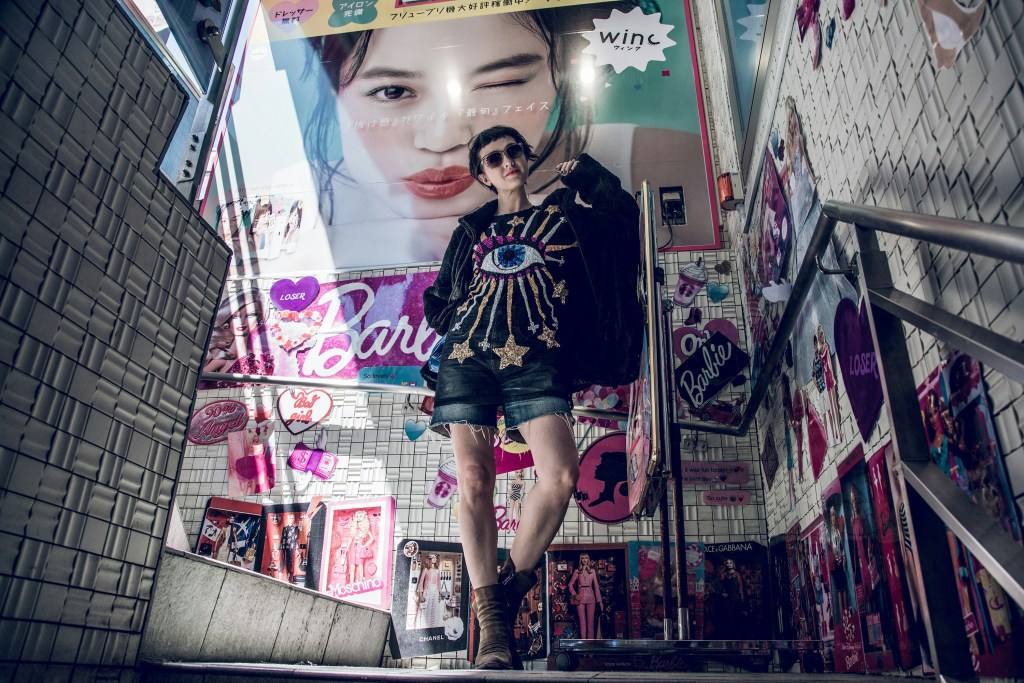
Takeshita-dōri in Harajuku is the heart of Japanese street fashion. This lively street, just a few steps from Harajuku Station, is lined with fashion boutiques, creperies, and accessory shops offering a plethora of affordable and colorful items. Especially popular among young people, Takeshita-dōri embodies the unique Harajuku style, characterized by creative, eye-catching, and often quirky fashion. Here, the cuteness aesthetic of kawaii meets individual eccentricity, creating an unmistakable atmosphere that attracts fashion enthusiasts from all over the world.
The street is not only a shopping paradise but also a place where trends are born. Singer Kyary Pamyu Pamyu (きゃりーぱみゅぱみゅ) epitomizes this style like no other; bold accessories, daring color combinations, and unconventional designs define her look. With the song ‘HARAJUKU IYAHOI (原宿いやほい),’ she has also given the district its own anthem in 2017, further highlighting Takeshita-dōri’s significance in the global fashion world.
Omotesandō is an elegant, tree-lined avenue in Harajuku, often referred to as the ‘Champs-Élysées of Tōkyō.’ In contrast to the lively and eccentric Takeshita-dōri, Omotesandō offers a more sophisticated and refined atmosphere. Here, luxurious boutiques, designer stores, and exquisite concept shops line the street, offering a wide range of high-quality fashion items and accessories.
In addition to its exclusive shopping options, Omotesandō is also known for its top-notch restaurants and cafés. From upscale Japanese dining to international gourmet cuisine, there is a variety of culinary experiences to be had. Popular cafés like Omotesandō Koffee, known for its minimalist style and high-quality coffee, and Anniversaire Café, renowned for its delicious desserts and stylish ambiance, attract both locals and tourists.
Ura-Harajuku, on the other hand, is a place for explorers and individualists seeking unique pieces and inspiring spots. This area is known for its independent boutiques, vintage shops, and innovative cafés, catering to an alternative and often avant-garde fashion taste. In its quieter yet equally creative atmosphere, many iconic Japanese streetwear brands, such as BAPE (A Bathing Ape) and Undercover, got their start.
Second-hand and vintage shopping are central elements of Ura-Harajuku. The appeal of second-hand fashion lies not only in the uniqueness and quality of the items available but also in the increasingly significant sustainable shopping philosophy. Reusing and rediscovering clothing not only supports the environment but also allows for the creation of individual and distinctive outfits. The vintage shops in Ura-Harajuku are renowned for their creative clothing displays and inspiring styling ideas, encouraging visitors to explore and experiment with their personal style.
The diversity of fashion, the vibrant youth culture, and the unique atmosphere make Harajuku a captivating place that enchants visitors from around the world. From the colorful Takeshita-dōri and the elegant Omotesandō to the alternative lanes of Ura-Harajuku, this district offers something for every taste. Harajuku remains an essential destination for anyone wanting to experience the most fashionable site of Tōkyō.
This short article analyses the practice behind the hashtag #stayhomekimono which encourages kimono lovers to dress up in kimono at home and share photographs with their friends and followers online. It was originally written for a website set up by UCL’s Center for Anthropology to collect ethnographic data on how people around the world are experiencing the appearance of COVID-19 in their lives, and can also be found here.
#stayhomekimono: Creative responses from kimono lovers to physical distancing
Instagram user opalmoonrabbit participating in the #stayhomekimono challenge.
Both within and outside of the country, kimono has long been regarded as Japan’s national and traditional costume with its own etiquette and customs. Diverse ways of approaching and appropriating the garment have been applied by different parts of the population however, with kimono being regarded as a fashionable, rather than ‘traditional’ garment at many different points throughout history. It was rather in a post-war context that an idea of ‘the kimono’ and ‘one way of wearing’ has been strengthened, with kimono dressing schools and conservatively-minded authors being the main drivers behind this movement. The now associated abundance of strict rules and regulations ended up alienating the majority of the Japanese population from kimono.
In the last decades however, kimono has seen a bit of a revival, with individuals picking up kimono more due to fashionable than traditional reasons, aiming to express their identity and taste through the playful combination of items and accessories to create personalised kimono ensembles. This new generation of kimono lovers are people of all genders and ages who are getting together with their friends and / or in special dressing groups to enjoy wearing kimono in a communal setting. Due to physical distancing restrictions being put on the Japanese population, these ventures are naturally now also being restricted. Some inspiring and creative ways of coping with the ‘new normal’ have come out of the community however which I would like to outline below.
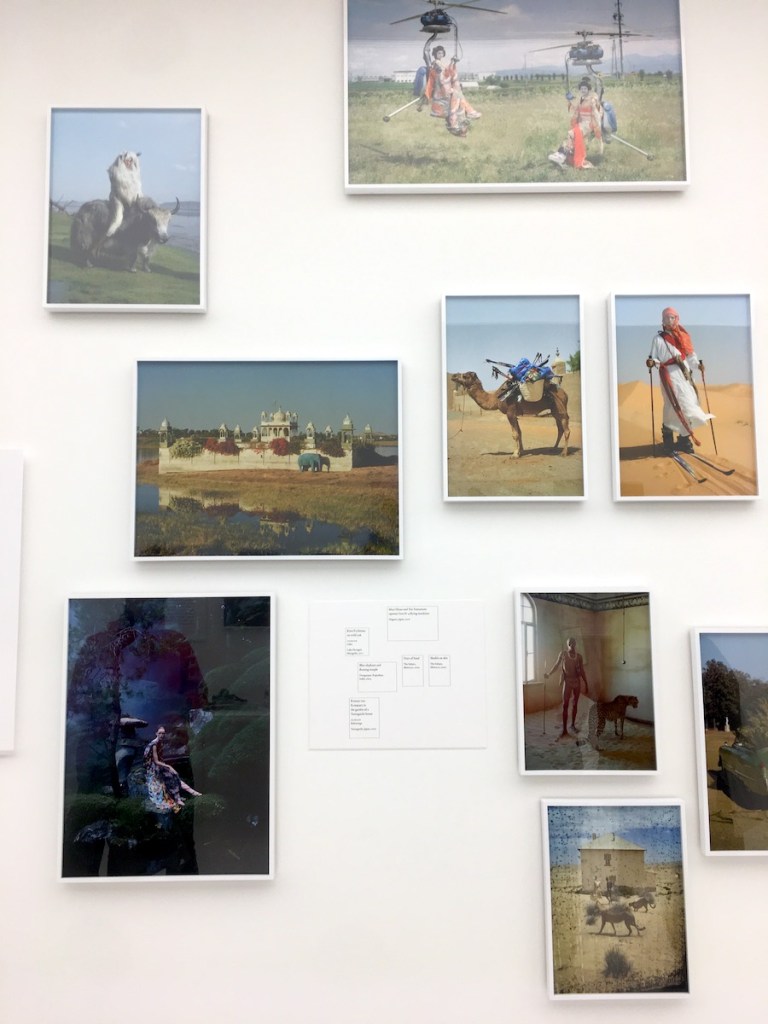
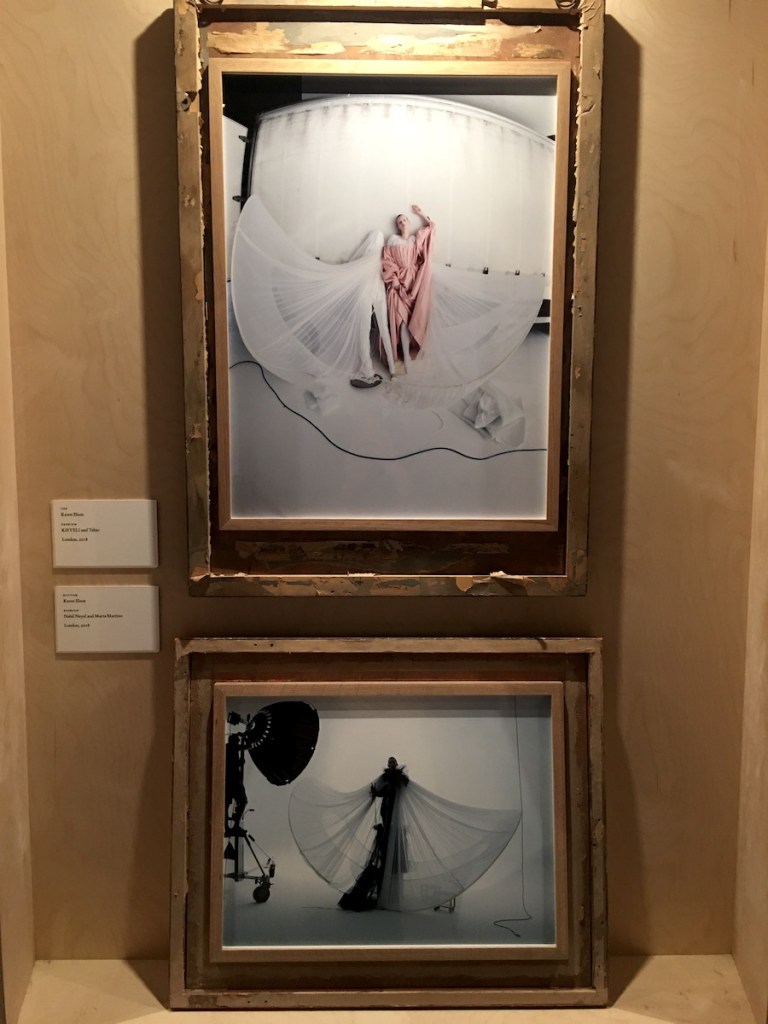
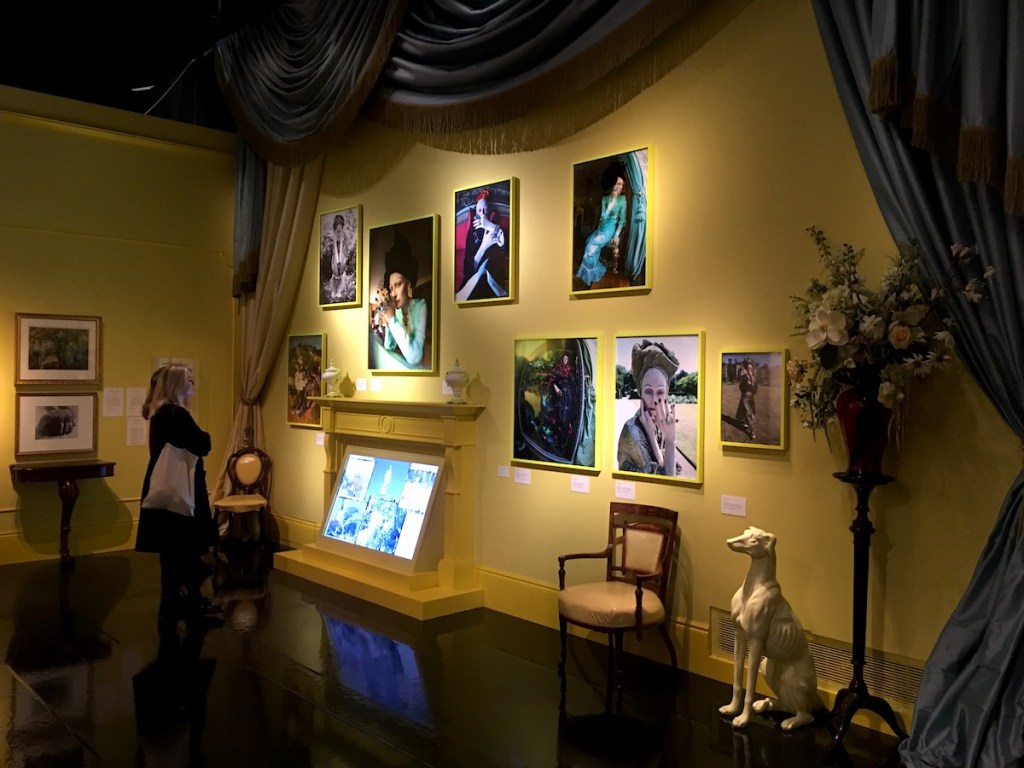
The Tim Walker: Wonderful Thingsexhibition at the Victoria & Albert Museum was among the last exhibitions I got to see before the Covid-19 physical distancings restrictions were set in place in the UK. I have been a fan of Tim Walker and his work ever since I was in my late-teens; his photo collection book ‘Picture’ was prominently placed in the corridor of my apartment in Berlin, with my walls being decorated with his fantastic and strange images. Tim Walker might also be part of my decision to study fashion design at ESMOD which was the reason for me to move to the capital city of my native Germany in the first place (and which I only did for a year – the reality of the fashion industry somewhat caught up with me …). The exhibition took me back to those time, and was simultaneously a good opportunity to catch up with the more recent work of the artist.
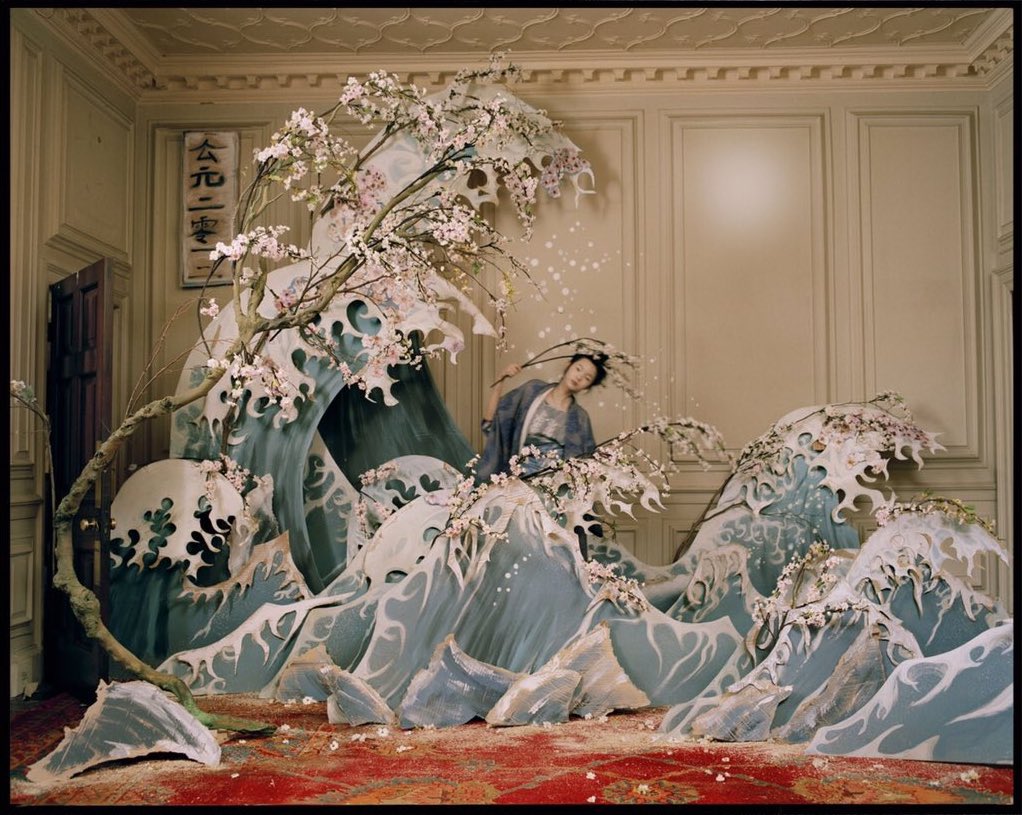
The first room gave a brief history over the career of Tim Walker, with the walls being filled with photographic images forming a sort of retroperspective of the artist’s creative ventures so far. Among them was the famous image of musicians Mari Hirao and Yui Yamamoto clad in full geisha kimono ensembles while operating Gen h-4 flying machines you can see below. Another one was one of my favourites by the artist which portrays model Xiao Wen Ju placed into a recreation of Hokusai‘s popular ukiyo-e woodblock print ‘The Great Wave off Kanagawa‘.
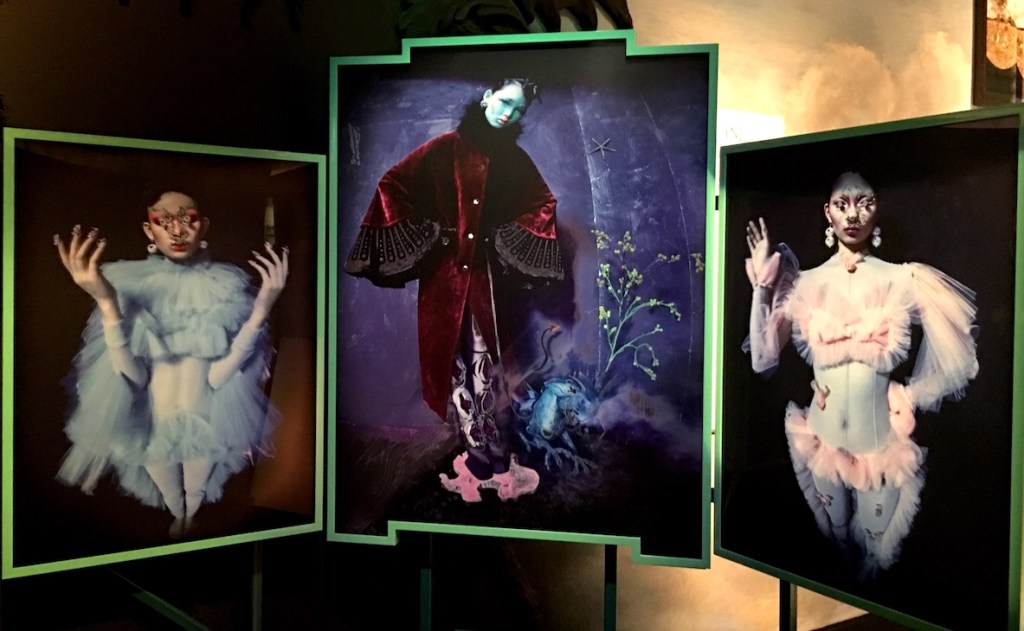
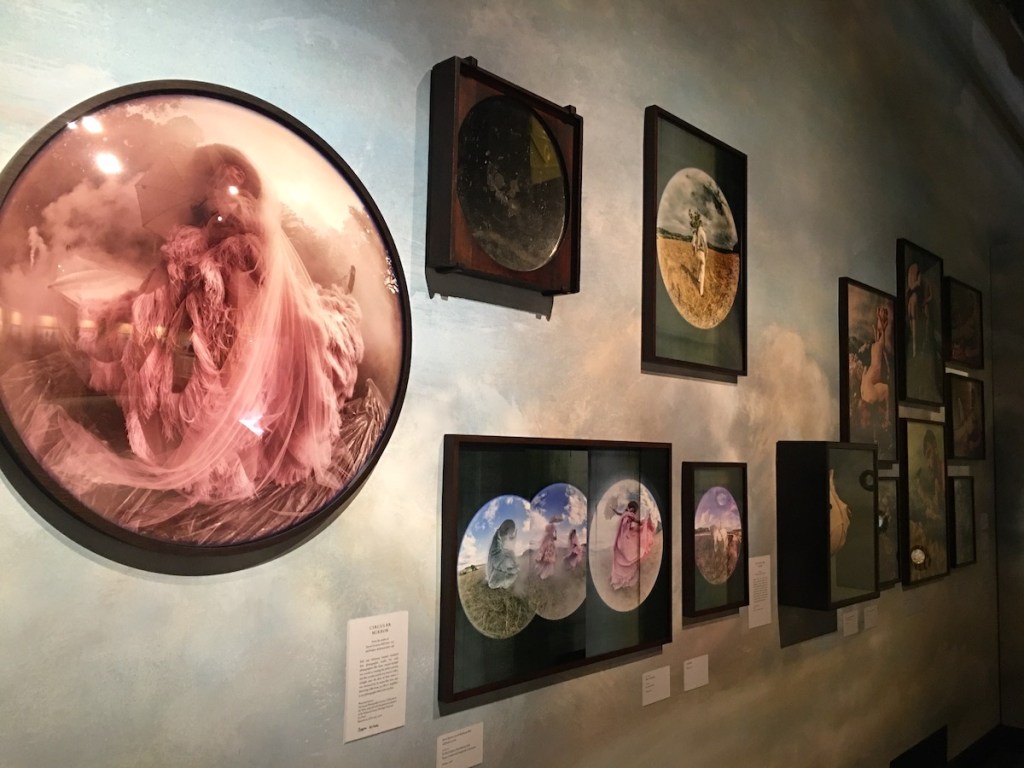
The second part of the exhibition focused on the works Tim Walker exclusively created for the exhibition. Taking different objects, or: ‘wonderful things’ from the V&A’s vast and diverse collection as the basis of inspiration, the photographer created ten series of photographs which were creatively displayed in different sections. The displays really added an emphasis in emersing oneself in the world of the artist.
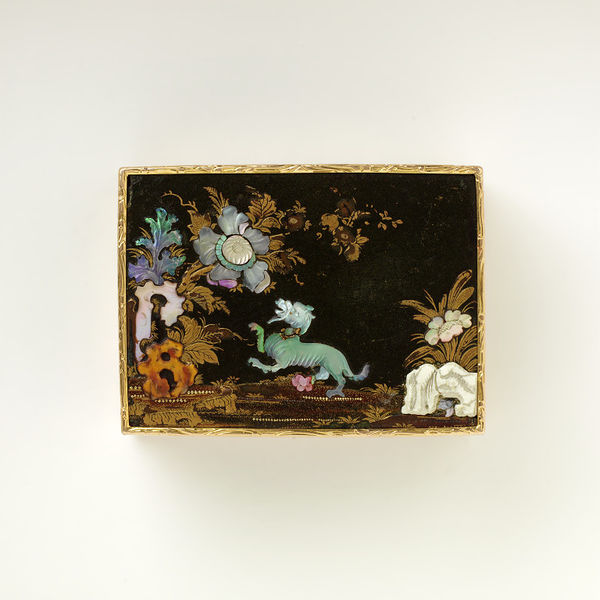
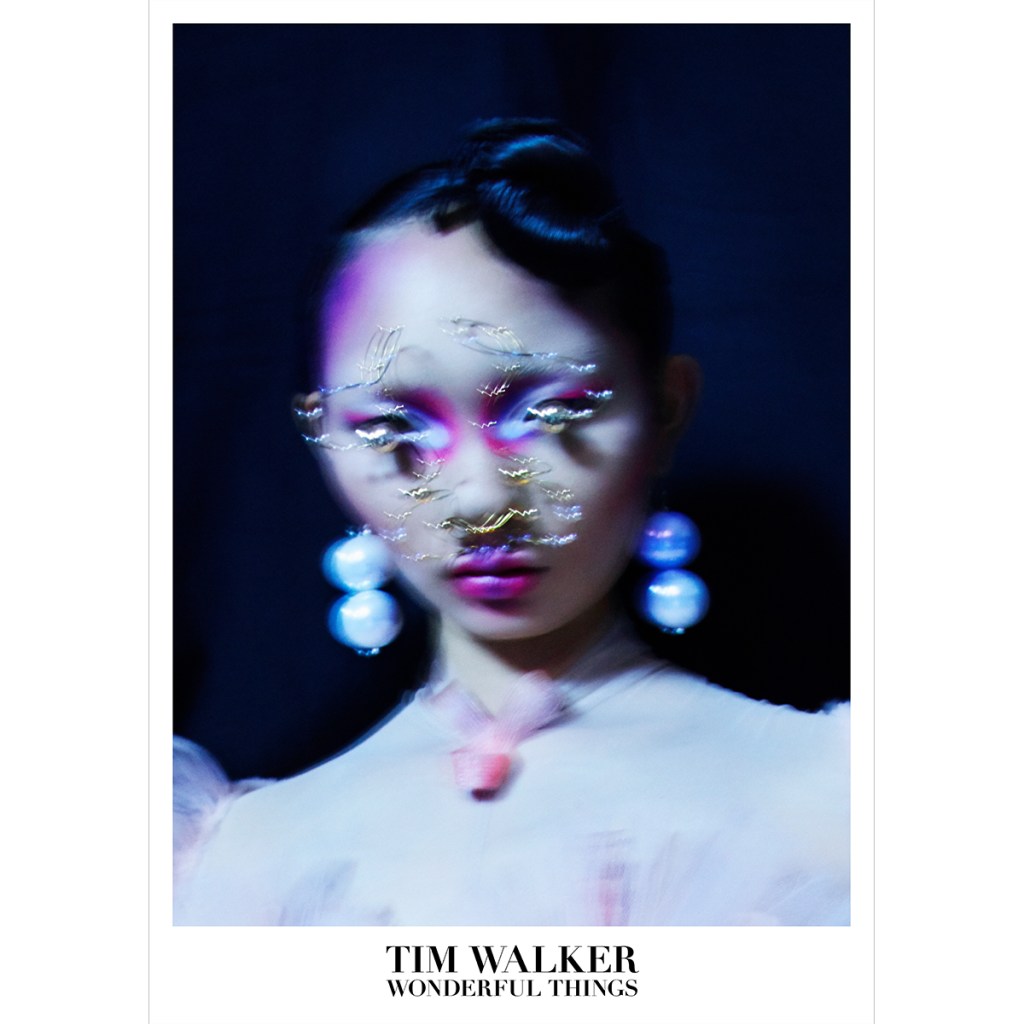
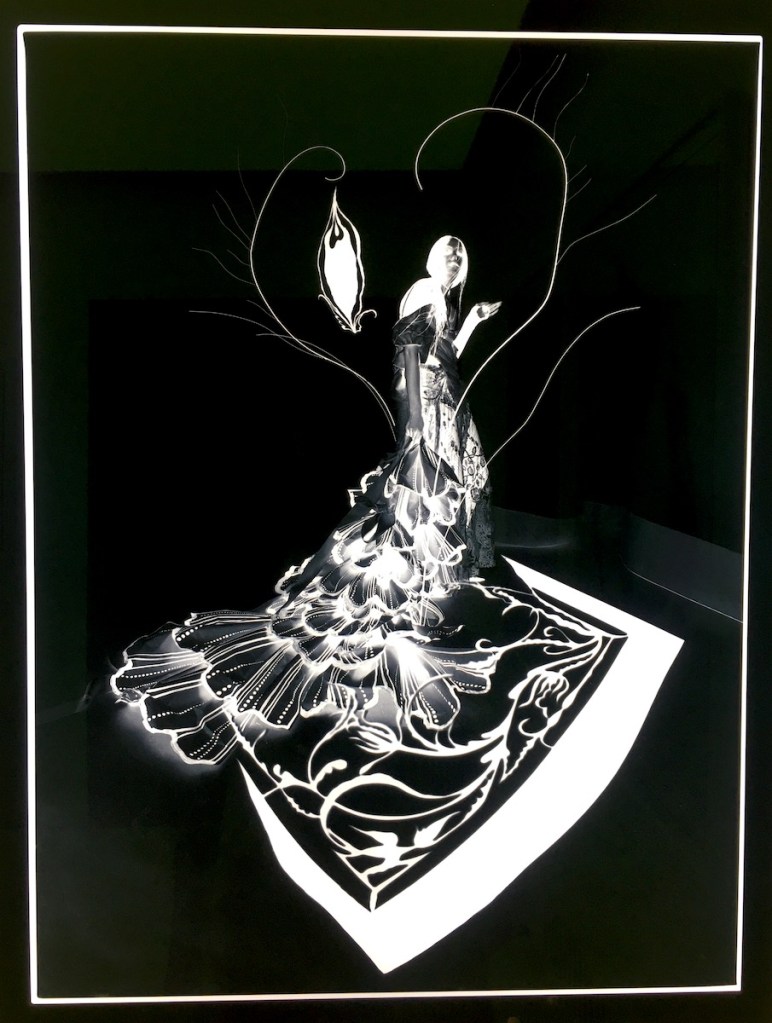
My particular favourite was probably the Lil’ Dragon photo series inspired by an 18th century Chinoiseriesnuffbox depicting a dragon on its front. Walker himself said about the series: “As soon as I saw [the snuffbox] with a dragon on it, I visualised an empress walking her pet dragon at night and picking a flower that only blooms at full moon”. I love how Walker translated the colours and strange imagery into darkly romantic photographs using UV light in front of dark black backgrounds, with main model Ling Ling’s make-up being done by Berlin-based drag artist Hungry.
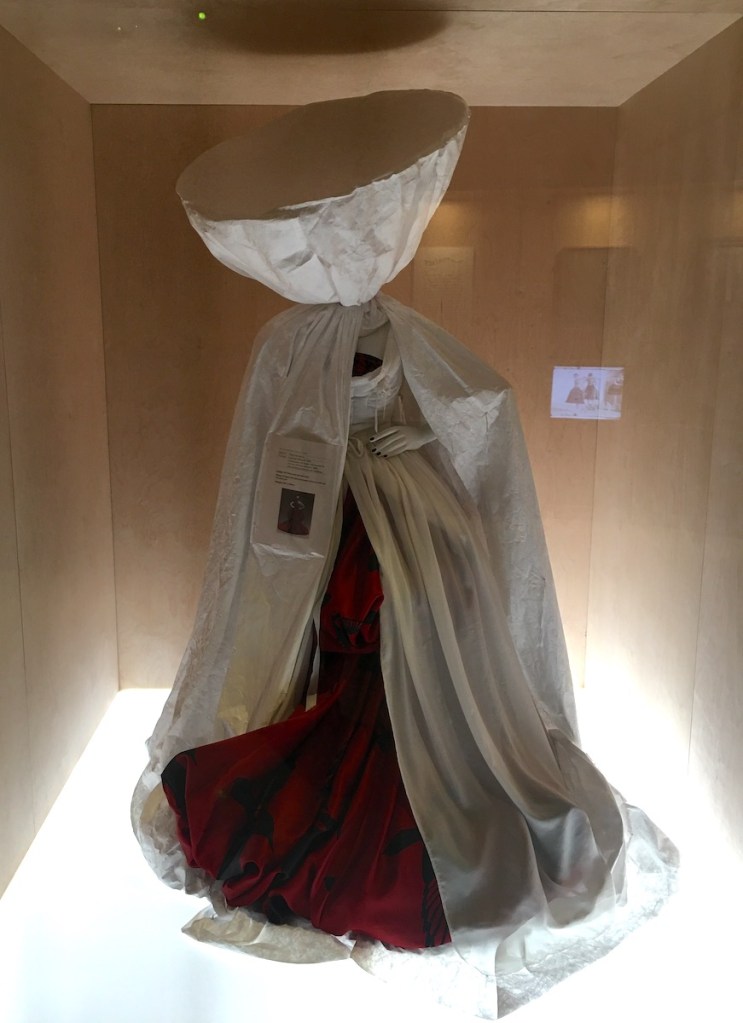
Other sources of inspiration ranged from Aubrey Beardsley’s black ink illustrations over the storage objects used by textile conservators at the V&A all the way to the wardrobe of the eccentric British poet Edith Sitwell.
All in all this was a truly wonderful exhibition, showcasing the creative talent of the British fashion photographer in a very approriate, Walker-esque way. It would be great to see more exhibitions like this in the future, with different artists taking inspiration from the museum’s collection to create new commissions.
The places your research leads you to … I never thought that I would be involved in a kimono photoshoot but this is precisely what happend two months ago!
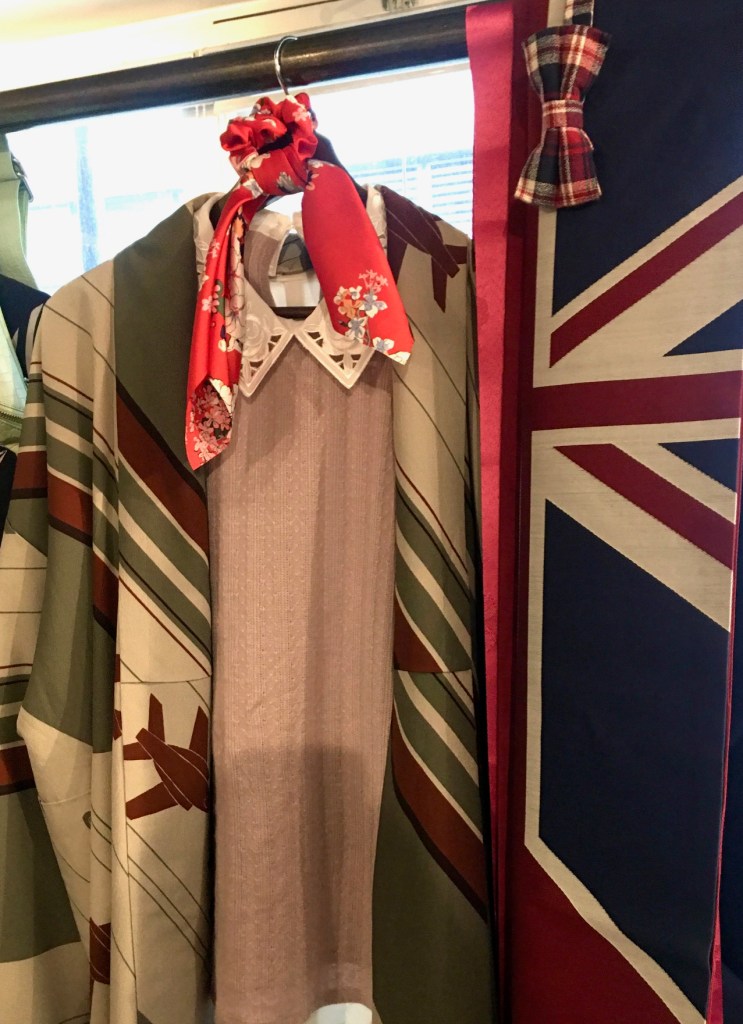
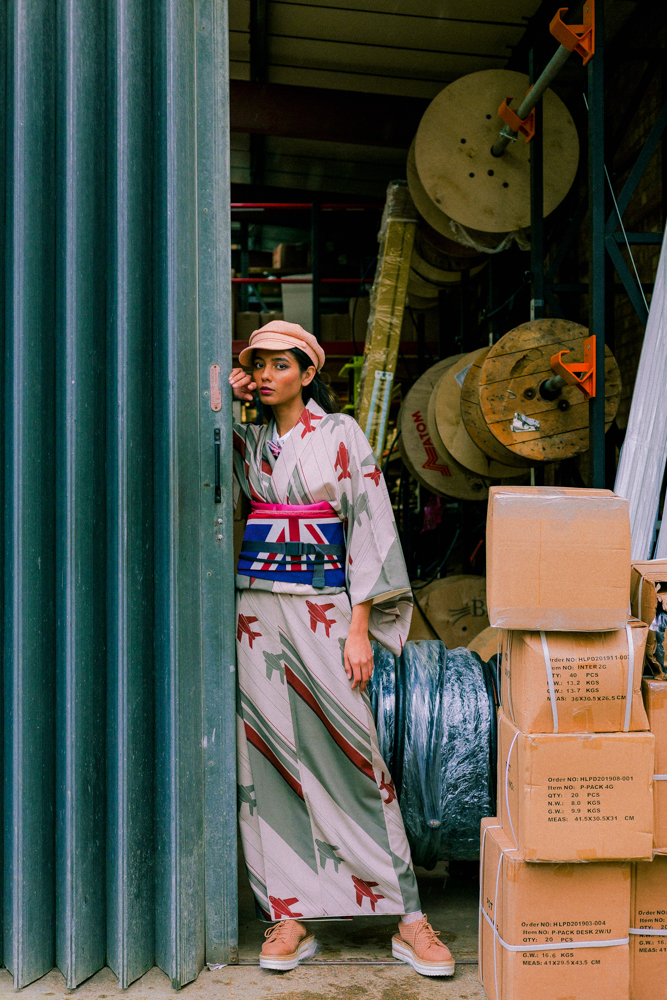
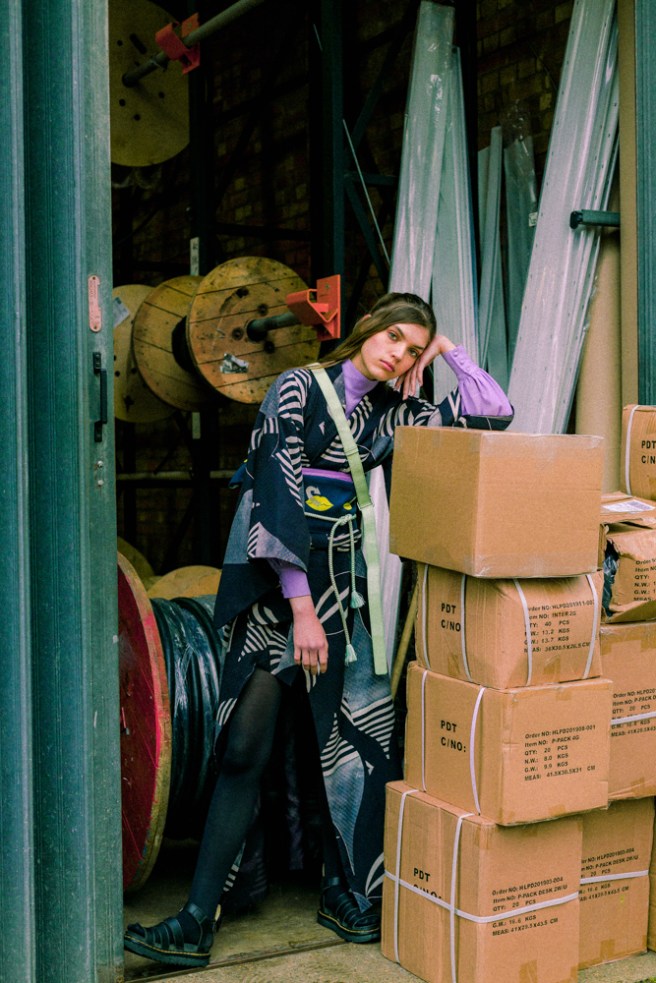
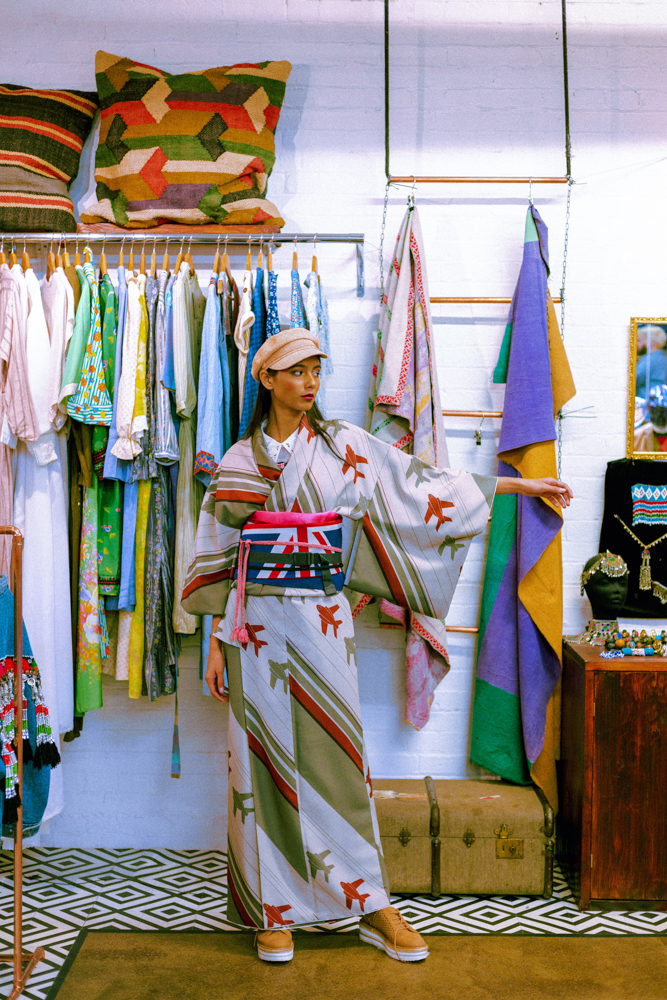
I took my friend Marion Gabrielle, a fashion photographer, to the KIMONO MAGIC SOCIETY POP-UP at the beginning of March and she was immediately fascinated by the designs of the presented garments! This led to us organising a full photoshot on very short notice (knowing the kimono designers and their garments wouldn’t stay in London too long), with the whole organisational process taking less than three days! The kimono and obi were kindly provided to us by Modern Antenna who gave us complete artistic freedom over the use of their garments. Marion got in touch with model agency Titanium Management who sent along the two lovely models Vera and Aanandita for the shooting. Jubby S. was in charge of styling, providing us with pieces of garments to wear with the two kimono that were chosen (see pictures below!).
On the day of the shooting we met at Titanium Management who are based in a small side street in Shoreditch, to have the models styled and put into their respective clothing ensembles. Having never put another person in kimono, I have to admit that this was quite the challenge! It all worked out in the end however, thanks mainly to our concept being based on a very fashionable approach towards kimono (and also A LOT of improvisation!).
After Vera and Aanandita were styled and dressed, we headed out with Marion looking for inspiring spots in the back streets of Brick Lane. This is were some of my favourite images (see below) were shot, at the parking lot and entrances to the storage space of a fabric supply company to be precise, providing us with a beautiful backdrop of brick buildings, heavy industrial doors, warehouse materials and (above all) shipping boxes!
The second location for the shooting was Brick Lane Vintage Market which provided a slightly more colourful, vintage-y visual context for the kimono ensembles. I loved how some of the motifs of the different pieces communicated with their surrounding; the lines of the Union Jack on Aanandita‘s obi for example visually respond strikingly to the The Who t-shirts logos in one of the LP record shops (see last image below).
All in all, this was a very inspirational experience, which, besides providing me with a welcome distraction from my more writing-focused research activities, offered greater insights into the way kimono and certain kitsuke (the practice of dressing in kimono) relate to and look in photographic images. Putting another person into kimono was another fascinating part of this whole experience, which made me want to actively study and practice different obi ties and bigger variety of kitsuke, particularly in regards to creating different lengths of the hem (my one-off yukata lesson in Kyoto surely did not adequately prepare me for this!). As Marion and I are already thinking about possible future collaboration, you probably do not need to wait long to hear more from us!
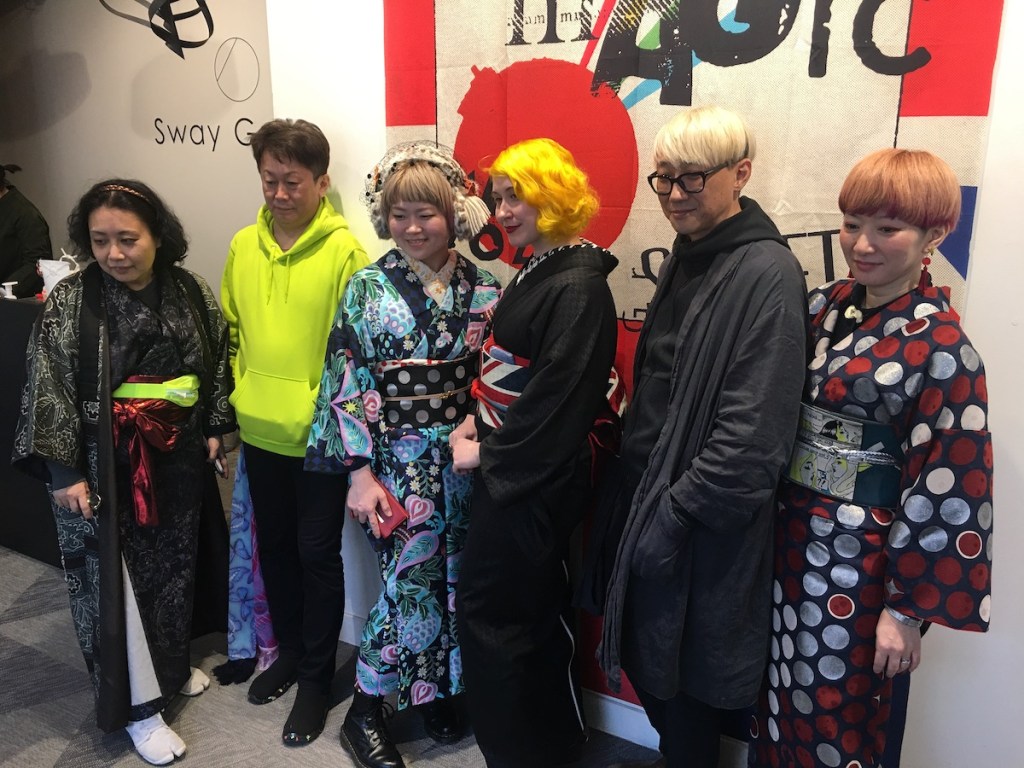
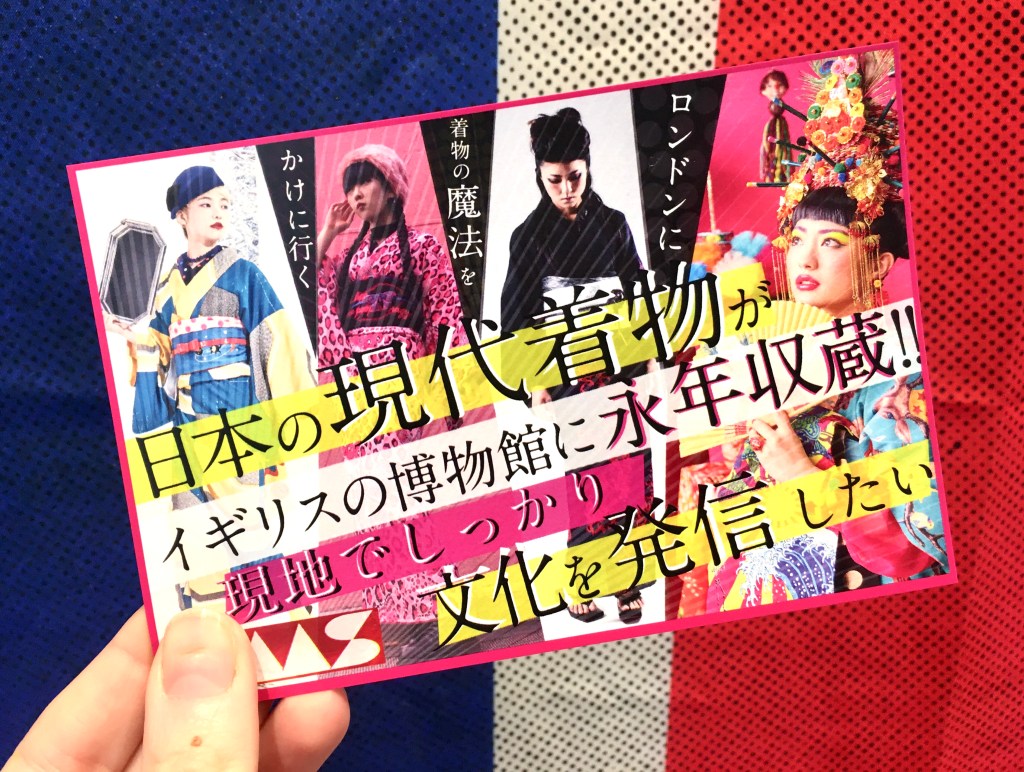
The Creation of Modern Kimono: KIMONO MAGIC SOCIETY POP UP was held from February 29th to March 4th at Sway Gallery London. Yoshihide Hirayama and Asako Yamamoto from Modern Antenna, Tamao Shigemune from Tamao Shigemune (重宗玉緒), Rumi Shibasaki from Rumi Rock, as well as Narutoshi Ishikawa from iroca, forming the The Kimono Magic Society, were all in attendance, showing off the latest designs from their respective brands. This was a great chance for me to get to know the designers in person, interviewing each of them for my research on contemporary kimono fashion. While united under the banner of ‘kimono as fashion’, every single one of them has a unique outlook and approach, visible in their respective designs pictured below.
The highlight of the pop up was the fashion show held on Sunday March 1st. Kimono influencers Anji Salz and Sheila Cliffe joined the spectacle which was a great chance for the general public to see the designs coordinated and styled on real-life models.
Overall, this was a great event which provided the designers with the opportunity to showcase their skills and share their kimono expertise with people based in the UK. All brands have some of their works featured at the ‘Kimono: From Kyoto to Catwalk‘ show held at the Victoria & Albert Museum, a fantastic exhibition which I will cover in my next post, so stay tuned 🙂
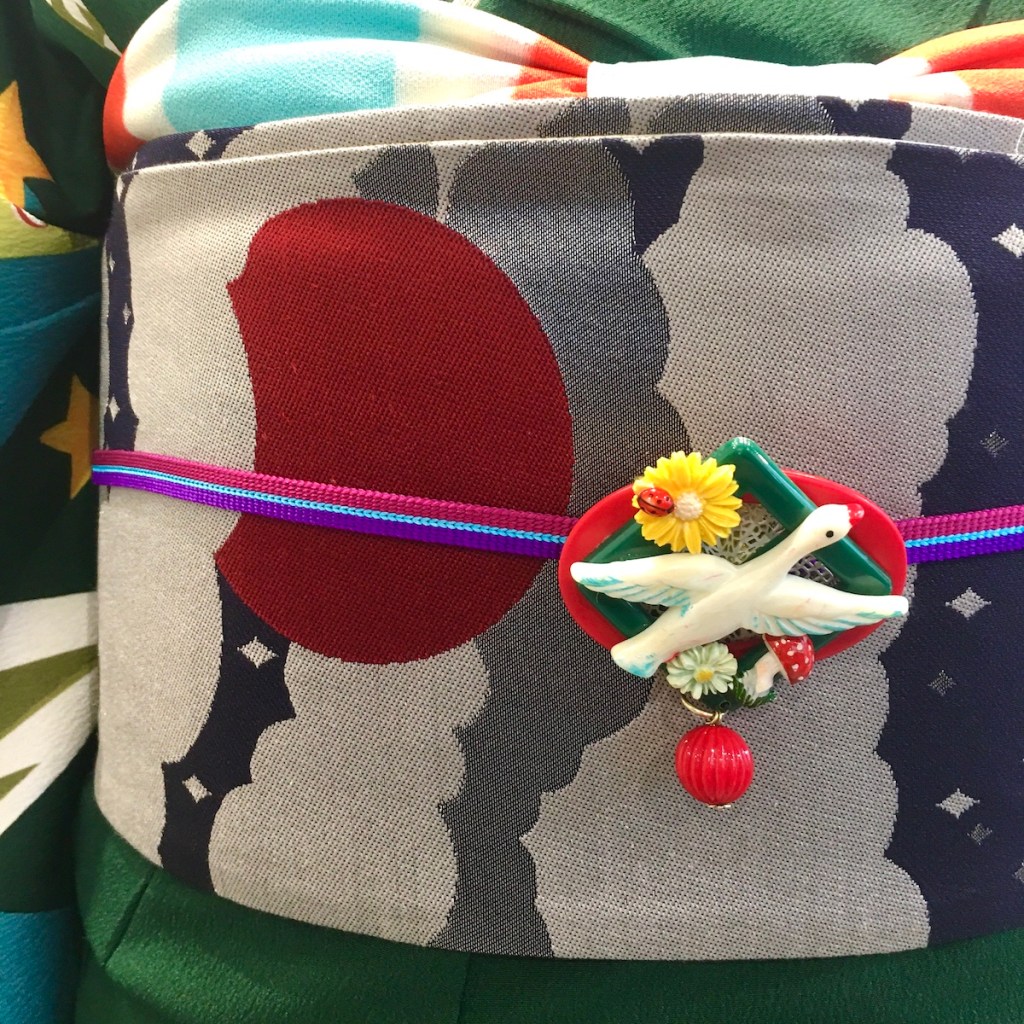
On February 28th, I attended the ‘Kimono Magic Society: Kimono Bash’ event held at the Royal College of Art in London. The Kimono Magic Society consists of the designers and creators behind contemporary kimono fashion brands Rumi Rock, Modern Antenna, Tamao Shigemune (重宗玉緒) and iroca, who all have their designs featured in the ‘Kimono: From Kyoto to Catwalk‘ exhibition currently held at the Victoria & Albert Museum. The event mainly consisted of a fun and practical exploration of contemporary kimono. Besides being able to try on kimono and obi, attendees could also get their hands on customising their own obi to go with a coordinate put together by one of the brands. Below you can see my and a fellow attendees attempt in styling an obi for a Rumi Rock outfit.
Another part of the event was the ‘Kimono in Conversation’ discussion facilitated by Sarah Cheang, senior tutor at the Royal College of Art, Elizabeth Kramer, senior lecturer at Northumbria University, Clare Johnston, a textile designer based in London, and the infamous Sheila Cliffe, a kimono researcher, stylist and influencer based in Tokyo. The conversation centered around kimono as a fashionable garment, with the panelists sharing their individual encounters with kimono, and engaging with the audience on questions of the past and current state of kimono in Japan.
One of the most interesting insights that came out of the panel for me was this statement by Sheila who commented on the body and kimono, challenging a long held stereotype on the garment: ‘The idea that the kimono ignores the body is a misunderstanding. The kimono does not ignore the body. In fact, the fitting in Western clothes is done at the cutting stage; you cut the clothes to fit the body. So, unless you have something tailor-made, it actually does not fit the body. YOU have to fit into a size 12, or size 14. […] Whereas kimono, there is fitting. The fitting takes place in the dressing process, not the cutting process. And because it takes place in the dressing process, when you fold and wrap, you can fit it perfectly to the body without cutting anything.’ The idea that kimono ignores the body never sat right with me, but I could not precisely articulate why. Sheila managed to completely break down the idea however, presenting a highly convincing argument which I will now use as well!
Overall, this was a very engaging and fun event which managed to find a good balance between physical engagement with the garments, as well as some contextualising debates on them. It would be great to keep the conversation going and have more encounters like this in the near future!
The Kimono Magic Society also hosted a pop-up exhibition and shop at Sway Gallery in East London, which I will cover in my next blog post so stay tuned!



























 DR CAROLIN BECKE