Designing the 2.5D Idol: Fashion, Character, and Stage Energy (Part 1/2)

What makes Japanese idol costumes so visually distinctive, and how are they actually designed? Drawing on an interview with fashion designer Mikio Sakabe, this two-part article explores how clothing for idol groups such as Dempagumi.inc operates between fashion, performance, and character design.
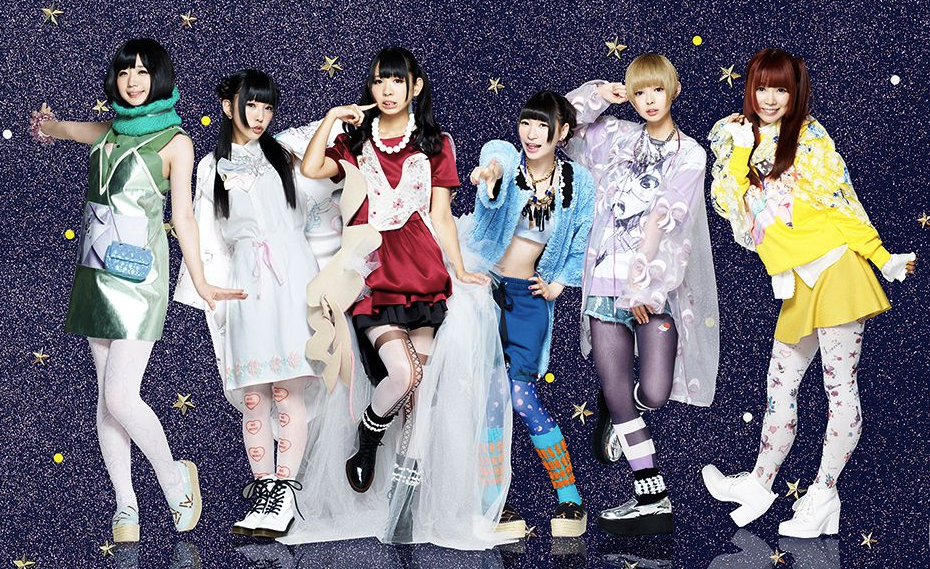
Promotional Image from Dempagumi.inc’s 12th single ‘Demparty Night’ (でんぱーりナイト, 2015).

Why Idol Costumes Matter

Japanese idol groups are instantly recognisable not only through their music, choreography, or group identities; they are also recognisable through their striking stage costumes. Bright colours, elaborate silhouettes, and coordinated outfits create a strong visual identity. This identity allows fans to recognise individual members even from a distance.

Unlike everyday fashion, however, these costumes are designed for a very specific environment: the stage. They must be visually legible under strong lighting. They should be dynamic enough to move beautifully during choreography. The outfits must also be distinctive enough to convey each performer’s character at a glance.

The relationship between fashion design and idol culture is therefore closer than it may initially appear. Designers working with idol groups must translate concepts, personalities, and subcultural references into garments that function both as clothing and as visual storytelling devices.

During my doctoral fieldwork on Japanese fashion cultures in 2018, I spoke with the Tokyo-based designer Mikio Sakabe (坂部三樹郎). His work has frequently intersected with Japan’s pop-cultural landscape. Among his many projects, Sakabe designed costumes for the idol group Dempagumi.inc (でんぱ組.inc), a group known for its strong connection to otaku culture and its distinctive, highly stylised visual aesthetic. Our conversation offered an insightful glimpse into the creative process behind idol costume design. It also revealed the challenges of translating character, movement, and subcultural identity into clothing.
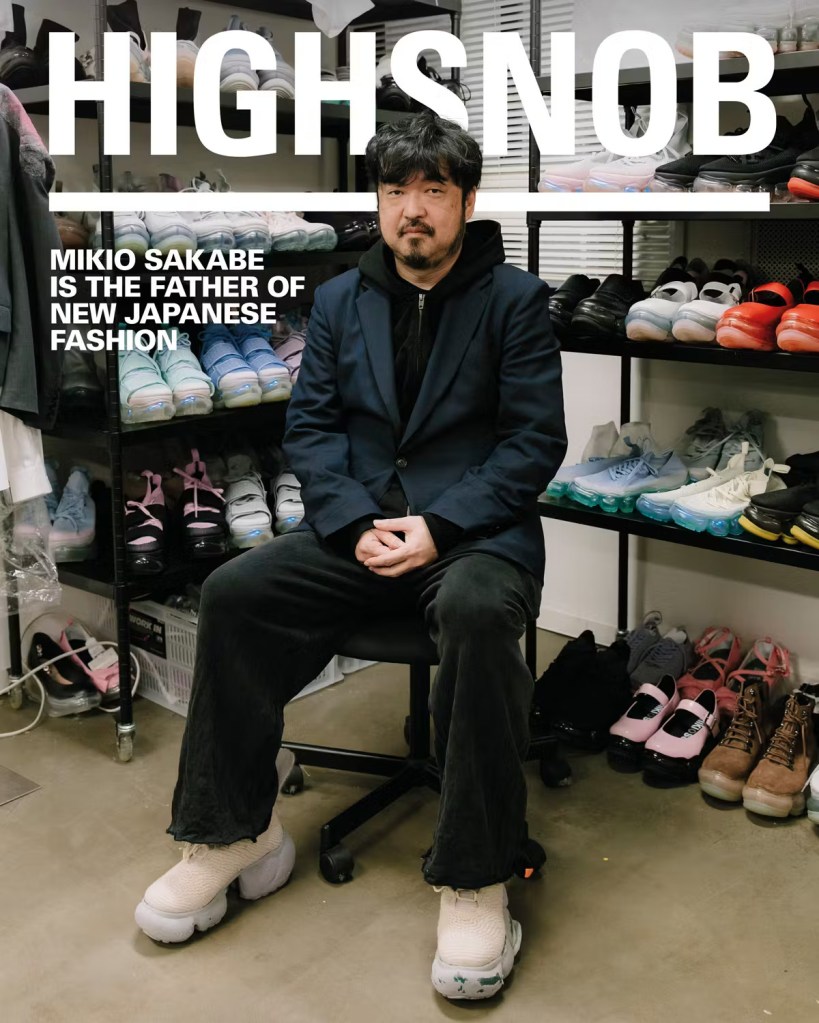
Mikio Sakabe on the cover of HIGHSNOBIETY magazine in 2023, photographed by Momo Angela.

From Fashion Design to Idol Costumes

Before becoming involved in idol costume design, Mikio Sakabe first built his career within the international fashion world. After studying fashion design at the Royal Academy of Fine Arts, he spent several years in Europe before returning to Japan in 2007 to establish his own brand.

Reflecting on his time abroad, Sakabe described Belgium as an interesting place to study fashion precisely because it occupied a somewhat ambiguous position within the European fashion landscape. Unlike fashion capitals such as Paris or Milan, Belgium did not carry the same historical weight. This lack of historical significance made it easier for him, as a Japanese designer, to find his own position there.

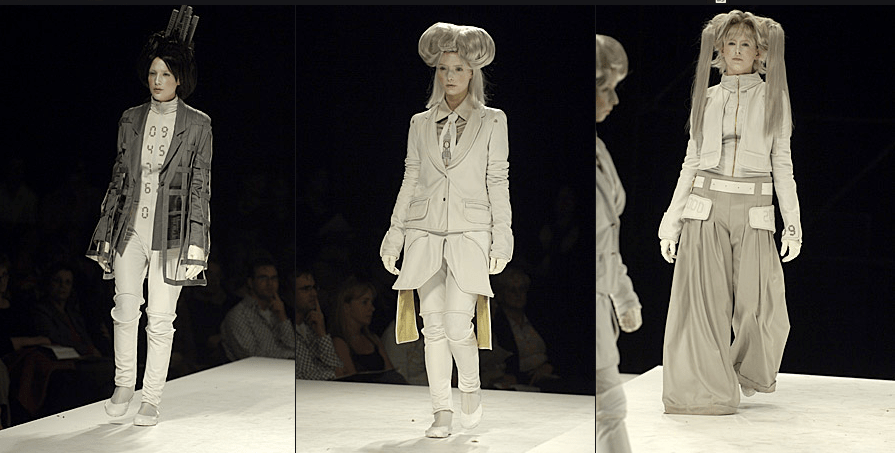
During his studies, Sakabe was already experimenting with visual influences drawn from Japanese popular culture. His graduation collection titled ‘20XX A/W Collection (@-@)‘ incorporated elements inspired by anime and manga aesthetics. Rather than simply referencing these media iconographically, he was interested in translating their visual qualities, particularly their flatness and graphic textures, into fabric, pattern, and tailoring. As he explained, animated images are essentially two-dimensional surfaces, making them surprisingly adaptable as textile textures and design motifs.
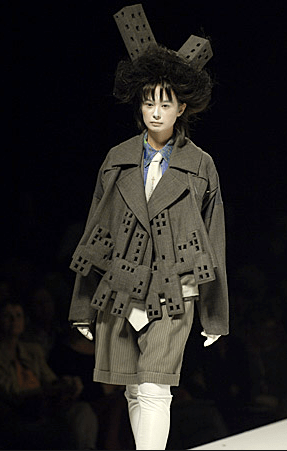
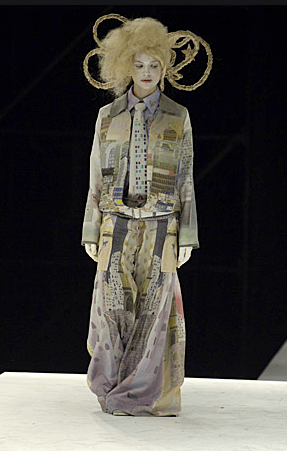
Ensembles from Mikio Sakabe’s graduation collection ‘20XX A/W Collection (@-@)‘, 2006. Photography : Etienne Tordoir.

After returning to Japan, Sakabe’s path eventually crossed with the producer Maiko Fukushima known as Mofuku-chan, who was looking for a designer to create costumes for the idol group Dempagumi.inc. At that time, Sakabe admitted that he was not particularly familiar with idol culture. His interest grew only after witnessing the group perform live at Dear Stage (秋葉原ディアステージ), the Akihabara venue closely associated with the group’s early activities.

What fascinated him most was not only the performance itself, but the relationship between the idols and their audience. The coordinated fan dances known as otagei (オタ芸) created a powerful sense of unity between performers and spectators. For Sakabe, this intense collective energy was strikingly different from the atmosphere typically associated with fashion shows or the fashion industry more broadly. Observing this dynamic sparked his curiosity and ultimately led him to explore how fashion design could intersect with idol culture.


The Stage as a Design Environment

Designing costumes for an idol group requires a very different approach from creating garments for a fashion collection. As Sakabe explained, the conditions under which these clothes are seen fundamentally shape the design process. Unlike runway pieces or everyday garments, idol costumes are created specifically for performance in front of large audiences.

The needs are totally different from my own brand,” Sakabe noted. “It’s not something you would wear on the street.” Instead, costumes must function within the visual and physical dynamics of a live performance. On stage, idols are viewed simultaneously by hundreds or even thousands of spectators, often from a considerable distance. As a result, details that might work in everyday clothing can easily disappear. To compensate for this, elements are frequently exaggerated: silhouettes may be larger, decorations more pronounced, and colours more vivid.

Toru Ishii (2017), Image from 「でんぱ組.inc」がWi-Fi普及団体の公認アイドルに on Ketai Watch.

A good example of this can be seen in the school uniform-style costumes designed for Dempagumi.inc. At first glance, they reference a familiar garment; a seifuku-style school uniform, but this recognisable base is transformed through highly stylised elements. Each outfit features bold, sketch-like prints in a distinct colour, often resembling hand-drawn anime illustrations applied directly onto the fabric.

These graphic designs are not subtle details; rather, they dominate the garment, ensuring visibility even from a distance. At the same time, coordinated silhouettes, pleated skirts, sailor-style collars, and ribbon ties maintain a sense of group cohesion, while colour-coding allows individual members to be easily distinguished.

The contrast between the everyday and stage versions of these uniforms further underscores this transformation. The original uniforms use simple, matte white cotton fabric, giving them a modest, traditional appearance. On stage, however, the materials are elevated with shimmering, reflective fabrics, sheer sleeves, and gold embellishments, creating a dazzling visual effect (see images below).
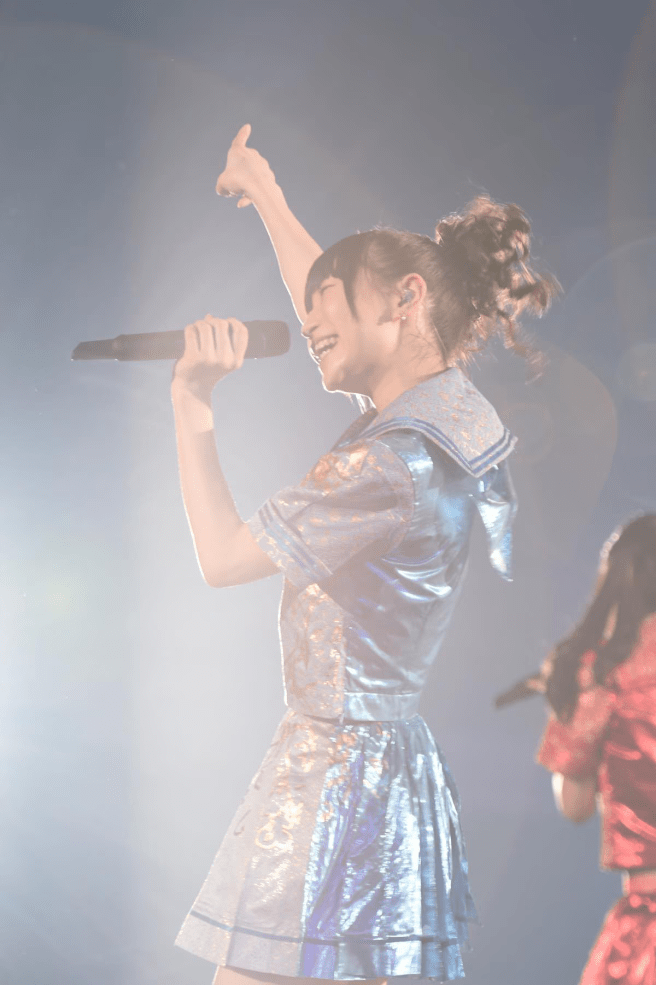
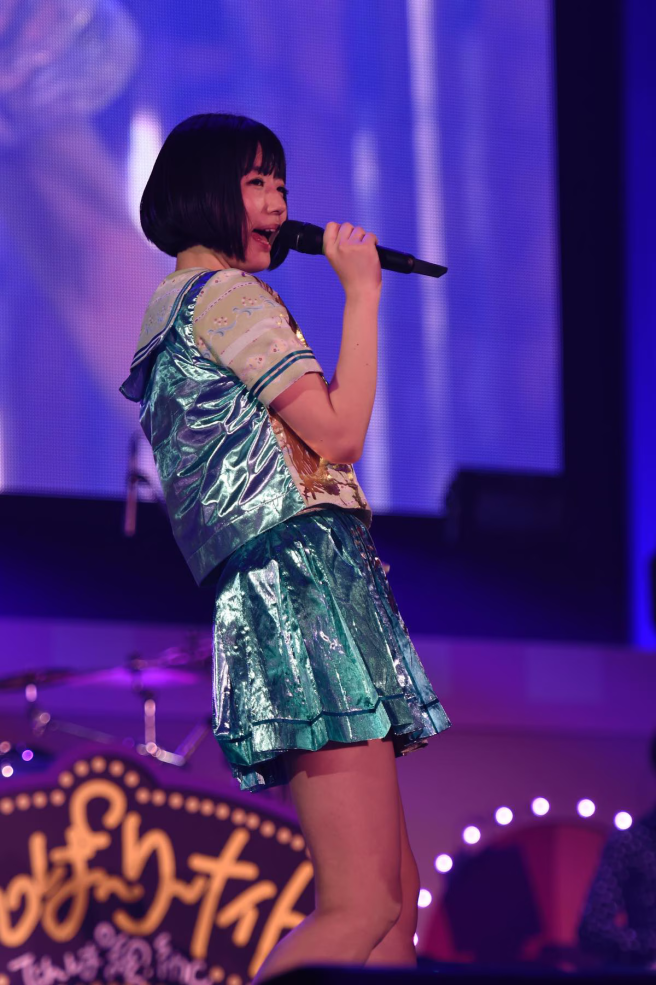
Movement is another crucial factor. Because idol performances involve energetic choreography, costumes must be designed to respond visually to motion. Mikio Sakabe therefore pays close attention to how fabrics behave when the performers dance; whether they sway, ripple, or catch the light in ways that enhance the performance. In the case of these uniform-inspired outfits, the pleated skirts and shimmering materials create dynamic movement, amplifying the visual rhythm of the choreography.

Equally important is the ability of the costume to communicate character instantly. In a group setting, each member needs to remain visually recognisable even within a coordinated ensemble. Sakabe emphasised that it is essential for audiences to grasp a performer’s character “at a glance.” The use of distinct colours, combined with expressive printed motifs, helps to create immediately identifiable personas.

This strategy is commonly used in J-pop idol performances, where individual members are often assigned specific colours that are associated with their perceived personality or role within the group. Costumes thus function not only as clothing but also as a form of visual shorthand, helping to define the identity of each member while still maintaining the overall aesthetic of the group.
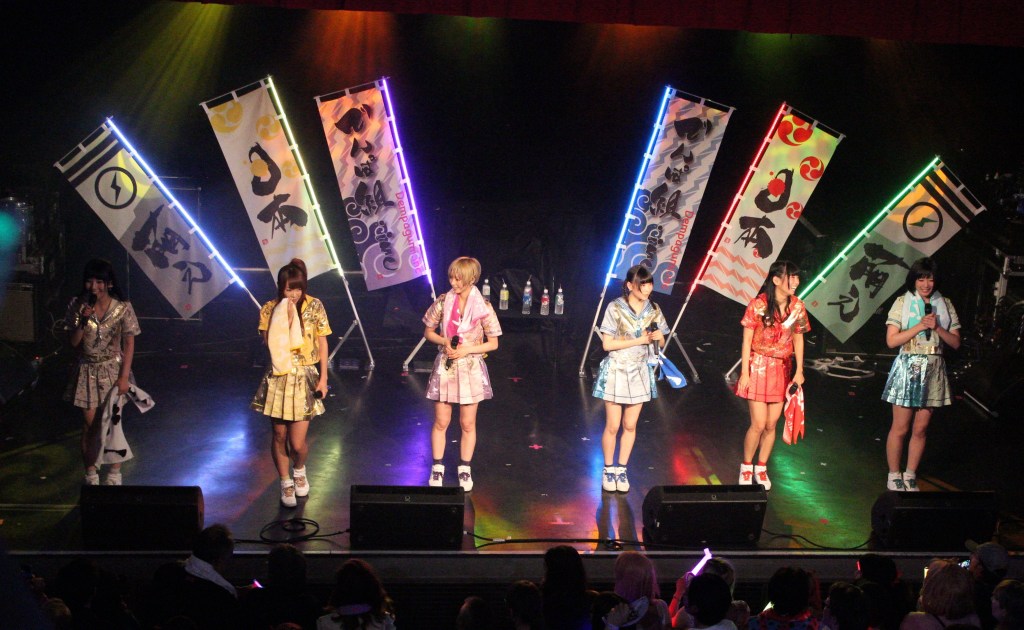
Christopher Woods (2015), Dempagumi.inc at HYPER JAPAN Summer 2015, CC BY-SA 4.0.

In this sense, these school uniform designs exemplify how idol costumes operate between familiarity and exaggeration: they draw on everyday clothing as a reference point, while transforming it into something highly performative, graphic, and unmistakably tied to the stage.


As the example of Mikio Sakabe demonstrates, idol costumes are shaped by a set of design principles that differ significantly from those of everyday fashion. Created for the stage, they must prioritise visibility, movement, and immediate recognisability.

At the same time, they are deeply embedded in the specific cultural context of Japanese idol performance, where visual identity plays a crucial role in shaping the relationship between performers and their audiences. Sakabe’s collaboration with Dempagumi.inc highlights how costume design operates at the intersection of fashion, performance, and popular culture.

In the second part of this article, I will explore more closely how idol costumes function as tools of character creation.

An Introduction to Kimono Styles of Japan‘s Taisho Period (1912-26): The Taisho Roman Style of Female Students

At the intersection of East and West, tradition and innovation, the Taishō period (1912–1926) saw the emergence of bold new kimono styles that reflected Japan’s rapidly changing society. Known as Taishō Roman, this aesthetic blended romantic ideals, Western influences, and a playful reinterpretation of traditional dress. In this article, I revisit a demonstration I co-hosted with Sonoe Sugawara of Furuki Yo-Kimono Vintage, where we introduced the unique look of the Taishō Roman schoolgirl, complete with high-collared blouses, red hakama, and vibrant, eye-catching kimono.

This article is 860 words long.
🕒 Estimated reading time: 4–5 minutes.

At the Yokimono Japanese Christmas Market in December 2022, I collaborated with my good friend Sonoe Sugawara of Furuki Yo-Kimono Vintage on a demonstration and talk of Taisho period kimono styles. This turbulent era gave birth to some eclectic kimono styles which were based on a new approach towards Japanese and Western modes of dress. One of the styles we introduced was the Taisho Roman (大正ロマン) style of female students.

Sonoe demonstrated how to recreate the so-called ‘Taisho Roman‘ style, also known as the hai-kara style, with a 1920s silver and purple vintage kimono and red hakama from her shop.

In general, Taisho Roman (大正浪漫, or 大正ロマン) refers to the ideals of romanticism which were expressed by a quirky reinterpretation of traditional culture during this time. Kimono of this decade often featured flowing, asymmetrical designs, with playful and whimsical motifs such as flowers, birds, and butterflies. It was also common to see the use of luxurious fabrics such as silk and satin, and the incorporation of Western-style elements such as lace and embroidery. The Taisho Roman kimono style became known for its bright colours and bold, graphic patterns such as the yabane (矢羽, arrow feathers) pattern.

Yabane pattern in purple. Image Source: nippon.com

The word hai-kara (ハイカラー) derives from the word ‘high collar’ on the other hand and refers to the, for Japanese eyes, unusual collar style of shirts of this time. Victorian-style blouses became popular with young Japanese women of the middle class who wore these as undergarments, with the collar and cuffs peaking out under the kimono. The term also more generally meant ‘to dress in the latest western fashion‘ which demonstrates the fashion-forward way of thinking of these young women.

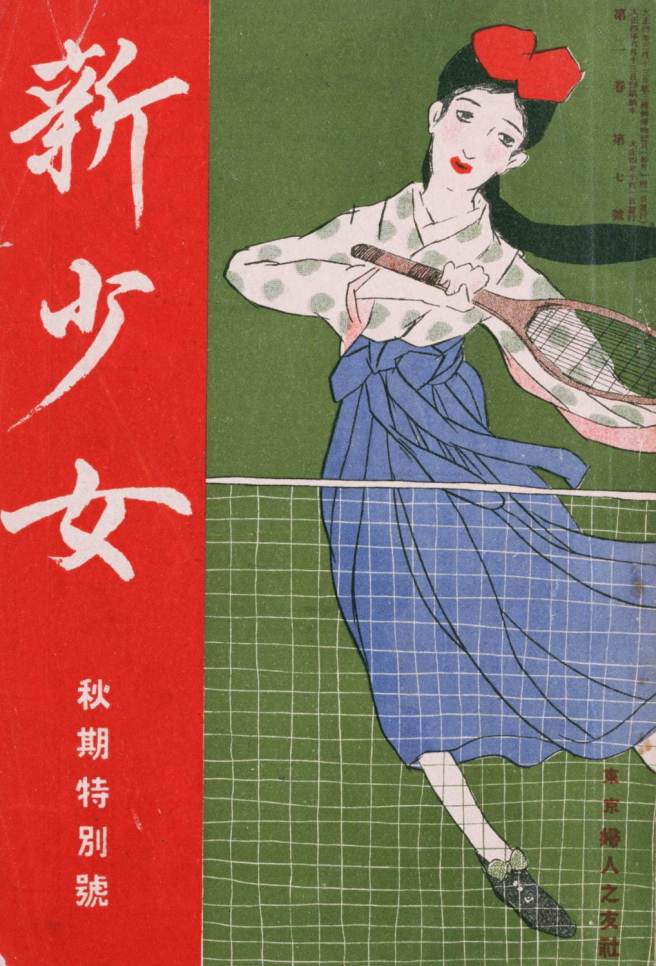
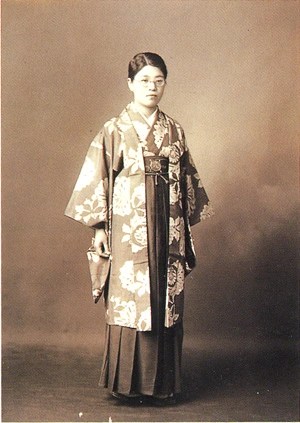
Besides blouses, women started to adopt hakama which were previously exclusively reserved for men. With more women entering education, female students were in need of a uniform which allowed them to participate in all school activities on the same level as the boys. Debates on movement and the body resulted in the decision to modify men‘s hakama trousers by turning them into hakama skirts for young women.

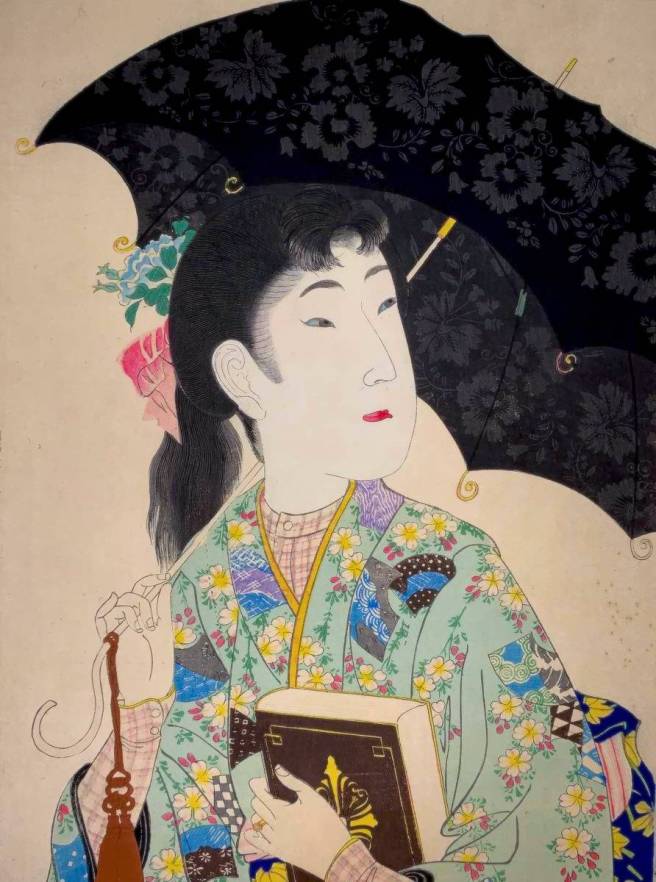
Toyohara Chikanobu (楊洲周延),「真美人 十四 洋傘をさす女学生」(Meiji 30, 1897).
© Ōta Memorial Museum of Art (太田記念美術館), Tokyo.
Young women wearing a short skirt, umbrella and lace shoes. Source unknown.

This hakama style was considered to allow for unrestricted movements of the hip and legs. This was particular important in a time when physical education became part of the school curriculum, and sports of all kinds became popular leisure activities. Shoes also played a part in this, with the traditional sandal footwear of geta being replaced by lace shoes and boots. The new mode of transportation, the bicycle, became favoured and later representative of the forward-thinking young men and women who were considered to built a bright future for the Japanese nation.

Yumeji Takehisa (竹久夢二), ‘Tennis’ (post-1900s).
Female student wearing a meisen kimono and haori combined with a women‘s hakama. Source unknown.

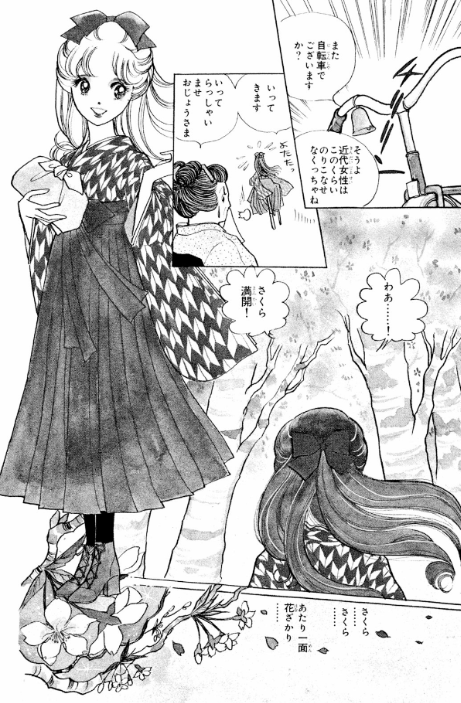
Another popular reference of the style is the manga Haikara-San: Here Comes Miss Modern (はいからさんが通る haikara-san ga tōru, 1975-77) by Waki Yamato. The manga that tells the story of Benio Hanamura, a young woman living in Tokyo in the 20th century. Benio is laballed as a ‘tomboy‘ with a big interest in Western culture and fashion. This sets her apart from and often creates a conflict with the more conservative Japanese women of her time. As a female student, she often wears a yabane-patterned furisode kimono and hakama combination as depicted below.

Cover picture of はいからさんが通る (1975-77) by Waki Yamato.
Panel on page 6 of はいからさんが通る (1975-77) by Waki Yamato.

Overall, the Taisho Roman kimono style was a reflection of the era’s fascination with modernity, individualism, and self-expression, and represented a departure from the more rigid and feminine conservative styles that had come before it.

Cardiff-Japanese Lecture Series: ‘Kimono (and) Fashion in Japan’

This online public lecture titled ‘Kimono (and) Fashion in Japan’ is part of the Cardiff-Japanese Lecture Series which aims to explore and understand aspects of language learning for those studying Japanese language and culture at Cardiff University, as well as various learners, teachers and researchers with an interest in Japan. The event is funded by the Japan Foundation, London.

Abstract
Both inside and outside of Japan, kimono is commonly framed as the national costume of Japan, bestowing the garment with notions of tradition and stability. However, ever since the establishment of a widespread fashion system in the Edo period (1603-1868), kimono was worn in different ways to communicate individual and social characteristics such as status, occupation, gender and taste.

This talk sheds some light on the fashionable influences on the garment by examining the following questions; how was kimono marketed by members of the merchant class, who became affluent during the Edo period? In which way did the moga (モガ, ‘modern girls’) of the Taisho period (1912-1926) wear the garment? How is the retro style, which gained prominence due to magazines such as Kimono Hime (Shōdensha, 2003-2018) and Kimono Anne (TAC Shuppan, 2019-), connected to the popularity of kimono as an everyday garment in recent decades?

Watch the recording of the lecture to find out more!

Discovering Tōkyō’s Harajuku: History, Fashion, and Cultural Evolution

Harajuku is the epicenter of Japanese street fashion, where young people express their individuality through unique outfits and extravagant styles. This lively Tōkyō district, situated between Shibuya and Shinjuku, has transformed from a modest residential area into a global symbol of creativity and youth culture. Harajuku is not only a shopping paradise but also a cultural melting pot, constantly evolving and setting new trends.

I first visited Harajuku in December 2007, at the beginning of my six-month language exchange stay. This was before the wide availability of Google Maps, so I had little idea of what the district would look like. The area has changed significantly since then, but at its heart, it remains the same vibrant and eclectic hub of creativity and culture I fell in love with back then.

Let’s first dive into the history of Harajuku, which dates back to the late 19th century. The name ‘Harajuku’ (原宿) literally means “meadow lodging” and refers to the area’s rural past, originally known for its Shinto shrines. During World War II, Harajuku was almost entirely destroyed by bombings. After the war, reconstruction began, and the district became home to many American military personnel and their families, which increased the influence of Western culture. In the 1960s, facilitated by the 1964 Tōkyō Olympics, Harajuku began to develop into a meeting place for creative and fashion-conscious youth. This transformation continued over the following decades, shaping it into the vibrant center of youth culture and street fashion that it is today.

The magazine FRUiTS, founded in 1997 by Japanese photographer Aoki Shoichi, has captured the diversity and creativity of Harajuku fashion for years. Through the publication, Harajuku’s fashion became not only a local but also an international symbol of creative freedom and non-conformist style, significantly influencing global street fashion. Althoug being discontinued in 2017, FRUiTS continues to show the style(s) of Harajuku to the world through its Instagram presence.

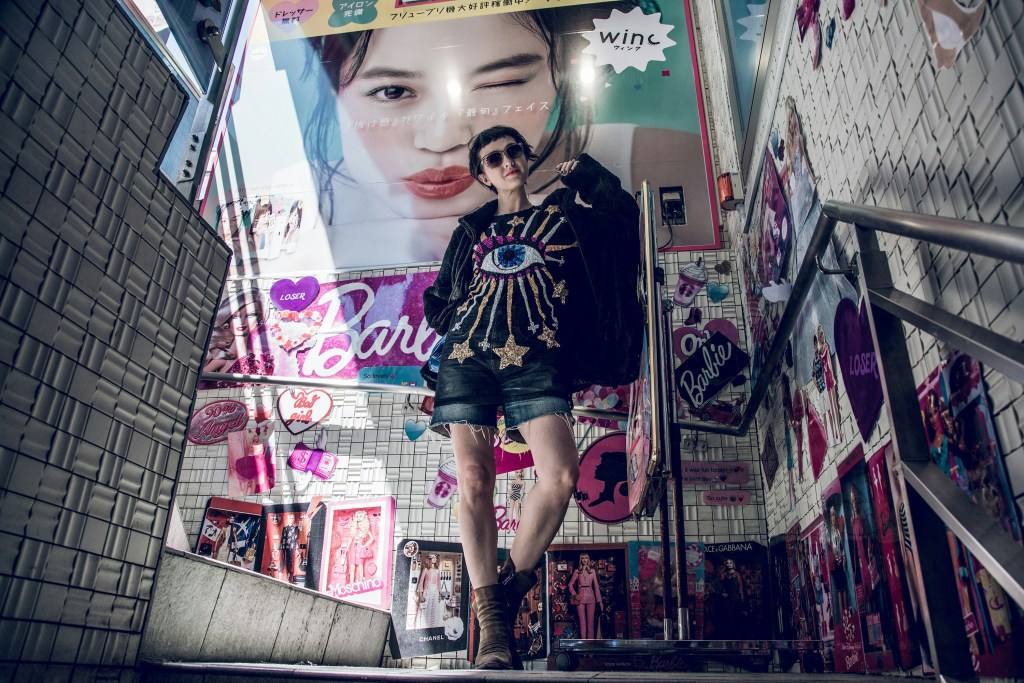
Image by Style Tomes on Unsplash.

For fashionistas feeling inspired, there are three main destinations: Takeshita-dōri, Omotesandō, and Ura-Harajuku. Let’s take a closer look at these three iconic sub-districts.

Takeshita-dōri

Takeshita-dōri in Harajuku is the heart of Japanese street fashion. This lively street, just a few steps from Harajuku Station, is lined with fashion boutiques, creperies, and accessory shops offering a plethora of affordable and colorful items. Especially popular among young people, Takeshita-dōri embodies the unique Harajuku style, characterized by creative, eye-catching, and often quirky fashion. Here, the cuteness aesthetic of kawaii meets individual eccentricity, creating an unmistakable atmosphere that attracts fashion enthusiasts from all over the world.

The street is not only a shopping paradise but also a place where trends are born. Singer Kyary Pamyu Pamyu (きゃりーぱみゅぱみゅ) epitomizes this style like no other; bold accessories, daring color combinations, and unconventional designs define her look. With the song ‘HARAJUKU IYAHOI (原宿いやほい),’ she has also given the district its own anthem in 2017, further highlighting Takeshita-dōri’s significance in the global fashion world.

‘HARAJUKU IYAHOI’ 「原宿いやほい」by Kyary Pamyu Pamyu (きゃりーぱみゅぱみゅ).

Omotesandō

Omotesandō is an elegant, tree-lined avenue in Harajuku, often referred to as the ‘Champs-Élysées of Tōkyō.’ In contrast to the lively and eccentric Takeshita-dōri, Omotesandō offers a more sophisticated and refined atmosphere. Here, luxurious boutiques, designer stores, and exquisite concept shops line the street, offering a wide range of high-quality fashion items and accessories.

In addition to its exclusive shopping options, Omotesandō is also known for its top-notch restaurants and cafés. From upscale Japanese dining to international gourmet cuisine, there is a variety of culinary experiences to be had. Popular cafés like Omotesandō Koffee, known for its minimalist style and high-quality coffee, and Anniversaire Café, renowned for its delicious desserts and stylish ambiance, attract both locals and tourists.

Image by Susann Schuster on Unsplash.

Ura-Harajuku

Ura-Harajuku, on the other hand, is a place for explorers and individualists seeking unique pieces and inspiring spots. This area is known for its independent boutiques, vintage shops, and innovative cafés, catering to an alternative and often avant-garde fashion taste. In its quieter yet equally creative atmosphere, many iconic Japanese streetwear brands, such as BAPE (A Bathing Ape) and Undercover, got their start.

Second-hand and vintage shopping are central elements of Ura-Harajuku. The appeal of second-hand fashion lies not only in the uniqueness and quality of the items available but also in the increasingly significant sustainable shopping philosophy. Reusing and rediscovering clothing not only supports the environment but also allows for the creation of individual and distinctive outfits. The vintage shops in Ura-Harajuku are renowned for their creative clothing displays and inspiring styling ideas, encouraging visitors to explore and experiment with their personal style.

Image by Jules Morel on Unsplash.

The diversity of fashion, the vibrant youth culture, and the unique atmosphere make Harajuku a captivating place that enchants visitors from around the world. From the colorful Takeshita-dōri and the elegant Omotesandō to the alternative lanes of Ura-Harajuku, this district offers something for every taste. Harajuku remains an essential destination for anyone wanting to experience the most fashionable site of Tōkyō.

This article was first published on the German-Japanese online magazine JAPANDIGEST: https://www.japandigest.de/reisen/tourismus/sehenswuerdigkeiten/harajuku-tokyo/.

Header image by Jezael Melgoza on Unsplash.