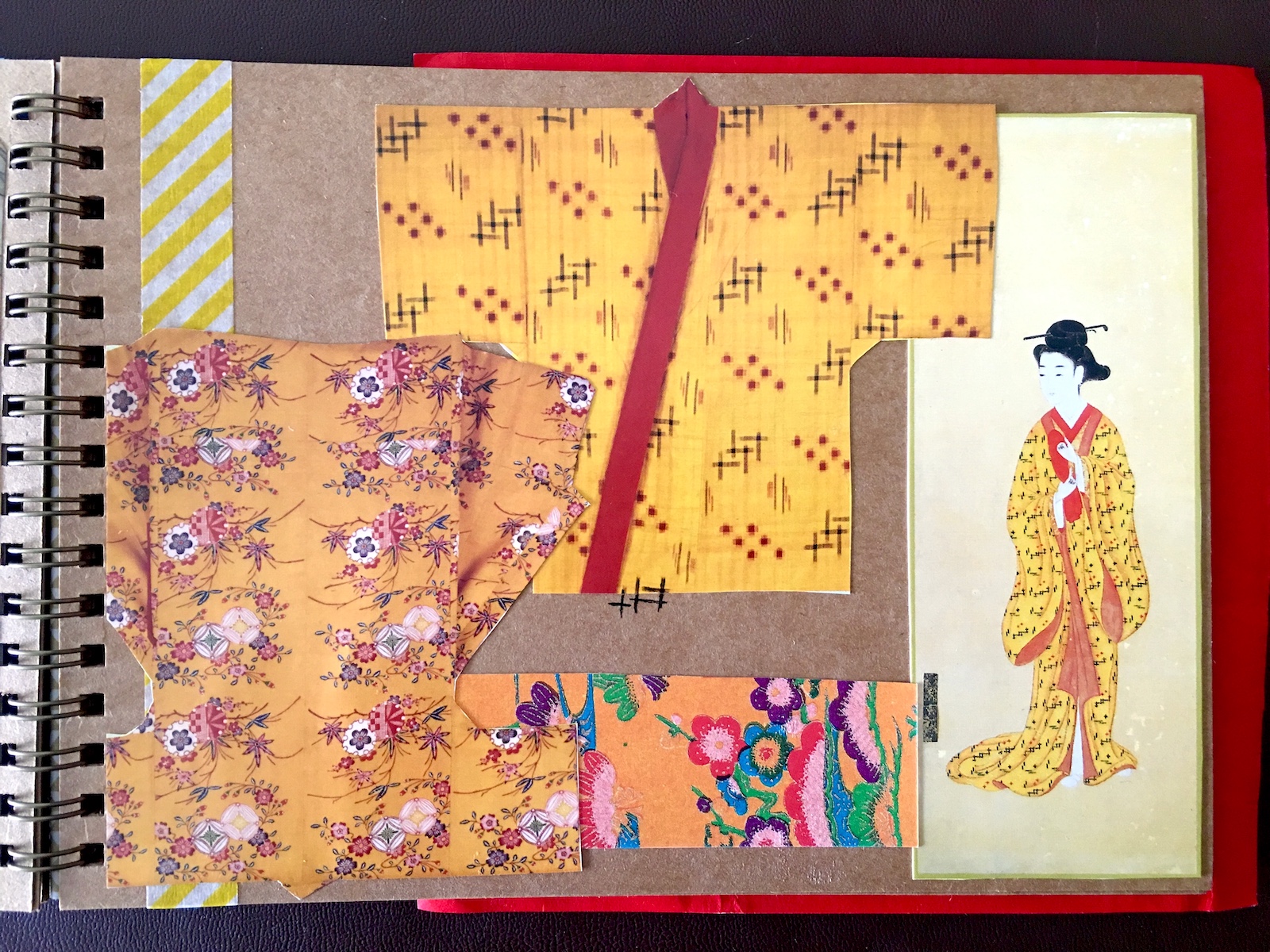
One of the hobbies I have pursued since being quite young is scrapbooking. I love to visually capture holidays or special occassions in the form of collages, and can’t get enough of stationary goods in general. The two pages below are from the scrapbook I worked on during my 6-month period of fieldwork I conducted in Japan in 2018. It was the first time I visited the most southern island of Japan, Okinawa, and was immediately captivated by the bright colours and bold patterns of so-called bingata (紅型) kimono.
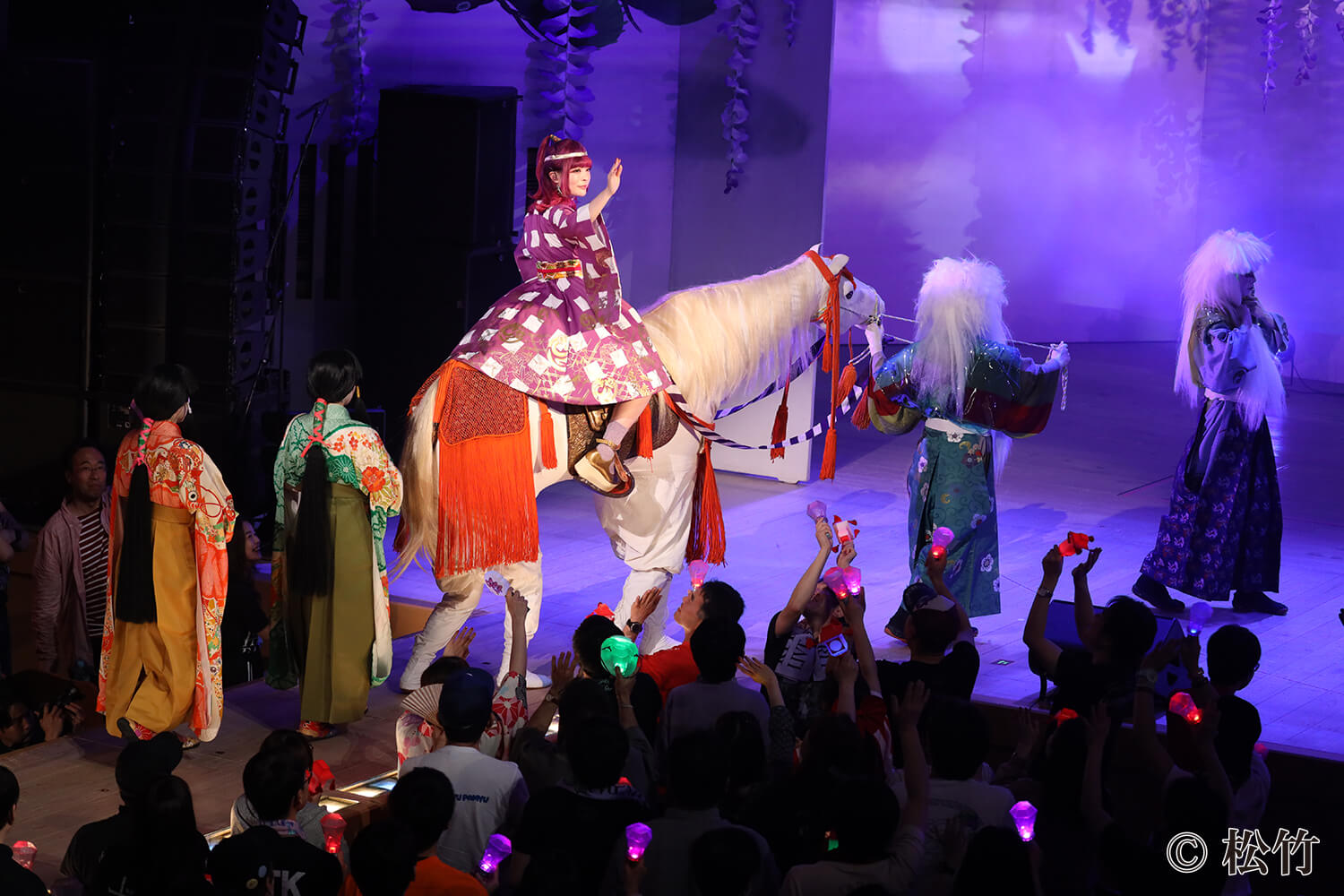
Japanese pop artist Kyary Pamyu Pamyu (きゃりーぱみゅぱみゅ) who is known for her visual and musical style blending historical Japanese and more contemporary kawaii elements performed at the legendary kabuki theatre Minami-za (南座) in Kyoto yesterday. The venue was errected during the Edo period in 1610 at a time when kabuki performances enjoyed increasing popularity among the growing middle class. The art form itself is famous for only allowing men acting in male and female roles on stage.
The artist hence somewhat broke conventions when performing songs from her latest album ‘Japamyu’ (じゃぱみゅ) in front of a traditional kabuki background screen during this one-time performance titled ‘Kyary Kabuki Kabuki’ (きゃりーかぶきかぶき). The singer herself was dressed in a Heian period-inspired kimono with her background dancers, female and male, donning conventional kabuki costume and make-up. Having received a proper training in the art of kabuki performance, the choreography incorporated the mie (見得) pose and roppo (六方) walk, as well as props such as so-called sensu (扇子) hand fans and sturdy bangasa (番傘) umbrellas.
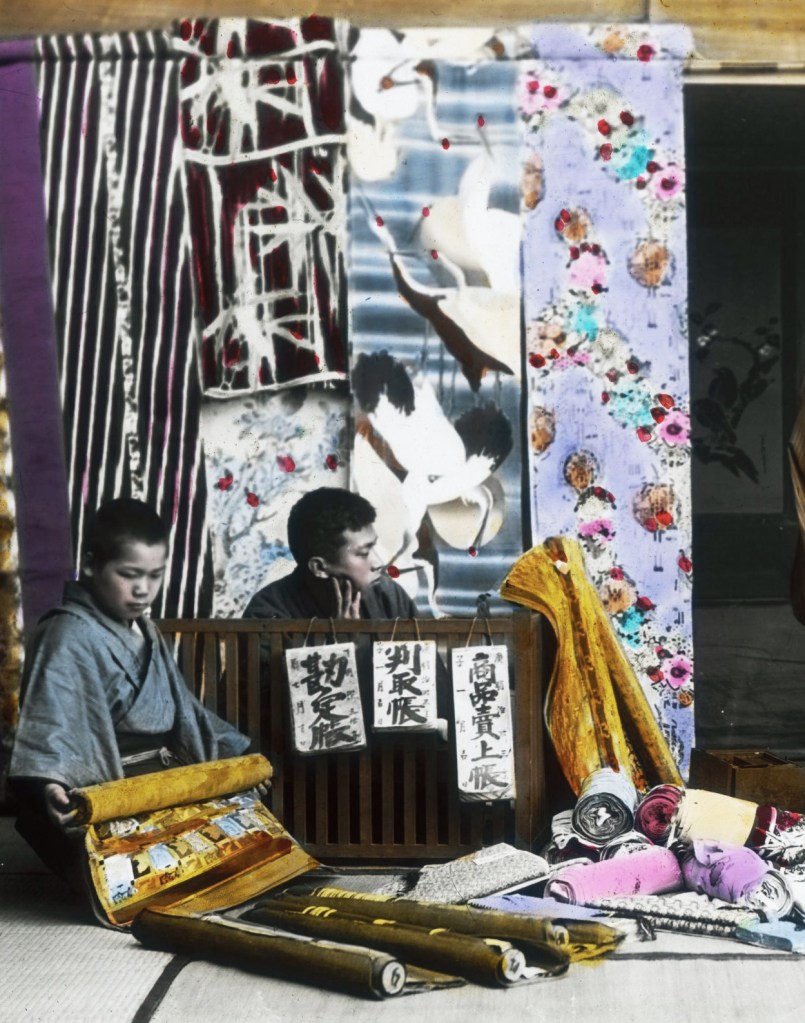
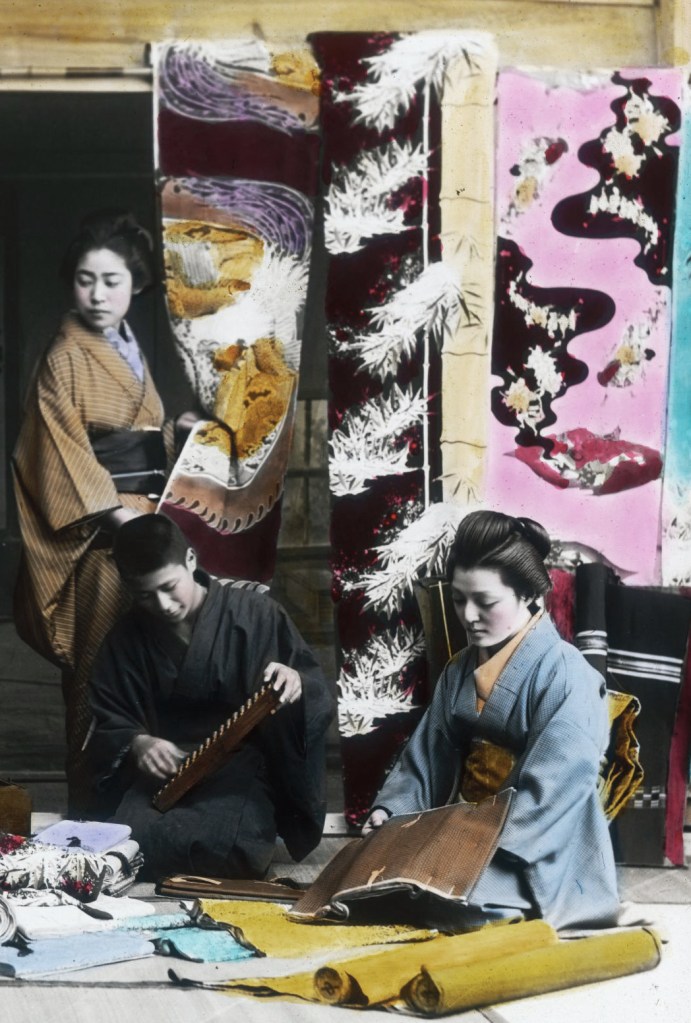
These images by Kobe-based photographer Teijiro Takagi (高木庭次郎) depict a so-called gofuku-shō (呉服商), a drapery store, during the Meiji (1868-1912) or Taishō period (1912-26). Panels of fabric are rolled out on the floor and hung up on the background, with customers examining the pieces of cloth they would like to have turned into kimono. Made from single bolts of cloth in a two-dimensional, flat manner, kimono are relatively simple garments to sew. Gofuku-shō did not just sell kimono fabric, but also orchestrated the extensive network, which included spinners, weavers, dyers, embroiderers, specialist thread suppliers, stencil makers and designers, involved in the creation of the individually commissioned garments₁. Some of Japan’s famous department stores such as Mitsukoshi originally started their business activities as gofuku-shō.
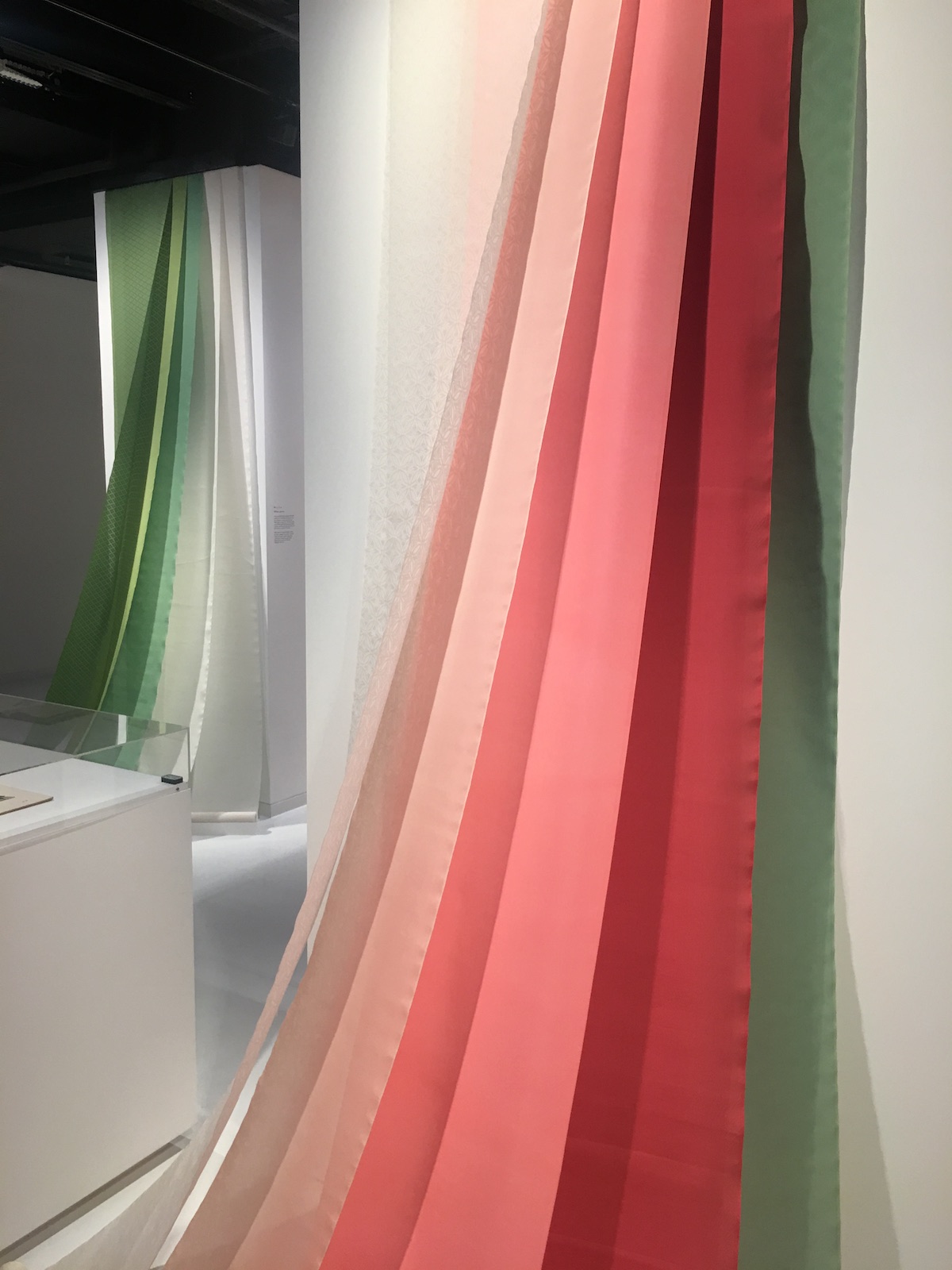
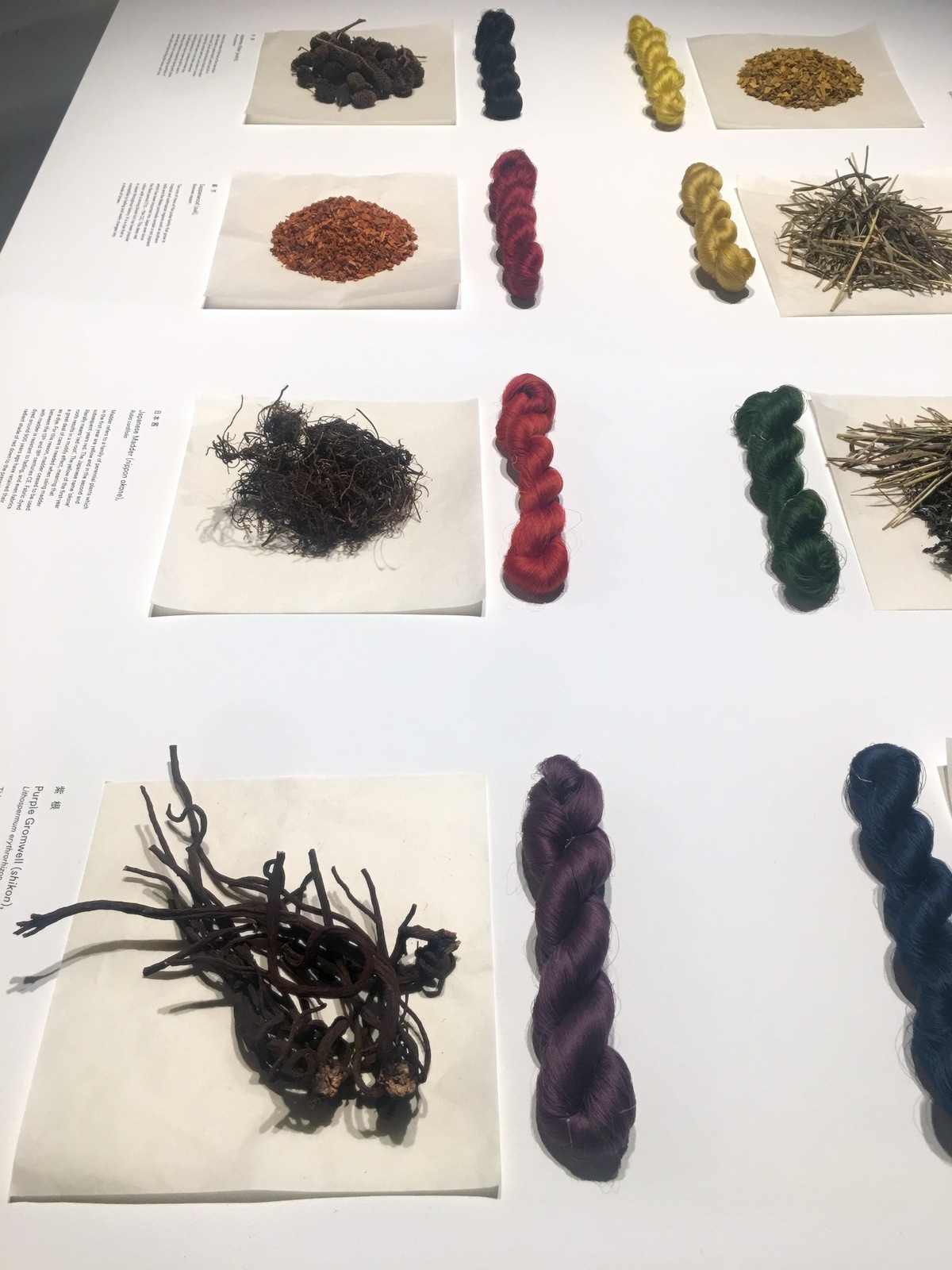
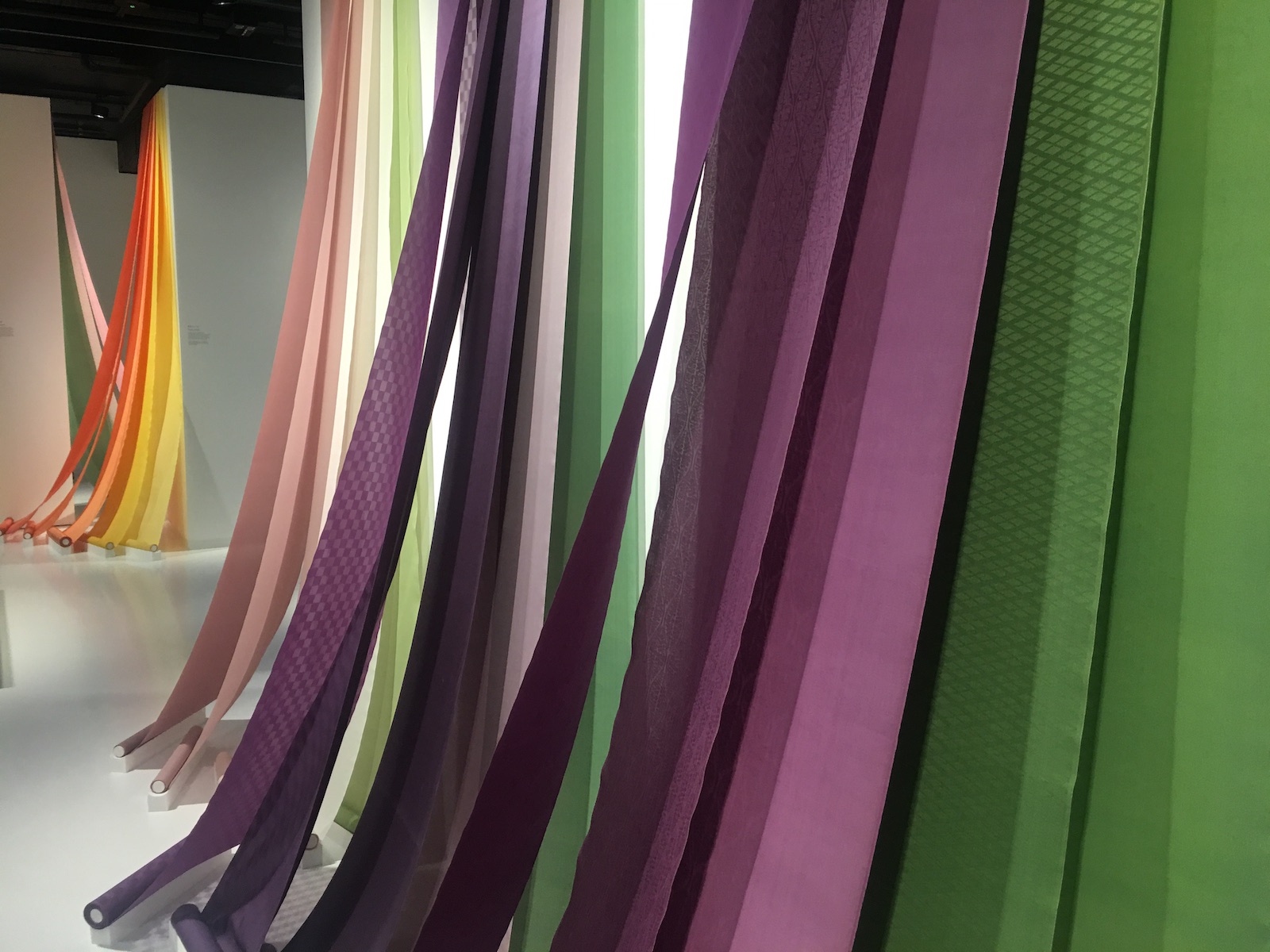
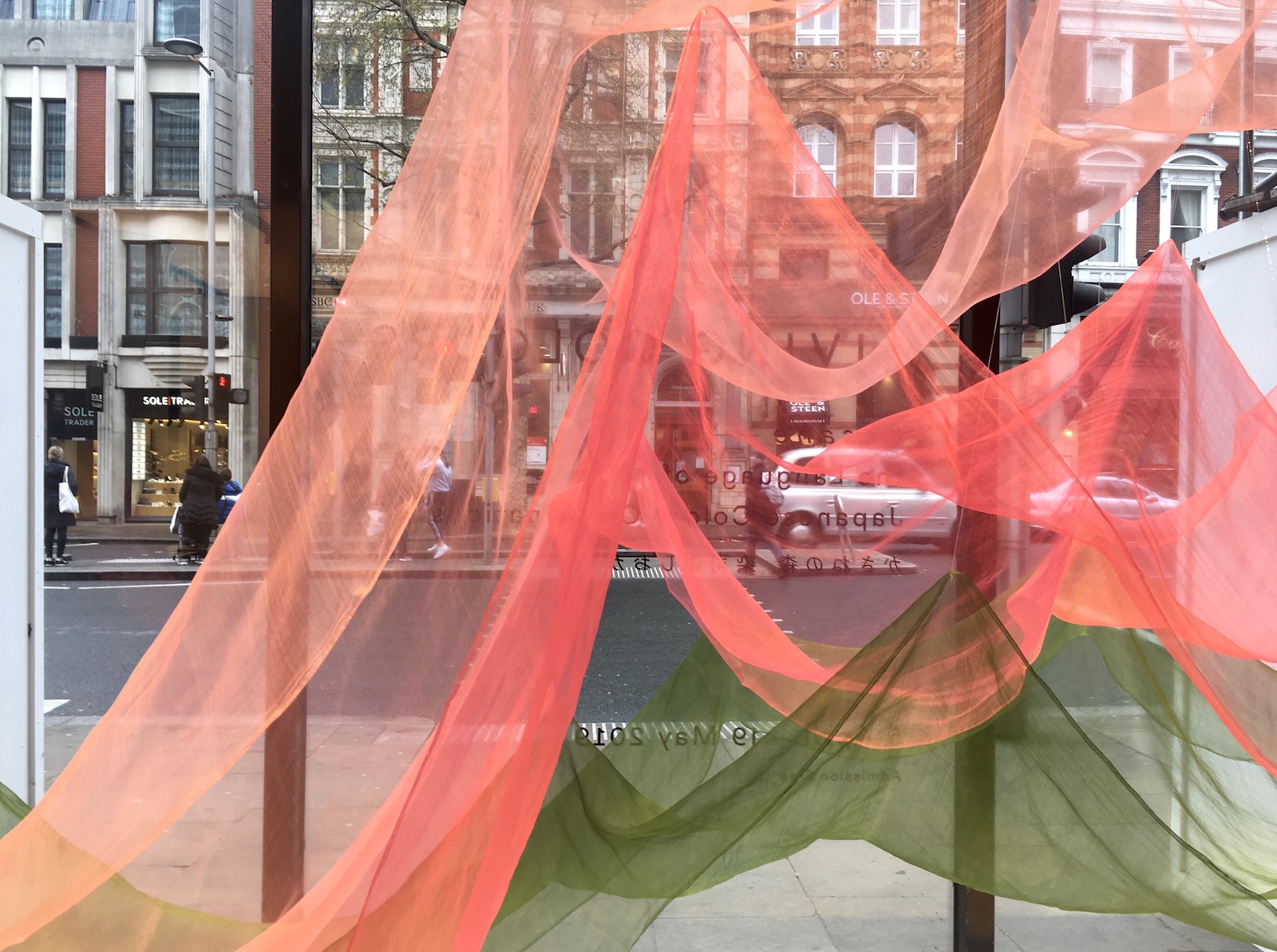
The exhibition mainly focuses on so-called kasane (かさね), the ‘concept of layering colours’. Specific colour combinations were particularly popular during the Heian period when fashion-conscious members of the aristocracy used them to communicate seasonal sensibilities. The exhibition showcases some of the most popular combinations, as well as the natural materials and tools used during the dyeing process.
The display is free of charge so I highly recommend a visit to anyone interested in Heian court culture and customs, as well as dying techniques and fabrics in general!
This ukiyo-e woodblock print from the Meiji period (1868-1912) depicts a young female student presumably heading to one of her lessons. In a very fashionable manner, she is combining a checkered buttoned shirt with a cherryblossom-patterned kimono, showing off the undergarment’s band collar and sleeves with rounded cuffs. The black laced umbrella additionally confirms the young woman’s position as one of the fashion leaders of the era.
Just thought that I should would like to start blogging again, so here we go. Expect to mainly find images of kimono and other clothing / costumes related content accompanied by semi-academic short texts.
To get things started, here is a picture of me and my friend wearing hakama in Kyoto in 2018. We aimed for a Taishō Roman 大正ロマン look, trying to capture the aesthetics of the Taishō period (1912-26) in our chosen kosode / hakama ensemble.








 DR CAROLIN BECKE