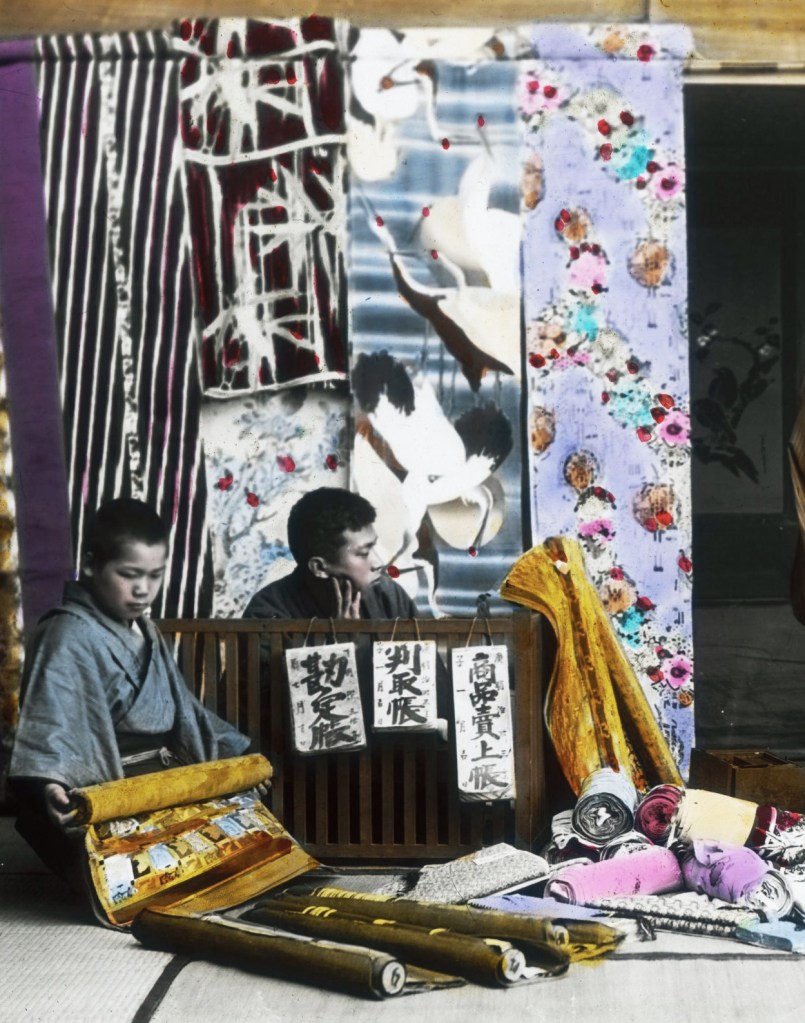
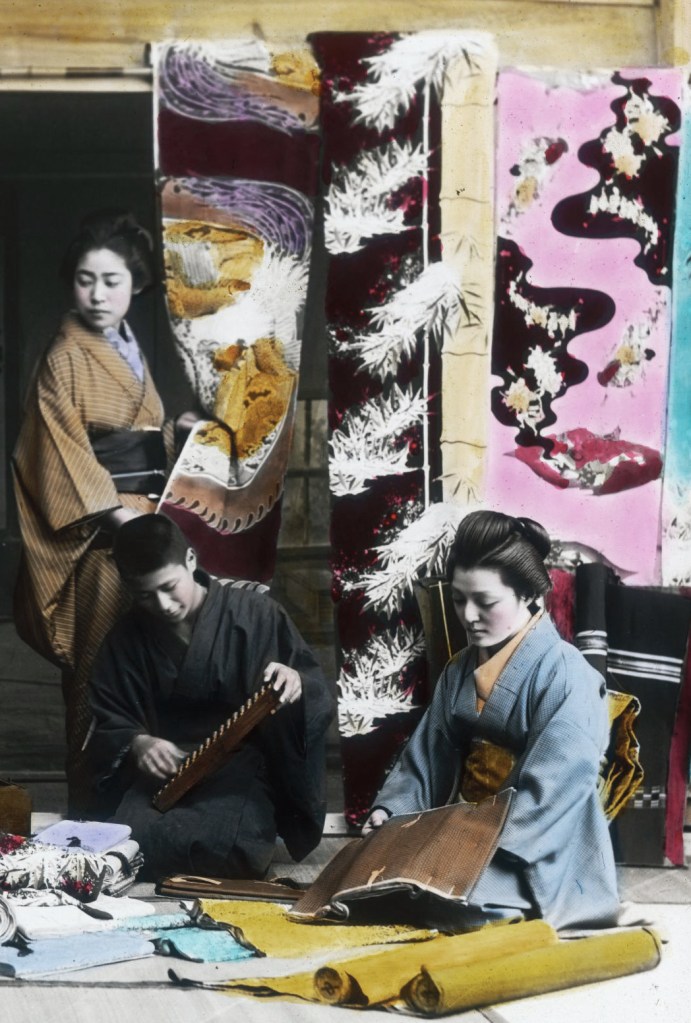
These images by Kobe-based photographer Teijiro Takagi (高木庭次郎) depict a so-called gofuku-shō (呉服商), a drapery store, during the Meiji (1868-1912) or Taishō period (1912-26). Panels of fabric are rolled out on the floor and hung up on the background, with customers examining the pieces of cloth they would like to have turned into kimono. Made from single bolts of cloth in a two-dimensional, flat manner, kimono are relatively simple garments to sew. Gofuku-shō did not just sell kimono fabric, but also orchestrated the extensive network, which included spinners, weavers, dyers, embroiderers, specialist thread suppliers, stencil makers and designers, involved in the creation of the individually commissioned garments₁. Some of Japan’s famous department stores such as Mitsukoshi originally started their business activities as gofuku-shō.
(₁) ‘Making Kimono’, Victoria and Albert Museum.

© Victoria and Albert Museum, London.





 DR CAROLIN BECKE