Furisode Kimono Explained: A Visual Guide to Japan’s Coming-of-Age Attire

When thinking of the Coming-of-Age Day in Japan, one image often comes to mind: young women dressed in striking, long-sleeved kimono known as furisode. Worn to mark the transition into adulthood, these colourful garments are rich in tradition and also full of personal and cultural meaning.

But not all furisode look the same. At the 2024 Yokimono Japanese Market in London, we presented two very different styles: one based on historical dress from the Edo period, and one showing how the furisode is worn today. This article takes a closer look at both styles, explores the symbolism behind their patterns, and considers how the furisode continues to evolve while preserving its role in Japanese rites of passage.


This article is 1,000 words long.
🕒 Estimated reading time: 5 minutes.
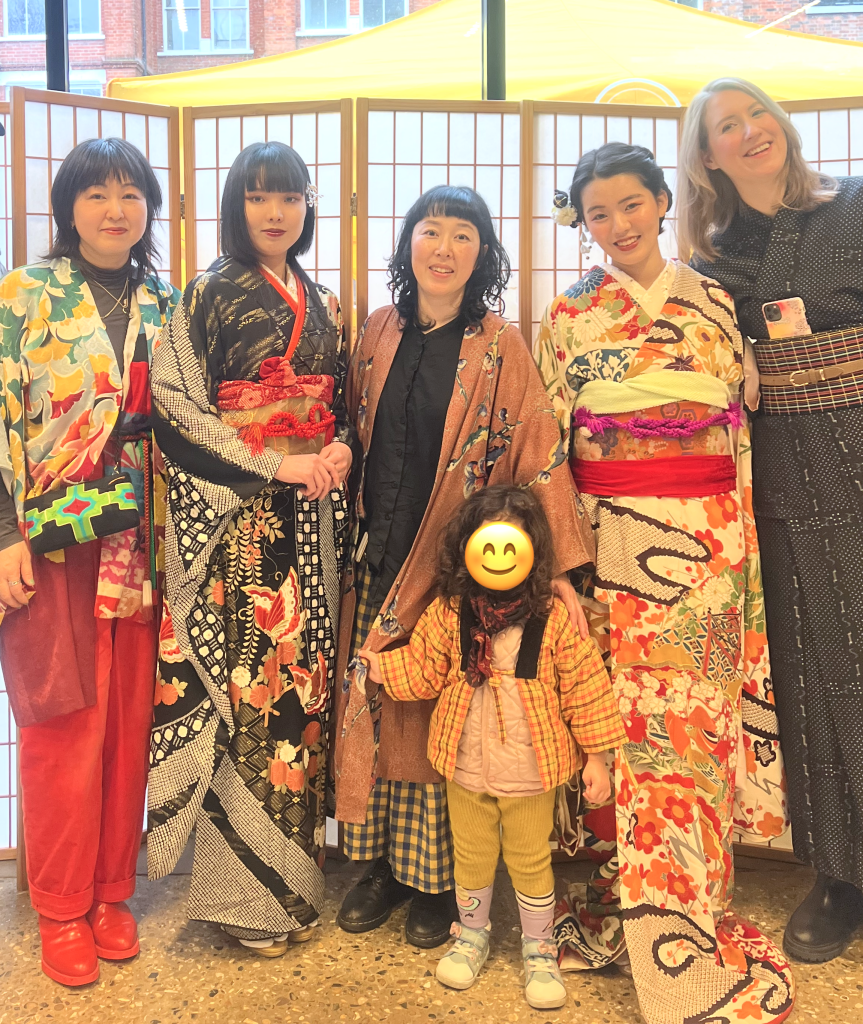
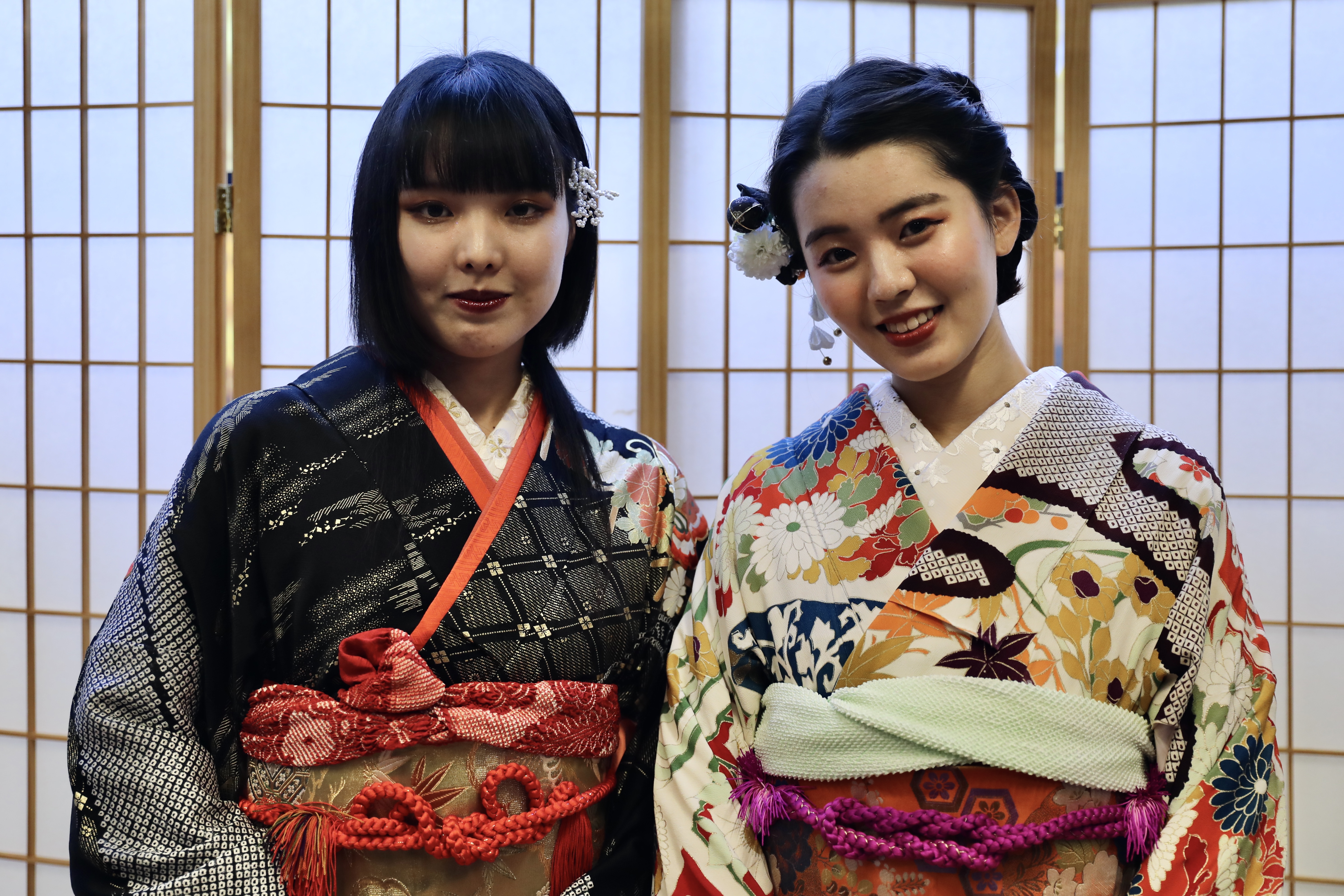
From left to right: Sonoe Sugawara (Furuki Yokimono Vintage), model Chizu, stylist Yuko Sasaki, model Yui, presenter Carolin. All images in this post taken by まなさん.

What is a Furisode?

The furisode (振袖) is a type of formal kimono distinguished by its long, flowing sleeves ranging from 85 to 114 cm in length. The name literally translates to “swinging sleeves,” which sway elegantly with the wearer’s movements.

Historically, furisode were worn by young, unmarried women, signaling both youth and availability for marriage. The long sleeves were believed to make a woman appear more graceful and attractive.

After marriage, it was customary to “shorten the sleeves” either by literally cutting them or having the garment altered by a tailor to convert the furisode into a tomesode (留袖), a formal kimono for married women, which has shorter, more restrained sleeves. This physical alteration marked a symbolic transition from maidenhood to matrimony.
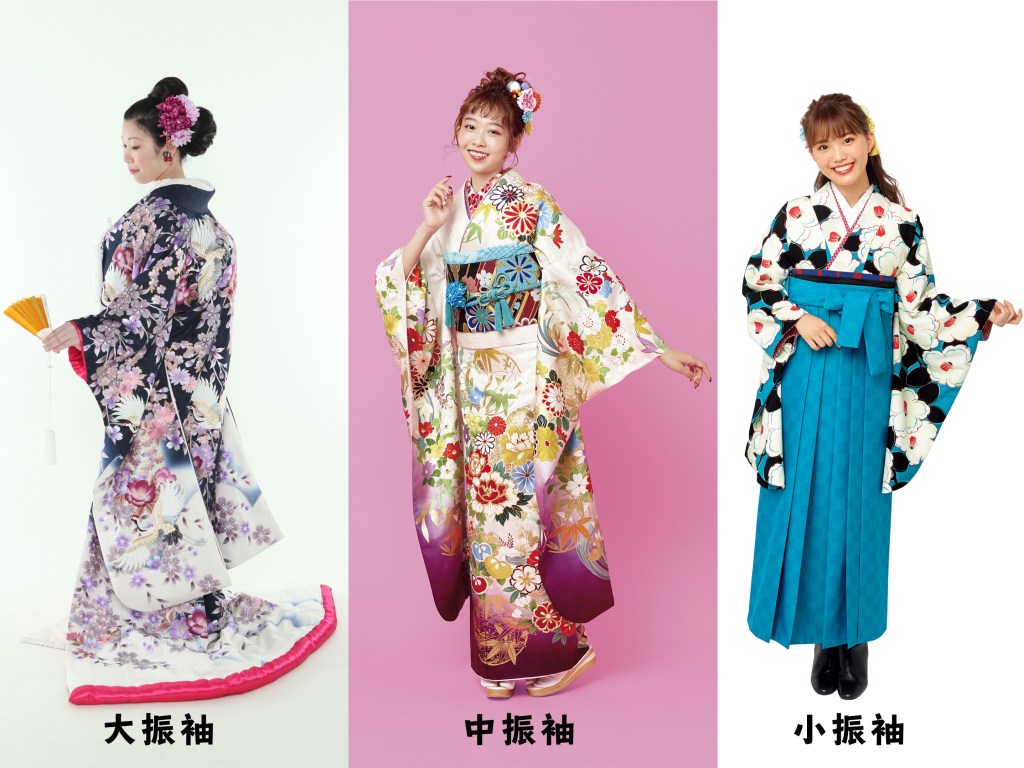
Sleeve lengths vary by occasion: longest for bridal wear (left), medium for Coming-of-Age Day (center), and shorter for graduation (right). Image source: http://aikah.com.

Today, they are most commonly associated with the Coming-of-Age Day (成人の日 / Seijin no Hi), a national holiday in Japan that celebrates young people turning 18 years old, which is, since 2022, the official age of adulthood. These garments are often elaborately decorated with seasonal or auspicious motifs, each carrying symbolic meaning.

Furisode Styles Now and Then

For the demonstration at the Yokimono Japanese Market, we showcased two contrasting styles of furisode:

  • A historical Edo-period style, emphasizing traditional elegance and formal symbolism
  • A contemporary adaptation, showing how the furisode is worn today with practical adjustments and personal flair

The Historical Style: Formal Elegance

Yui wore a furisode styled in the fashion of the Edo period (1603–1868), a time when clothing adhered to strict codes that reflected social status, age, and marital status. The kimono she wore was richly decorated with a variety of auspicious motifs, each symbolising positive qualities or well-wishes for the wearer:

  • Chrysanthemum (菊, kiku) – A symbol of longevity and a floral emblem associated with the Imperial family
  • The “Three Friends of Winter” (松竹梅, shōchikubai) – Plum, bamboo, and pine; a classic trio in East Asian art representing resilience, integrity, and perseverance during hardship
  • Crane (鶴, tsuru) – A revered creature in Japanese folklore, symbolizing good fortune, fidelity, and long life

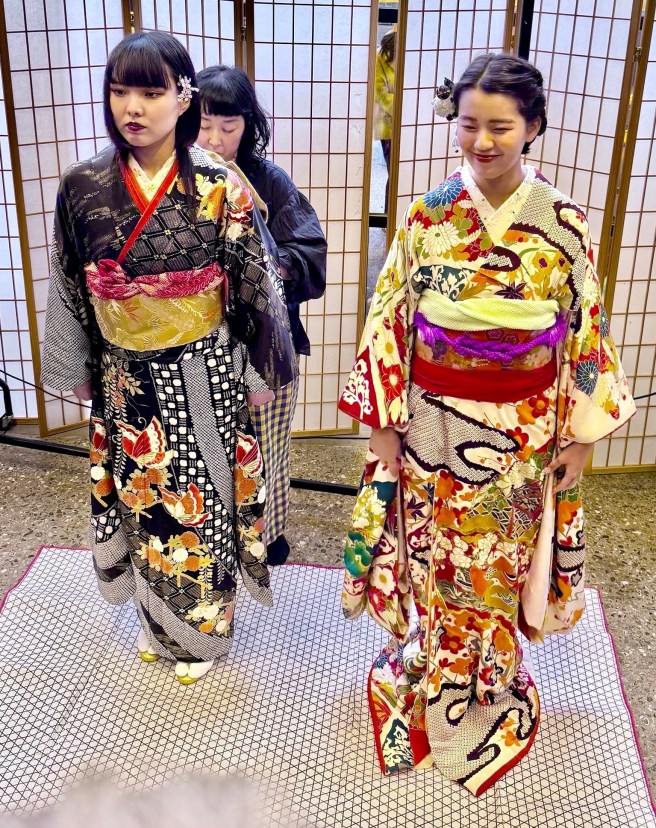
The hem of this kimono was left to trail on the floor, a style considered highly formal and luxurious. In the Edo period, this trailing hem was typical for young women of higher social rank attending important occasions. Today, such styling is rarely seen outside of stage performances or ceremonial roles, such as those of geiko and maiko, where traditional dress is preserved as part of cultural heritage.

The Contemporary Style: Practical and Personal

In contrast to the traditional Edo-period ensemble, Chizu wore a more contemporary interpretation of the furisode, illustrating how modern wearers adapt this formal garment to suit current lifestyles and practical needs. While the furisode remains a symbol of youth and celebration, today’s wearers often choose more accessible ways of styling it.

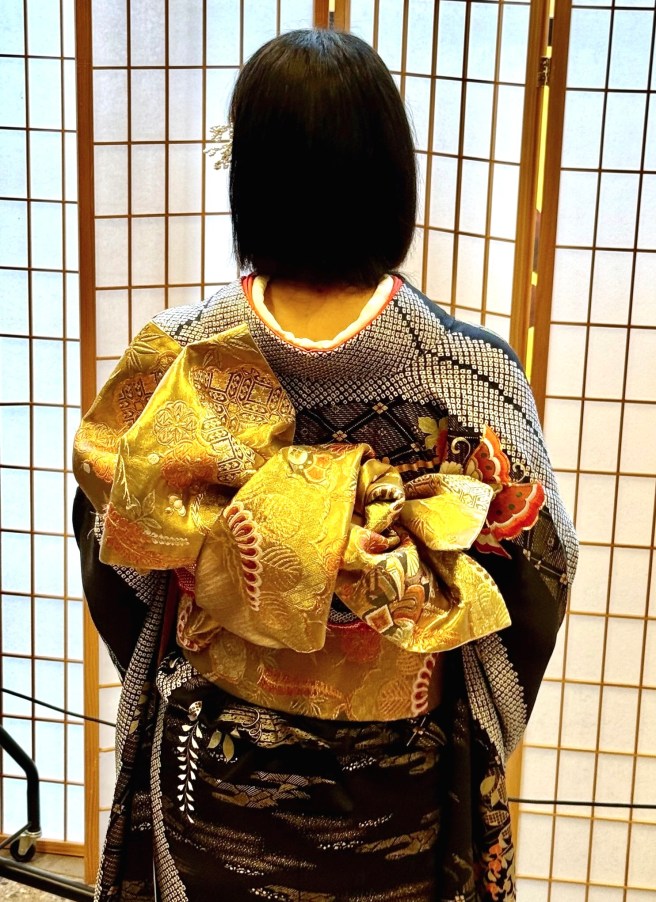
One key adaptation was the use of the o-hashori technique, where excess fabric at the hem is folded and tucked to create a clean, ankle-length silhouette. This method makes the kimono easier to walk in and helps prevent the fabric from dragging on the ground; an important consideration for modern-day mobility and comfort.

A particularly meaningful element of this outfit was the furisode itself. This kimono originally belonged to Sonoe Sugawara, owner of Furuki Yokimono Vintage and host of the Yokimono Market, who wore it at her own Coming-of-Age ceremony in 1995. It had been gifted to her by her grandmother and has been carefully preserved ever since.

Wearing this heirloom piece today highlights how kimono are not only fashion garments but also carriers of family history, memory, and generational continuity.

The Art of the Obi

No kimono is complete without the obi, a wide sash tied in the back. Tying the obi is both a technical skill and an art form, often requiring assistance due to the weight, length, and complexity of the knot.

The obi is often the most expensive part of a kimono outfit, as it must be stiff enough to hold elaborate shapes and usually features intricate weaving or embroidery. During the demonstration, Yuko showcased two different obi knots:

  • A formal structured knot worn by Yui matching the grandeur of her historical furisode
  • A rose-shaped obi knot worn by Chizu symbolic of blossoming youth and individuality

Secured with hidden cords and accessories, these knots balance visual beauty with structural durability meant to stay in place all day.
Watch the Presentation

🎥 See both styles brought to life in our full video recording below:

Our live demonstration at Yokimono Japanese Market highlighted not only the stunning beauty of furisode, but also the interplay of tradition and transformation that makes kimono culture so rich and enduring.

Whether worn in classical elegance or reimagined through a modern lens, the furisode remains a powerful expression of coming of age, identity, and celebration in Japan.

Sonoe Sugawara, owner of Furuki Yokimono Vintage
Yuko Sasaki, kimono dresser & stylist
Carolin Becke, kimono expert
Yui, model of the historical style
千珠 / Chizu, model of the contemporary style

Exploring Japanese Theater: Nō and Kabuki at Cool Japan 2025 in Hamburg

Back in March, I had the pleasure of curating and moderating the event “Cool Japan 2025 – Japanese Theater from Nō to Kabuki” at the Museum am Rothenbaum – Kulturen und Künste der Welt (MARKK) in Hamburg.

The one-day event offered a rich, multi-sensory exploration of historical and contemporary Japanese performing arts. With a diverse programme tailored to both children and adults, visitors could take part in creative workshops, guided exhibition tours, academic talks, and live performances which were all designed to bring Japanese theater traditions closer to a broad audience.

Stories in Masks and Makeup

The programme opened with a lecture by Prof. Annegret Bergmann titled “An Introduction to Japanese Theater.” In this talk, she offered valuable historical and aesthetic context for and Kabuki, giving the audience a solid foundation for understanding the performances and objects featured throughout the day.

Later, she returned with a second, more focused lecture on the symbolism and staging of Kabuki makeup, known as kumadori (隈取). Far from being mere decoration, these bold lines and colours communicate essential traits of a character – strength, virtue, rage, or deception – and are deeply intertwined with the dramatic rhythm and emotional charge of Kabuki theater. Her insights made it clear that makeup in Kabuki is not just worn; it is performed.

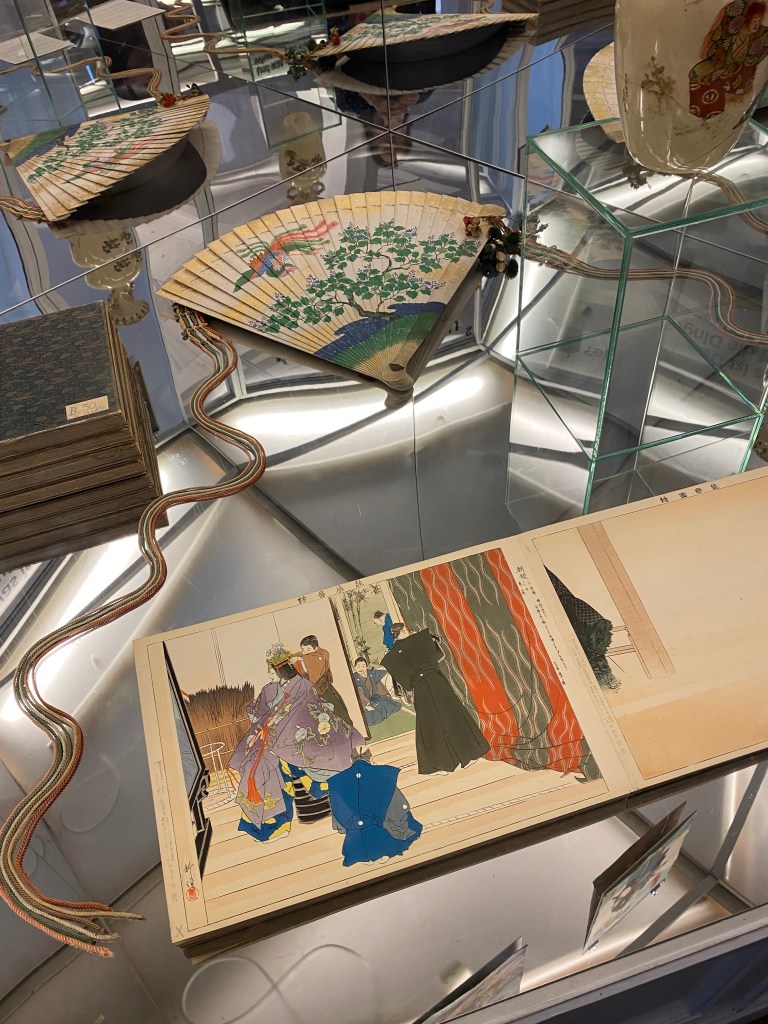
Complementing her talk was a display of curated objects from the MARKK’s own collection, giving attendees a rare glimpse into the material culture of Japanese theater. Items on view included authentic masks, makeup utensils, decorative accessoires such as hair pins, and kabuki-themed ukiyo-e prints. Together, they offered a tactile connection to performance traditions that have shaped Japanese cultural identity for centuries.

Another key moment in the program was the screening of the Kabuki classic Yoshitsune and the Thousand Cherry Trees (義経千本桜, Yoshitsune Senbon Zakura), a beloved tale of loyalty, disguise, and fate. Before the screening, Mr. Shinsuke Toda, Consul General of Japan in Hamburg, addressed the audience with warm words that reflected on the richness of Japanese stage tradition and its resonance far beyond Japan’s borders.

Contemporary Echoes: Chihoco Yanagi’s Journey Through Dance

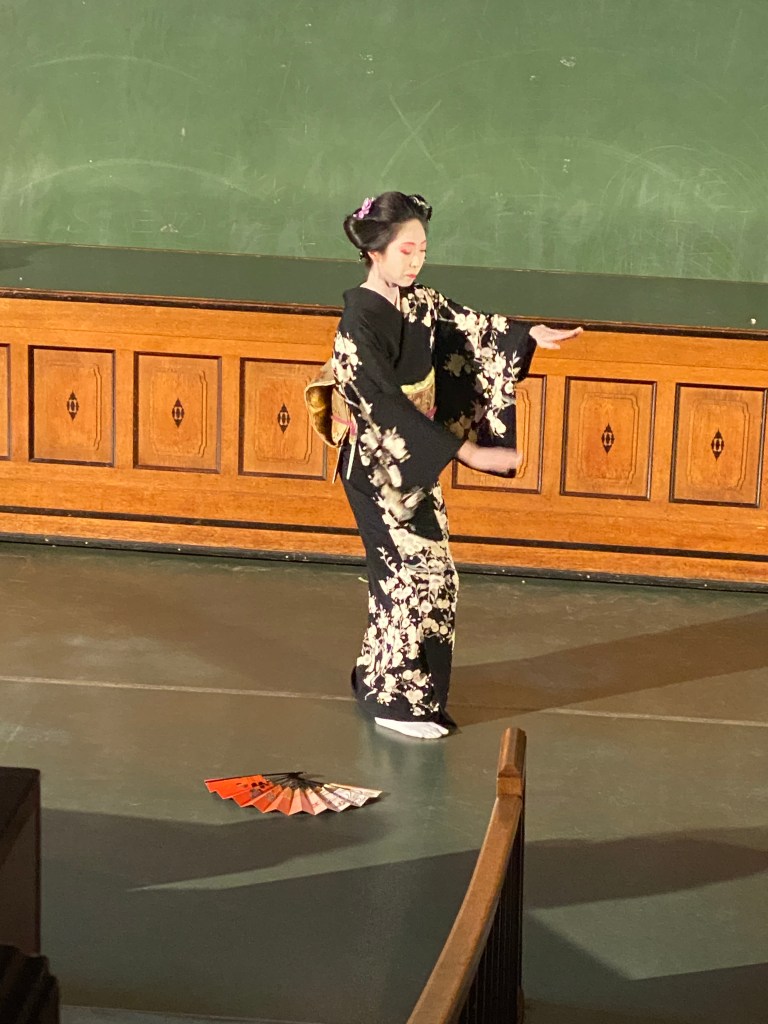
Dancer and choreographer Chihoco Yanagi performed twice during the event, showcasing two distinct forms of Japanese dance and offering the audience a powerful glimpse into both tradition and innovation.

Her first performance was a traditional Nihon Buyō (日本舞踊) piece, an elegant, stylised form of Japanese stage dance that draws from classical theater traditions of Kabuki and . Performed in kimono and often accompanied by shamisen music, Nihon Buyō combines graceful movement with storytelling gestures that reference nature, seasonal change, and human emotion. Chihoco’s precise, flowing choreography and expressive presence brought this refined tradition vividly to life.

Later in the day, Chihoco returned to the stage with a series of contemporary Shin Buyō (新舞踊) pieces. Shin Buyō, or “new dance,” emerged in the 20th century as a modern evolution of traditional Japanese dance forms. While it often preserves the structure and vocabulary of classical styles, it embraces greater freedom, allowing for modern music, expressive experimentation, and personal themes.

One of these pieces was set to live music performed by musicians from the Laeiszhalle Akademie, featuring Antonín Dvořák’s American Quartet. This particular performance stood out for its deeply autobiographical tone. Drawing on her own experience of leaving Japan and adapting to a new cultural environment, Chihoco expressed themes of longing, excitement, disorientation, and liberation through a nuanced choreography.

As someone who has lived in several countries myself, I found this piece especially moving. Her gestures, at once searching and composed, articulated a kind of emotional geography I knew well: the shifting terrain between memory and discovery, between where we come from and where we imagine ourselves becoming.

Dressing for the Kabuki

To mark the occasion, I chose to wear a vintage purple komon kimono I had found during a trip to Japan the previous November. It was the first time I wore it, and together with my fellow kimono nerd and illustrator friend Sophie, we had previously experimented with different obi styles to find one that reflected the spirit of kabuki: expressive, playful, a little bold.

Unfortunately, I couldn’t quite recreate the knot on the day of the event as beautifully as we had done together but it was still fun to experiment, and it added a personal layer of creativity to the day. In its own small way, it was also a performance: a gesture of cultural appreciation, memory, and imagination folded into fabric.

It felt especially meaningful to share the day with friends who are also engaged with Japanese textile culture in their own ways. My friend Mana, for instance, recently founded Hansa Kimono, a small business through which she curates and sells vintage haori (kimono jackets) here in Hamburg. Our shared passion for making traditional Japanese garments accessible and wearable in everyday life adds yet another layer to how these textiles continue to live, travel, and evolve across cultures.

Final Reflections

Cool Japan 2025 was more than a themed event; it was an exploration of cultural expression across generations, media, and stages. Through movement, music, objects, and storytelling, the day offered a window into the deep roots and evolving forms of Japanese theater.

From masks to Kabuki fans, from classic dance to modern choreography, each element provided a different point of entry into a living tradition. For me, it was not only an opportunity to help shape the programme, but also to participate in it through dress, dialogue, and shared appreciation.

The museum’s historic lecture hall offered a fitting stage for it all: its wood paneling, raised platform, and slightly timeworn elegance lent the performances a quiet grandeur; one that mirrored the layers of history embedded in the art forms themselves.

And like any good performance, the echoes of the day continue to resonate… but more on this another time 😉

Cardiff-Japanese Lecture Series: ‘Kimono (and) Fashion in Japan’

This online public lecture titled ‘Kimono (and) Fashion in Japan’ is part of the Cardiff-Japanese Lecture Series which aims to explore and understand aspects of language learning for those studying Japanese language and culture at Cardiff University, as well as various learners, teachers and researchers with an interest in Japan. The event is funded by the Japan Foundation, London.

Abstract
Both inside and outside of Japan, kimono is commonly framed as the national costume of Japan, bestowing the garment with notions of tradition and stability. However, ever since the establishment of a widespread fashion system in the Edo period (1603-1868), kimono was worn in different ways to communicate individual and social characteristics such as status, occupation, gender and taste.

This talk sheds some light on the fashionable influences on the garment by examining the following questions; how was kimono marketed by members of the merchant class, who became affluent during the Edo period? In which way did the moga (モガ, ‘modern girls’) of the Taisho period (1912-1926) wear the garment? How is the retro style, which gained prominence due to magazines such as Kimono Hime (Shōdensha, 2003-2018) and Kimono Anne (TAC Shuppan, 2019-), connected to the popularity of kimono as an everyday garment in recent decades?

Watch the recording of the lecture to find out more!

Minami-za: ‘Kyary Kabuki Kabuki’ きゃりーかぶきかぶき

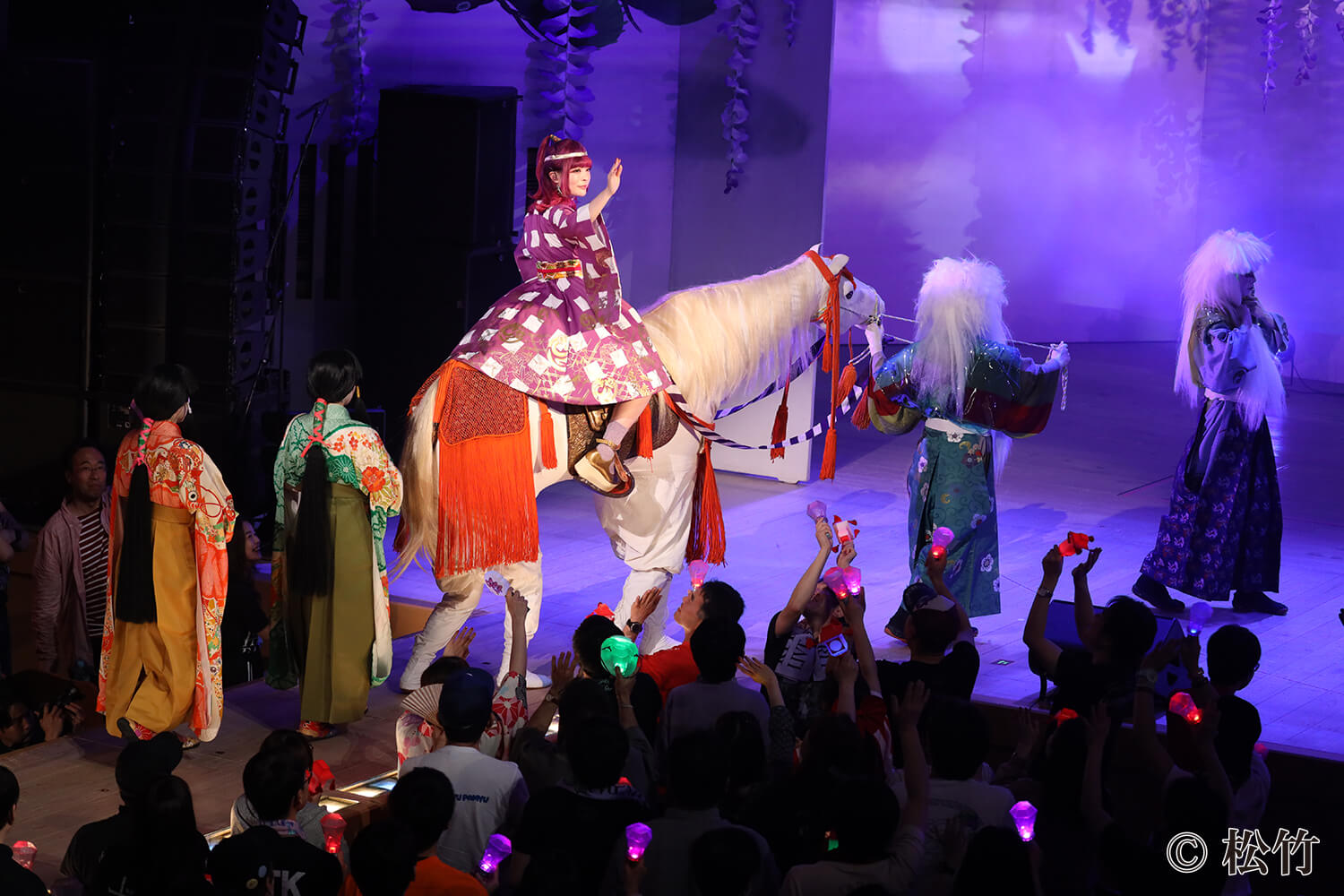
Japanese pop artist Kyary Pamyu Pamyu (きゃりーぱみゅぱみゅ) who is known for her visual and musical style blending historical Japanese and more contemporary kawaii elements performed at the legendary kabuki theatre Minami-za (南座) in Kyoto yesterday. The venue was errected during the Edo period in 1610 at a time when kabuki performances enjoyed increasing popularity among the growing middle class. The art form itself is famous for only allowing men acting in male and female roles on stage.

The artist hence somewhat broke conventions when performing songs from her latest album ‘Japamyu’ (じゃぱみゅ) in front of a traditional kabuki background screen during this one-time performance titled ‘Kyary Kabuki Kabuki’ (きゃりーかぶきかぶき). The singer herself was dressed in a Heian period-inspired kimono with her background dancers, female and male, donning conventional kabuki costume and make-up. Having received a proper training in the art of kabuki performance, the choreography incorporated the mie (見得) pose and roppo (六方) walk, as well as props such as so-called sensu (扇子) hand fans and sturdy bangasa (番傘) umbrellas.

Source: Rolling Stone Japan
Images are ©️松竹