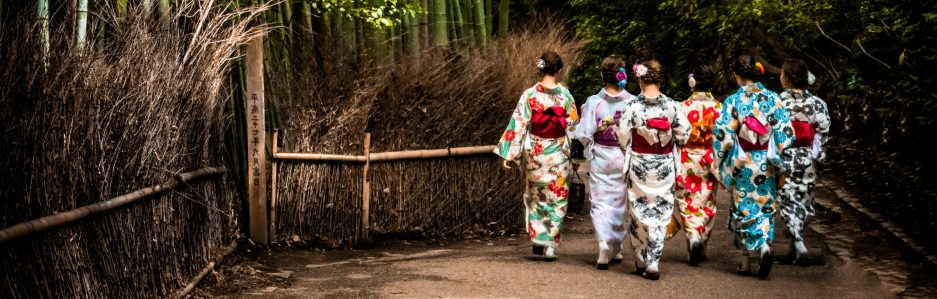
Why Did I Go to Japan? Discussing Kimono on Japanese TV

It just recently occured to me that I never talked about my appearance on TV Tokyo’s well-known show Why Did YOU Come to Japan? (YOUは何しに日本へ?) on this blog. I’m not quite sure what kept me from writing about it before, but here is me aiming to change that.

This article is 720 words long.
🕒 Estimated reading time: 4 minutes.

For those unfamiliar with the show, Why Did YOU Come to Japan? follows the journeys of international visitors to Japan, often starting with spontaneous interviews at the airport. The programme’s crew approaches travelers to ask about their plans, hoping to uncover unique and meaningful stories.

I was one such traveler, approached by the crew at Kansai Airport in February 2018, just as I was arriving for a six-month stay to conduct PhD fieldwork. The crew followed me over three full days, capturing glimpses of my daily life as a researcher in Japan. While many scenes didn’t make the final cut, the broadcast focused on my research visit to the shop MIYABI in Kitakyushu.

Miyabi Ikeda, the owner of kimono shop MIYABI.
Me during an interview with Miyabi-san.

The shop MIYABI is renowned in Kitakyushu as a popular destination for the local Seijin-Shiki (成人式), or Coming-of-Age Ceremony. This annual event celebrates young adults reaching the age of then 20, now 18, marking their transition to adulthood. Kitakyushu’s ceremony, in particular, is famous across Japan for its attendees’ incredibly inventive attire—each year, many invest a significant amount into crafting unforgettable outfits that reflect personal style and hometown pride.

A female attendee of Kitakyushu’s coming-of-age ceremony in 2015.
A male attendee of Kitakyushu’s coming-of-age ceremony in 2016.

Although I didn’t get to attend the ceremony itself or interview the young adults firsthand, my visit to MIYABI provided valuable insight into these unique local customs. The shop’s owner, Miyabi Ikeda, shared stories of her experiences and the elaborate preparations that go into helping customers create statement outfits for this important day. Through her perspective, I gained a deeper appreciation for the cultural significance and creativity surrounding Kitakyushu’s Coming-of-Age Ceremony.

The distinctive styles of the hade hakama (派手袴) for men and oiran kitsuke (花魁着け) for women served as key inspirations for Chapter 6 of my PhD dissertation, Challenging Normative Gender Ideals? Alternative Forms of Coming-of-Age Dress. In this chapter, I examine how these bold styles transcend conventional norms to allow unique expressions of identity. For those interested, my full dissertation can be accessed here: Becke, Carolin (2022) Negotiating Gendered Identities Through Dress: Kimono at the Coming-of-age Day in Contemporary Japan.

A summary of the TV episode discussing these styles is also available in Japanese on the programme’s website: Why Did YOU Come to Japan? – Episode 180730. For a closer look at MIYABI’s most recent creations, I recommend following their Instagram account: @miyabi_kokura.

Reflecting on this experience, I’m reminded of how unexpected encounters can shape and enrich our journeys in ways we don’t anticipate. Being part of Why Did YOU Come to Japan? gave me a unique opportunity to share my research with a broader audience and connect with Japan from a new perspective. It captured not only the purpose of my fieldwork but also the warmth and curiosity that I encountered throughout my time there. I hope this glimpse into my journey offers you some insight into the fascinating intersections of research, culture, and the unexpected surprises that make travel so rewarding.

Cardiff-Japanese Lecture Series: ‘Kimono (and) Fashion in Japan’

This online public lecture titled ‘Kimono (and) Fashion in Japan’ is part of the Cardiff-Japanese Lecture Series which aims to explore and understand aspects of language learning for those studying Japanese language and culture at Cardiff University, as well as various learners, teachers and researchers with an interest in Japan. The event is funded by the Japan Foundation, London.

Abstract
Both inside and outside of Japan, kimono is commonly framed as the national costume of Japan, bestowing the garment with notions of tradition and stability. However, ever since the establishment of a widespread fashion system in the Edo period (1603-1868), kimono was worn in different ways to communicate individual and social characteristics such as status, occupation, gender and taste.

This talk sheds some light on the fashionable influences on the garment by examining the following questions; how was kimono marketed by members of the merchant class, who became affluent during the Edo period? In which way did the moga (モガ, ‘modern girls’) of the Taisho period (1912-1926) wear the garment? How is the retro style, which gained prominence due to magazines such as Kimono Hime (Shōdensha, 2003-2018) and Kimono Anne (TAC Shuppan, 2019-), connected to the popularity of kimono as an everyday garment in recent decades?

Watch the recording of the lecture to find out more!

Discovering Tōkyō’s Harajuku: History, Fashion, and Cultural Evolution

Harajuku is the epicenter of Japanese street fashion, where young people express their individuality through unique outfits and extravagant styles. This lively Tōkyō district, situated between Shibuya and Shinjuku, has transformed from a modest residential area into a global symbol of creativity and youth culture. Harajuku is not only a shopping paradise but also a cultural melting pot, constantly evolving and setting new trends.

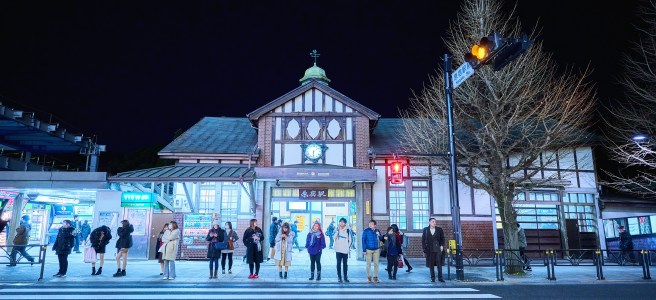
I first visited Harajuku in December 2007, at the beginning of my six-month language exchange stay. This was before the wide availability of Google Maps, so I had little idea of what the district would look like. The area has changed significantly since then, but at its heart, it remains the same vibrant and eclectic hub of creativity and culture I fell in love with back then.

Let’s first dive into the history of Harajuku, which dates back to the late 19th century. The name ‘Harajuku’ (原宿) literally means “meadow lodging” and refers to the area’s rural past, originally known for its Shinto shrines. During World War II, Harajuku was almost entirely destroyed by bombings. After the war, reconstruction began, and the district became home to many American military personnel and their families, which increased the influence of Western culture. In the 1960s, facilitated by the 1964 Tōkyō Olympics, Harajuku began to develop into a meeting place for creative and fashion-conscious youth. This transformation continued over the following decades, shaping it into the vibrant center of youth culture and street fashion that it is today.

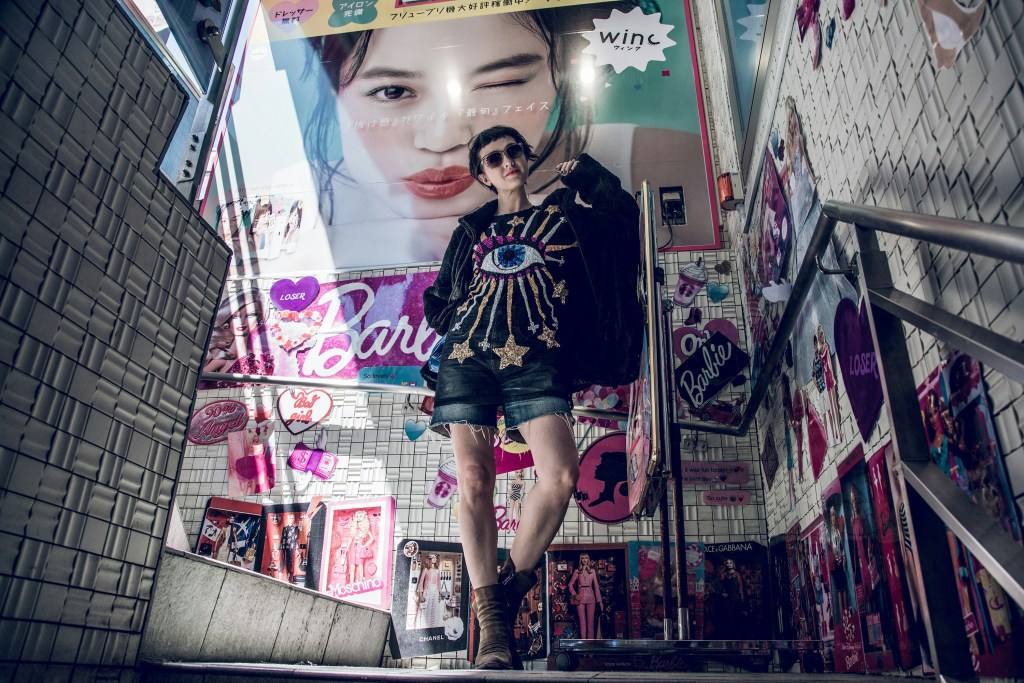
The magazine FRUiTS, founded in 1997 by Japanese photographer Aoki Shoichi, has captured the diversity and creativity of Harajuku fashion for years. Through the publication, Harajuku’s fashion became not only a local but also an international symbol of creative freedom and non-conformist style, significantly influencing global street fashion. Althoug being discontinued in 2017, FRUiTS continues to show the style(s) of Harajuku to the world through its Instagram presence.

Image by Style Tomes on Unsplash.

For fashionistas feeling inspired, there are three main destinations: Takeshita-dōri, Omotesandō, and Ura-Harajuku. Let’s take a closer look at these three iconic sub-districts.

Takeshita-dōri

Takeshita-dōri in Harajuku is the heart of Japanese street fashion. This lively street, just a few steps from Harajuku Station, is lined with fashion boutiques, creperies, and accessory shops offering a plethora of affordable and colorful items. Especially popular among young people, Takeshita-dōri embodies the unique Harajuku style, characterized by creative, eye-catching, and often quirky fashion. Here, the cuteness aesthetic of kawaii meets individual eccentricity, creating an unmistakable atmosphere that attracts fashion enthusiasts from all over the world.

The street is not only a shopping paradise but also a place where trends are born. Singer Kyary Pamyu Pamyu (きゃりーぱみゅぱみゅ) epitomizes this style like no other; bold accessories, daring color combinations, and unconventional designs define her look. With the song ‘HARAJUKU IYAHOI (原宿いやほい),’ she has also given the district its own anthem in 2017, further highlighting Takeshita-dōri’s significance in the global fashion world.

‘HARAJUKU IYAHOI’ 「原宿いやほい」by Kyary Pamyu Pamyu (きゃりーぱみゅぱみゅ).

Omotesandō

Omotesandō is an elegant, tree-lined avenue in Harajuku, often referred to as the ‘Champs-Élysées of Tōkyō.’ In contrast to the lively and eccentric Takeshita-dōri, Omotesandō offers a more sophisticated and refined atmosphere. Here, luxurious boutiques, designer stores, and exquisite concept shops line the street, offering a wide range of high-quality fashion items and accessories.

In addition to its exclusive shopping options, Omotesandō is also known for its top-notch restaurants and cafés. From upscale Japanese dining to international gourmet cuisine, there is a variety of culinary experiences to be had. Popular cafés like Omotesandō Koffee, known for its minimalist style and high-quality coffee, and Anniversaire Café, renowned for its delicious desserts and stylish ambiance, attract both locals and tourists.

Image by Susann Schuster on Unsplash.

Ura-Harajuku

Ura-Harajuku, on the other hand, is a place for explorers and individualists seeking unique pieces and inspiring spots. This area is known for its independent boutiques, vintage shops, and innovative cafés, catering to an alternative and often avant-garde fashion taste. In its quieter yet equally creative atmosphere, many iconic Japanese streetwear brands, such as BAPE (A Bathing Ape) and Undercover, got their start.

Second-hand and vintage shopping are central elements of Ura-Harajuku. The appeal of second-hand fashion lies not only in the uniqueness and quality of the items available but also in the increasingly significant sustainable shopping philosophy. Reusing and rediscovering clothing not only supports the environment but also allows for the creation of individual and distinctive outfits. The vintage shops in Ura-Harajuku are renowned for their creative clothing displays and inspiring styling ideas, encouraging visitors to explore and experiment with their personal style.

Image by Jules Morel on Unsplash.

The diversity of fashion, the vibrant youth culture, and the unique atmosphere make Harajuku a captivating place that enchants visitors from around the world. From the colorful Takeshita-dōri and the elegant Omotesandō to the alternative lanes of Ura-Harajuku, this district offers something for every taste. Harajuku remains an essential destination for anyone wanting to experience the most fashionable site of Tōkyō.

This article was first published on the German-Japanese online magazine JAPANDIGEST: https://www.japandigest.de/reisen/tourismus/sehenswuerdigkeiten/harajuku-tokyo/.

Header image by Jezael Melgoza on Unsplash.

Kimono Fashion Photoshoot with Marion Gabrielle: ‘Clearing Lines’

The places your research leads you to … I never thought that I would be involved in a kimono photoshoot but this is precisely what happend two months ago!

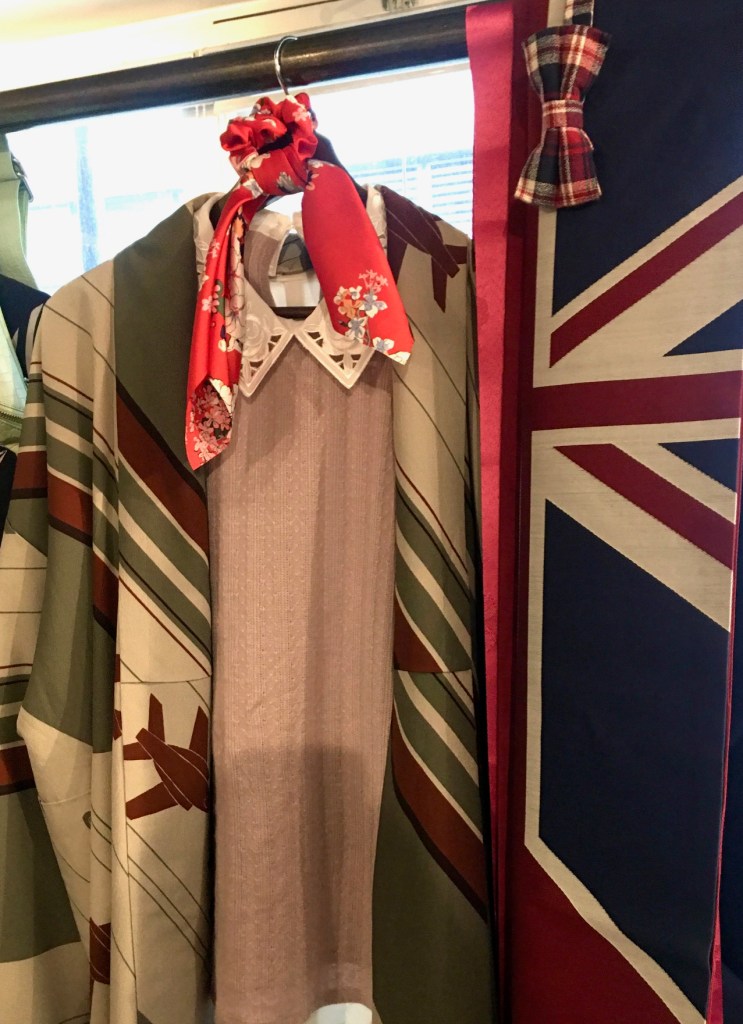
I took my friend Marion Gabrielle, a fashion photographer, to the KIMONO MAGIC SOCIETY POP-UP at the beginning of March and she was immediately fascinated by the designs of the presented garments! This led to us organising a full photoshot on very short notice (knowing the kimono designers and their garments wouldn’t stay in London too long), with the whole organisational process taking less than three days! The kimono and obi were kindly provided to us by Modern Antenna who gave us complete artistic freedom over the use of their garments. Marion got in touch with model agency Titanium Management who sent along the two lovely models Vera and Aanandita for the shooting. Jubby S. was in charge of styling, providing us with pieces of garments to wear with the two kimono that were chosen (see pictures below!).

On the day of the shooting we met at Titanium Management who are based in a small side street in Shoreditch, to have the models styled and put into their respective clothing ensembles. Having never put another person in kimono, I have to admit that this was quite the challenge! It all worked out in the end however, thanks mainly to our concept being based on a very fashionable approach towards kimono (and also A LOT of improvisation!).

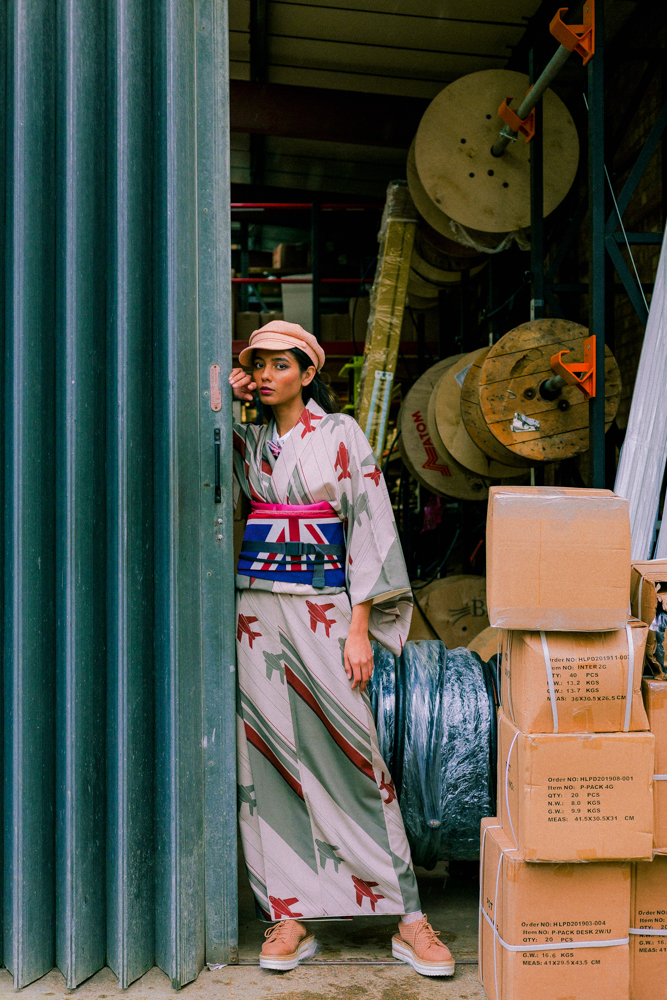
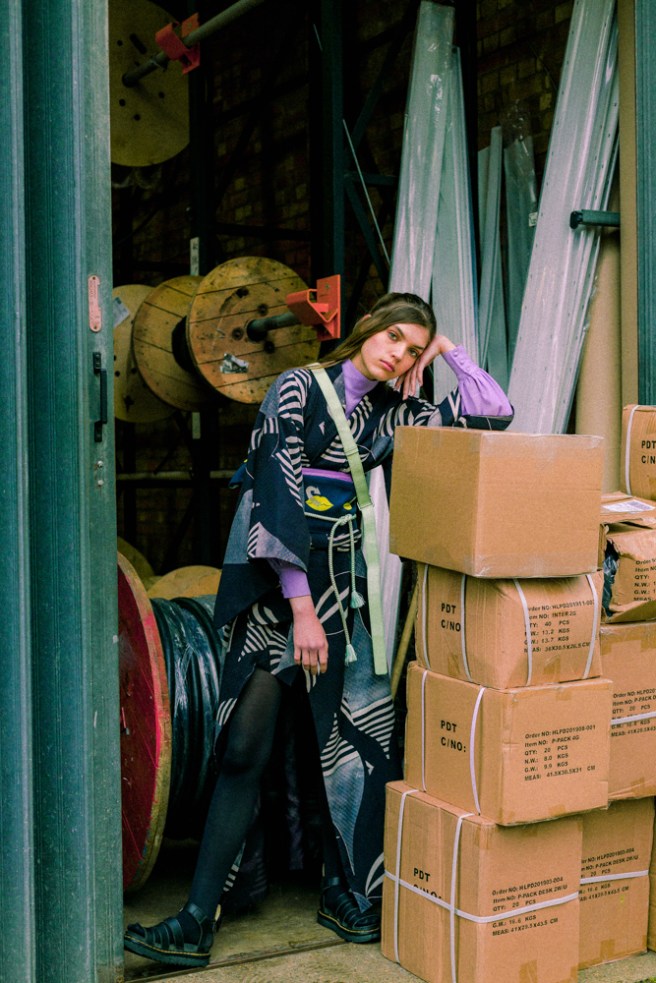
After Vera and Aanandita were styled and dressed, we headed out with Marion looking for inspiring spots in the back streets of Brick Lane. This is were some of my favourite images (see below) were shot, at the parking lot and entrances to the storage space of a fabric supply company to be precise, providing us with a beautiful backdrop of brick buildings, heavy industrial doors, warehouse materials and (above all) shipping boxes!

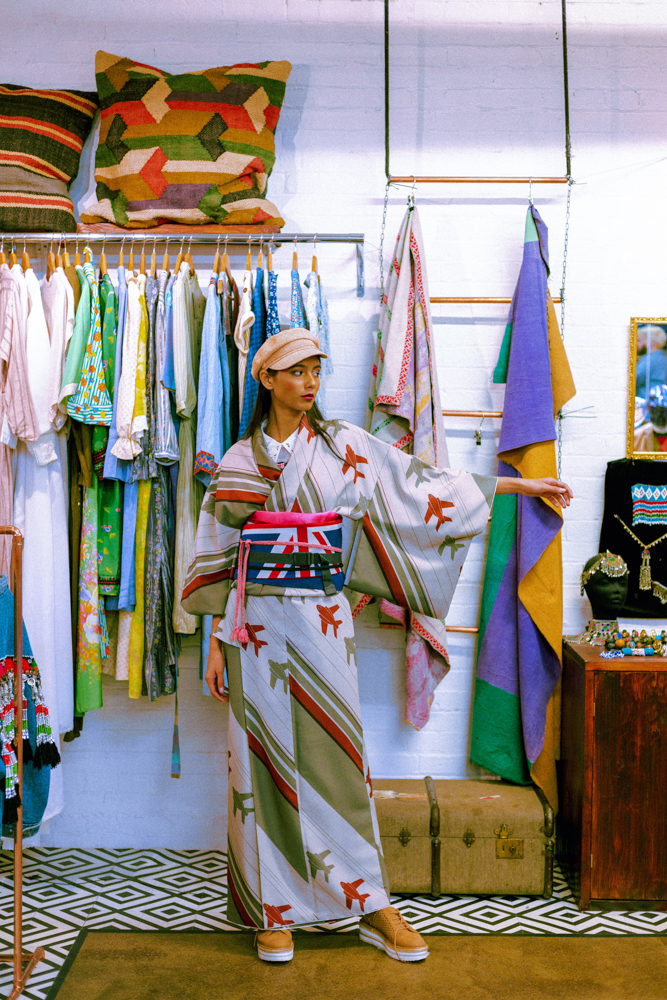
The second location for the shooting was Brick Lane Vintage Market which provided a slightly more colourful, vintage-y visual context for the kimono ensembles. I loved how some of the motifs of the different pieces communicated with their surrounding; the lines of the Union Jack on Aanandita‘s obi for example visually respond strikingly to the The Who t-shirts logos in one of the LP record shops (see last image below).

All in all, this was a very inspirational experience, which, besides providing me with a welcome distraction from my more writing-focused research activities, offered greater insights into the way kimono and certain kitsuke (the practice of dressing in kimono) relate to and look in photographic images. Putting another person into kimono was another fascinating part of this whole experience, which made me want to actively study and practice different obi ties and bigger variety of kitsuke, particularly in regards to creating different lengths of the hem (my one-off yukata lesson in Kyoto surely did not adequately prepare me for this!). As Marion and I are already thinking about possible future collaboration, you probably do not need to wait long to hear more from us!

Clearing Lines
Photographer Marion Gabrielle @mariongabriellephotos
Models: Vera and Aanandita @titaniummanagement @veralialko @aananditarajawat
Kimono Stylist: Carolin Becke
Stylist: Jubbi S. @jubbi.s
HMUA: Margherita Fabbro @margheritafabbro_mua
Kimono Designer: Modern Antenna @modern_antenna
Assistant: Katrina Spadaro

Find the full gallery here: http://www.behance.net/gallery/95744735/Clearing-Lines