What makes Japanese idol costumes so visually distinctive, and how are they actually designed? Drawing on an interview with fashion designer Mikio Sakabe, this two-part article explores how clothing for idol groups such as Dempagumi.inc operates between fashion, performance, and character design.
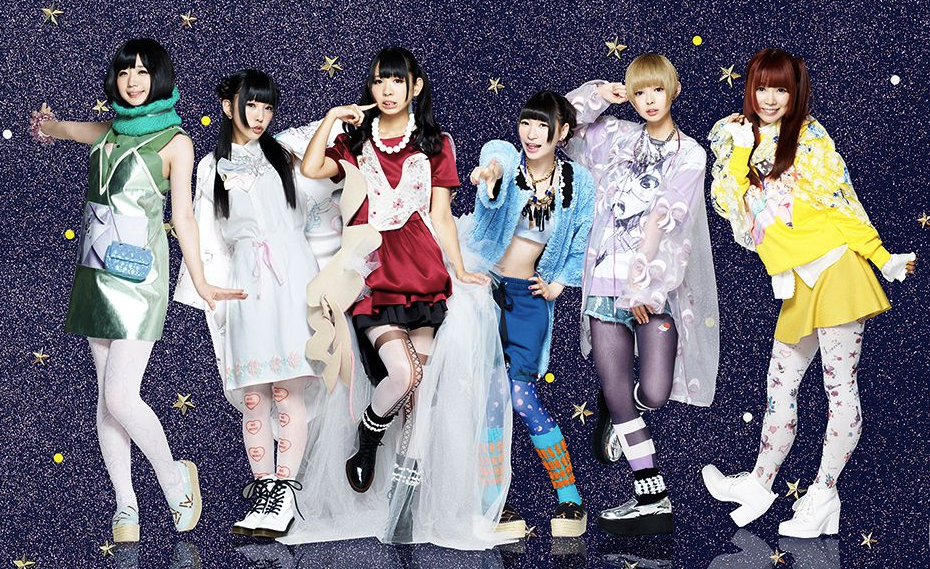
Why Idol Costumes Matter
Japanese idol groups are instantly recognisable not only through their music, choreography, or group identities; they are also recognisable through their striking stage costumes. Bright colours, elaborate silhouettes, and coordinated outfits create a strong visual identity. This identity allows fans to recognise individual members even from a distance.
Unlike everyday fashion, however, these costumes are designed for a very specific environment: the stage. They must be visually legible under strong lighting. They should be dynamic enough to move beautifully during choreography. The outfits must also be distinctive enough to convey each performer’s character at a glance.
The relationship between fashion design and idol culture is therefore closer than it may initially appear. Designers working with idol groups must translate concepts, personalities, and subcultural references into garments that function both as clothing and as visual storytelling devices.
During my doctoral fieldwork on Japanese fashion cultures in 2018, I spoke with the Tokyo-based designer Mikio Sakabe (坂部三樹郎). His work has frequently intersected with Japan’s pop-cultural landscape. Among his many projects, Sakabe designed costumes for the idol group Dempagumi.inc (でんぱ組.inc), a group known for its strong connection to otaku culture and its distinctive, highly stylised visual aesthetic. Our conversation offered an insightful glimpse into the creative process behind idol costume design. It also revealed the challenges of translating character, movement, and subcultural identity into clothing.
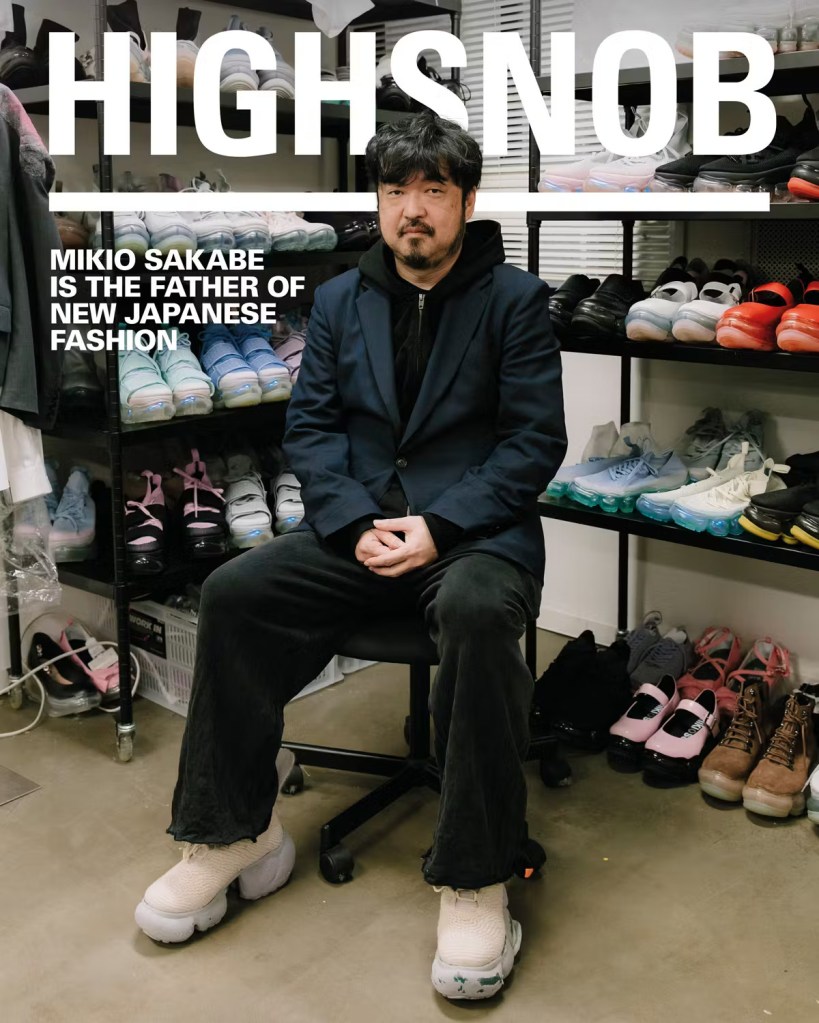
From Fashion Design to Idol Costumes
Before becoming involved in idol costume design, Mikio Sakabe first built his career within the international fashion world. After studying fashion design at the Royal Academy of Fine Arts, he spent several years in Europe before returning to Japan in 2007 to establish his own brand.
Reflecting on his time abroad, Sakabe described Belgium as an interesting place to study fashion precisely because it occupied a somewhat ambiguous position within the European fashion landscape. Unlike fashion capitals such as Paris or Milan, Belgium did not carry the same historical weight. This lack of historical significance made it easier for him, as a Japanese designer, to find his own position there.
During his studies, Sakabe was already experimenting with visual influences drawn from Japanese popular culture. His graduation collection titled ‘20XX A/W Collection (@-@)‘ incorporated elements inspired by anime and manga aesthetics. Rather than simply referencing these media iconographically, he was interested in translating their visual qualities, particularly their flatness and graphic textures, into fabric, pattern, and tailoring. As he explained, animated images are essentially two-dimensional surfaces, making them surprisingly adaptable as textile textures and design motifs.
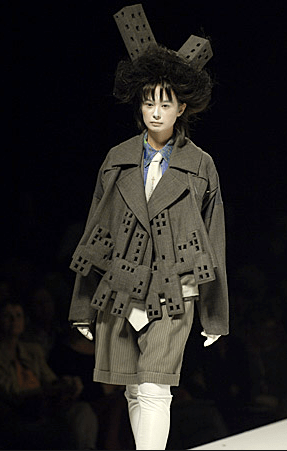
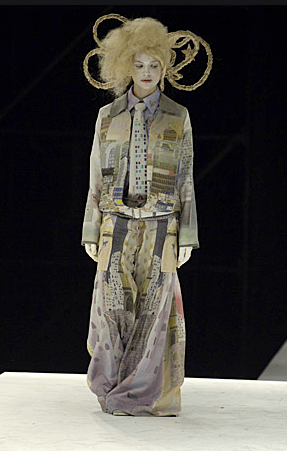
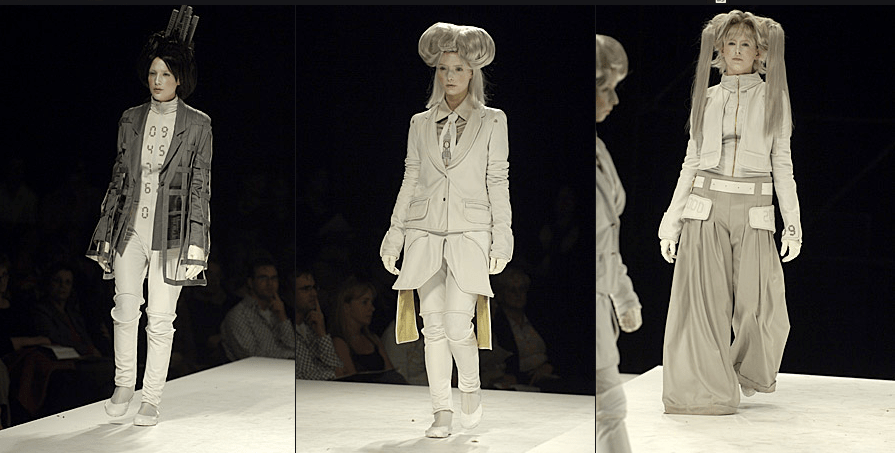
After returning to Japan, Sakabe’s path eventually crossed with the producer Maiko Fukushima known as Mofuku-chan, who was looking for a designer to create costumes for the idol group Dempagumi.inc. At that time, Sakabe admitted that he was not particularly familiar with idol culture. His interest grew only after witnessing the group perform live at Dear Stage (秋葉原ディアステージ), the Akihabara venue closely associated with the group’s early activities.
What fascinated him most was not only the performance itself, but the relationship between the idols and their audience. The coordinated fan dances known as otagei (オタ芸) created a powerful sense of unity between performers and spectators. For Sakabe, this intense collective energy was strikingly different from the atmosphere typically associated with fashion shows or the fashion industry more broadly. Observing this dynamic sparked his curiosity and ultimately led him to explore how fashion design could intersect with idol culture.
The Stage as a Design Environment
Designing costumes for an idol group requires a very different approach from creating garments for a fashion collection. As Sakabe explained, the conditions under which these clothes are seen fundamentally shape the design process. Unlike runway pieces or everyday garments, idol costumes are created specifically for performance in front of large audiences.
“The needs are totally different from my own brand,” Sakabe noted. “It’s not something you would wear on the street.” Instead, costumes must function within the visual and physical dynamics of a live performance. On stage, idols are viewed simultaneously by hundreds or even thousands of spectators, often from a considerable distance. As a result, details that might work in everyday clothing can easily disappear. To compensate for this, elements are frequently exaggerated: silhouettes may be larger, decorations more pronounced, and colours more vivid.

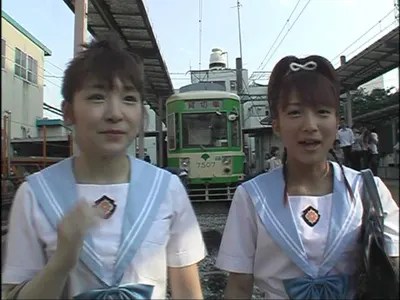
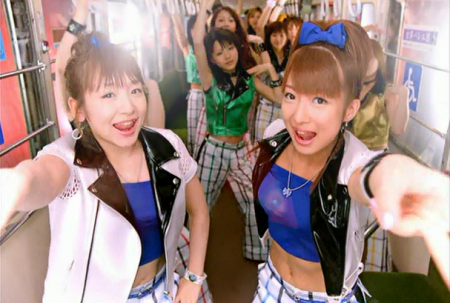
A good example of this can be seen in the school uniform-style costumes designed for Dempagumi.inc. At first glance, they reference a familiar garment; a seifuku-style school uniform, but this recognisable base is transformed through highly stylised elements. Each outfit features bold, sketch-like prints in a distinct colour, often resembling hand-drawn anime illustrations applied directly onto the fabric.
These graphic designs are not subtle details; rather, they dominate the garment, ensuring visibility even from a distance. At the same time, coordinated silhouettes, pleated skirts, sailor-style collars, and ribbon ties maintain a sense of group cohesion, while colour-coding allows individual members to be easily distinguished.
The contrast between the everyday and stage versions of these uniforms further underscores this transformation. The original uniforms use simple, matte white cotton fabric, giving them a modest, traditional appearance. On stage, however, the materials are elevated with shimmering, reflective fabrics, sheer sleeves, and gold embellishments, creating a dazzling visual effect (see images below).
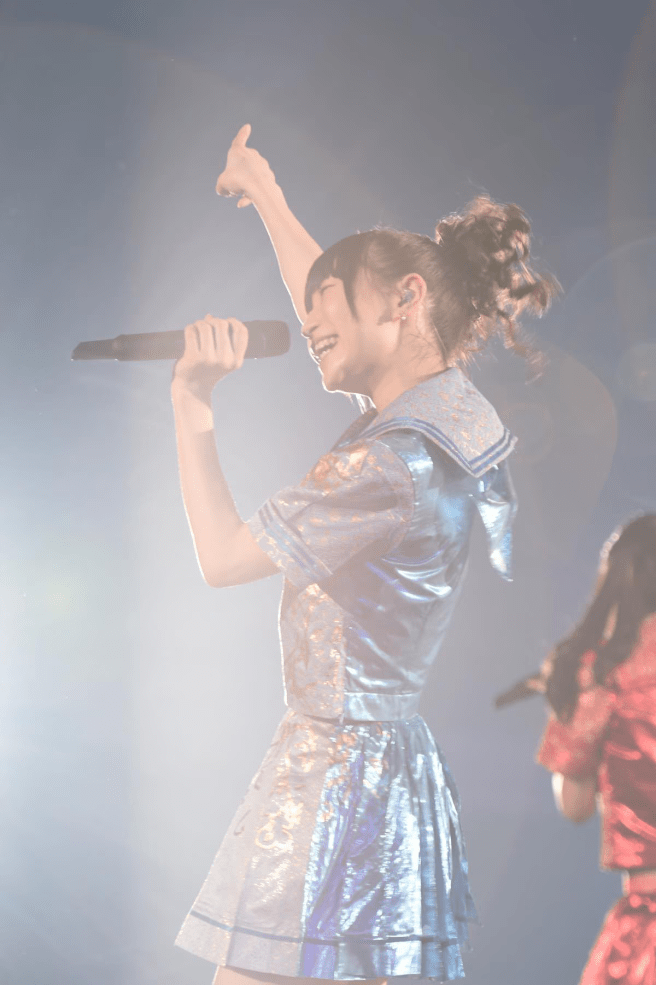
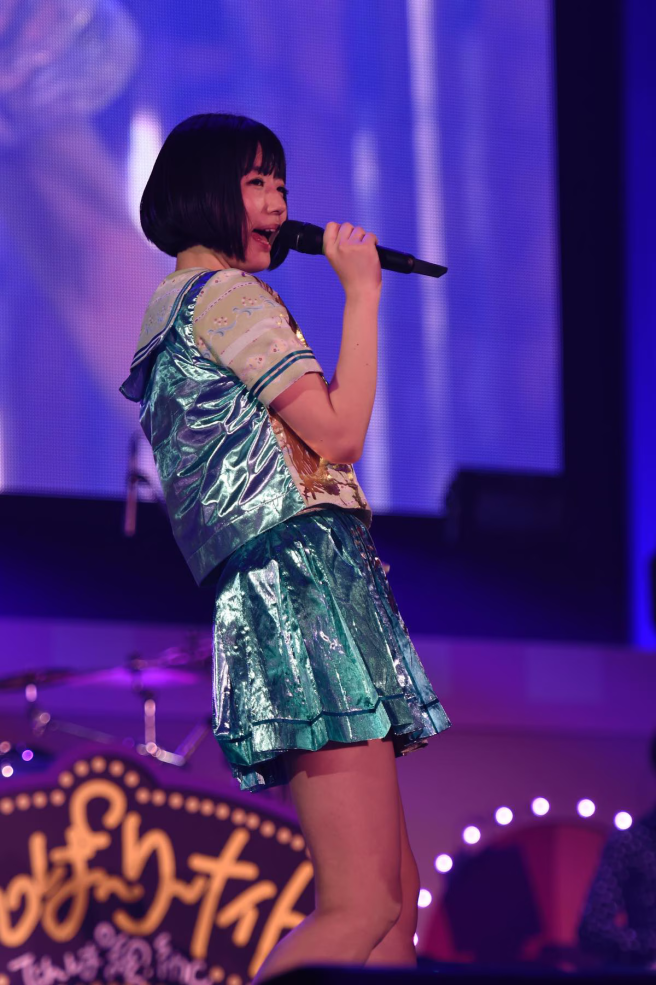
Movement is another crucial factor. Because idol performances involve energetic choreography, costumes must be designed to respond visually to motion. Mikio Sakabe therefore pays close attention to how fabrics behave when the performers dance; whether they sway, ripple, or catch the light in ways that enhance the performance. In the case of these uniform-inspired outfits, the pleated skirts and shimmering materials create dynamic movement, amplifying the visual rhythm of the choreography.
Equally important is the ability of the costume to communicate character instantly. In a group setting, each member needs to remain visually recognisable even within a coordinated ensemble. Sakabe emphasised that it is essential for audiences to grasp a performer’s character “at a glance.” The use of distinct colours, combined with expressive printed motifs, helps to create immediately identifiable personas.
This strategy is commonly used in J-pop idol performances, where individual members are often assigned specific colours that are associated with their perceived personality or role within the group. Costumes thus function not only as clothing but also as a form of visual shorthand, helping to define the identity of each member while still maintaining the overall aesthetic of the group.
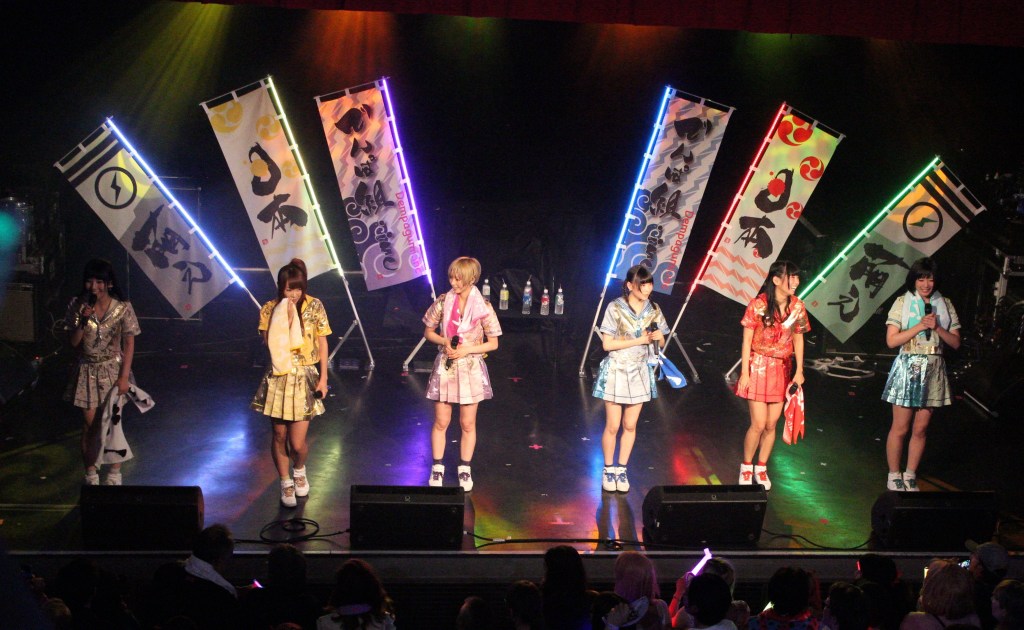
In this sense, these school uniform designs exemplify how idol costumes operate between familiarity and exaggeration: they draw on everyday clothing as a reference point, while transforming it into something highly performative, graphic, and unmistakably tied to the stage.
As the example of Mikio Sakabe demonstrates, idol costumes are shaped by a set of design principles that differ significantly from those of everyday fashion. Created for the stage, they must prioritise visibility, movement, and immediate recognisability.
At the same time, they are deeply embedded in the specific cultural context of Japanese idol performance, where visual identity plays a crucial role in shaping the relationship between performers and their audiences. Sakabe’s collaboration with Dempagumi.inc highlights how costume design operates at the intersection of fashion, performance, and popular culture.
In the second part of this article, I will explore more closely how idol costumes function as tools of character creation.