Women’s Hakama: Female student’s school uniforms

Artist unknown.

The three young women depicted here are all wearing the first version of Japanese school uniforms, consisting of a hakama (袴) skirt worn over a short-sleeved furisode kimono. Hakama are wide trousers which were one of the main garments for men during the Edo period. These trousers were slightly modified and turned into skirts, being tied at one’s waist rather than one’s hip for the sake of becoming uniforms for young females.

Just like their male counterparts who adopted uniforms in 1879, the rising number of female students during the late 19th century likewise called for unified clothing on their part. Being adopted on a nationwide level in 1898 (and held in place until 1918), an emphasis was put on the functionality of the hakama / kimono ensemble within an environment in which students were expected to participate in regular practices of sports and physical exercise. The addition of boots or leather shoes, as well as a big ribbon in one’s hair would later come to quintessentially represent early female students of the Meiji and Taishō period.

Photograph by Elstner Hilton (1914-8).
「自転車に乗る女学生」from 新版引札見本帖、第1 (Meiji 36, 1903).
© National Diet Library (国立国会図書館), Tokyo.

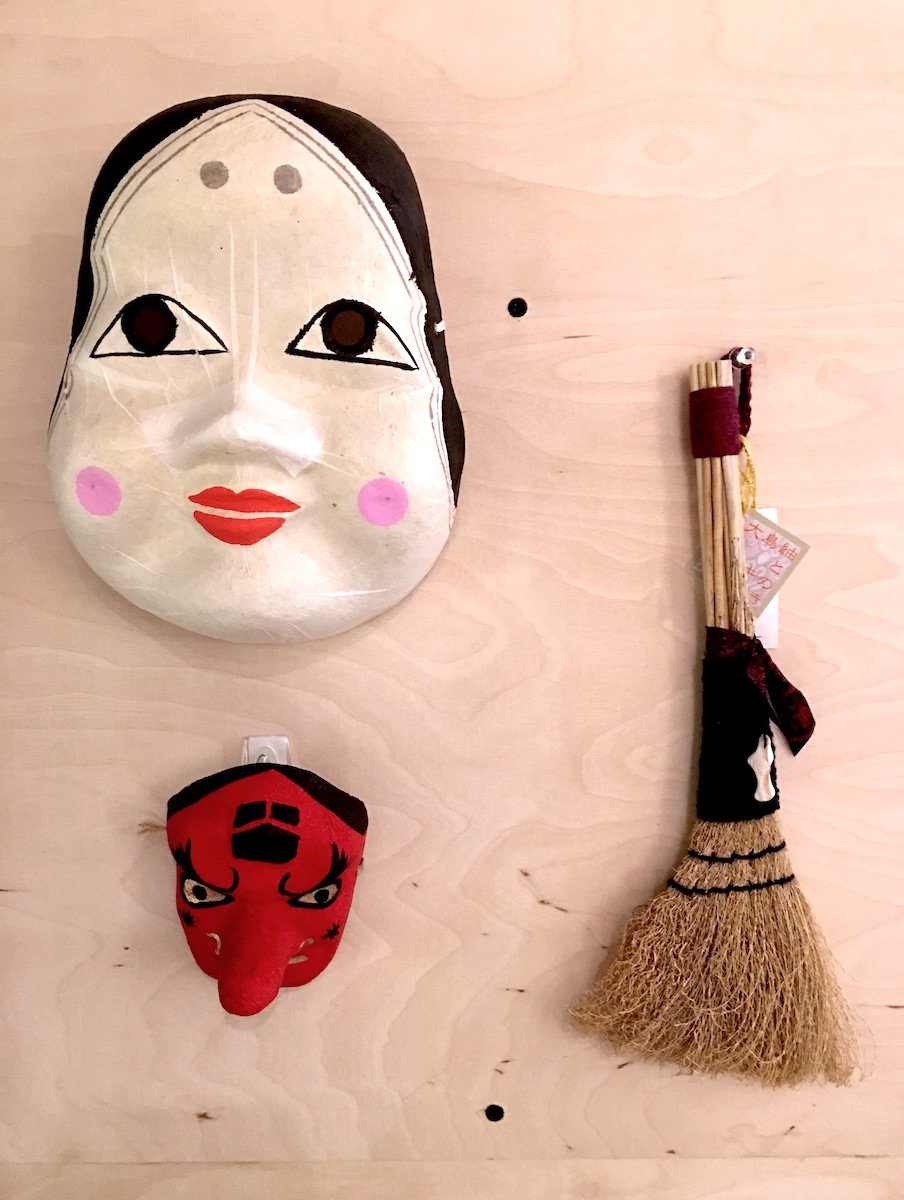
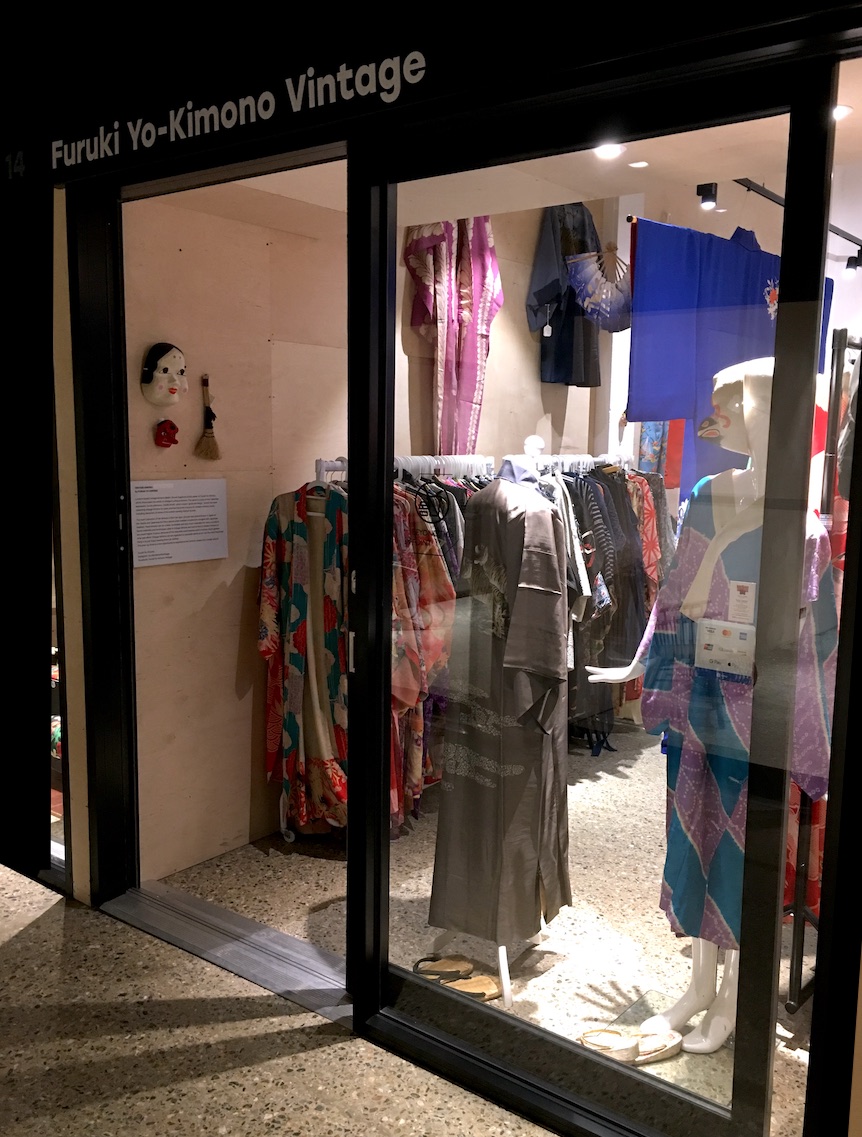
Furuki Yo-Kimono Vintage by Sonoe Sugawara

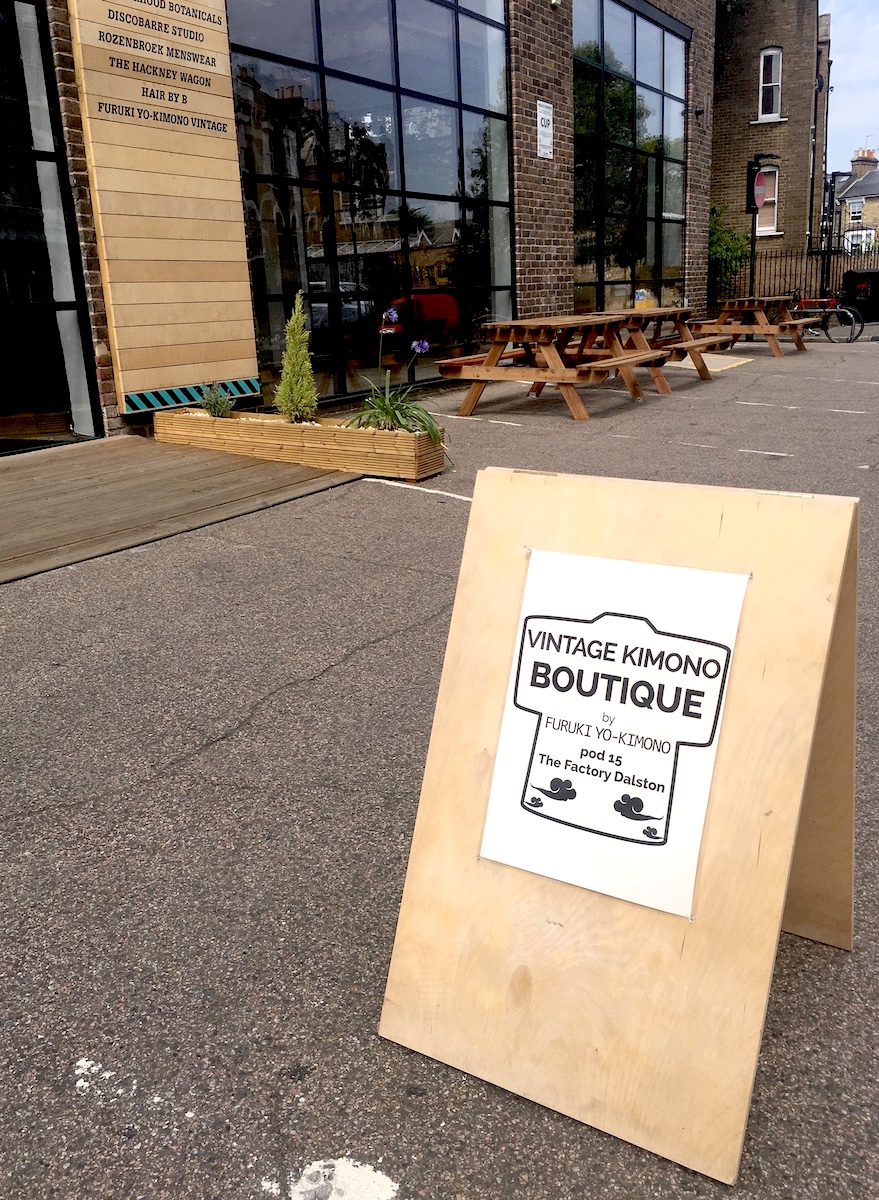
After only recently finding out that there is a shop specialising in vintage kimono in London, I went to meet Sonoe Sugawara, kimono dealer and owner of Furuki Yo-Kimono Vintage in Dalston yesterday. After mainly selling and displaying kimono at markets around London for over 10 years, Sugawara-san just recently moved into the newly opened independent business venue The Factory.

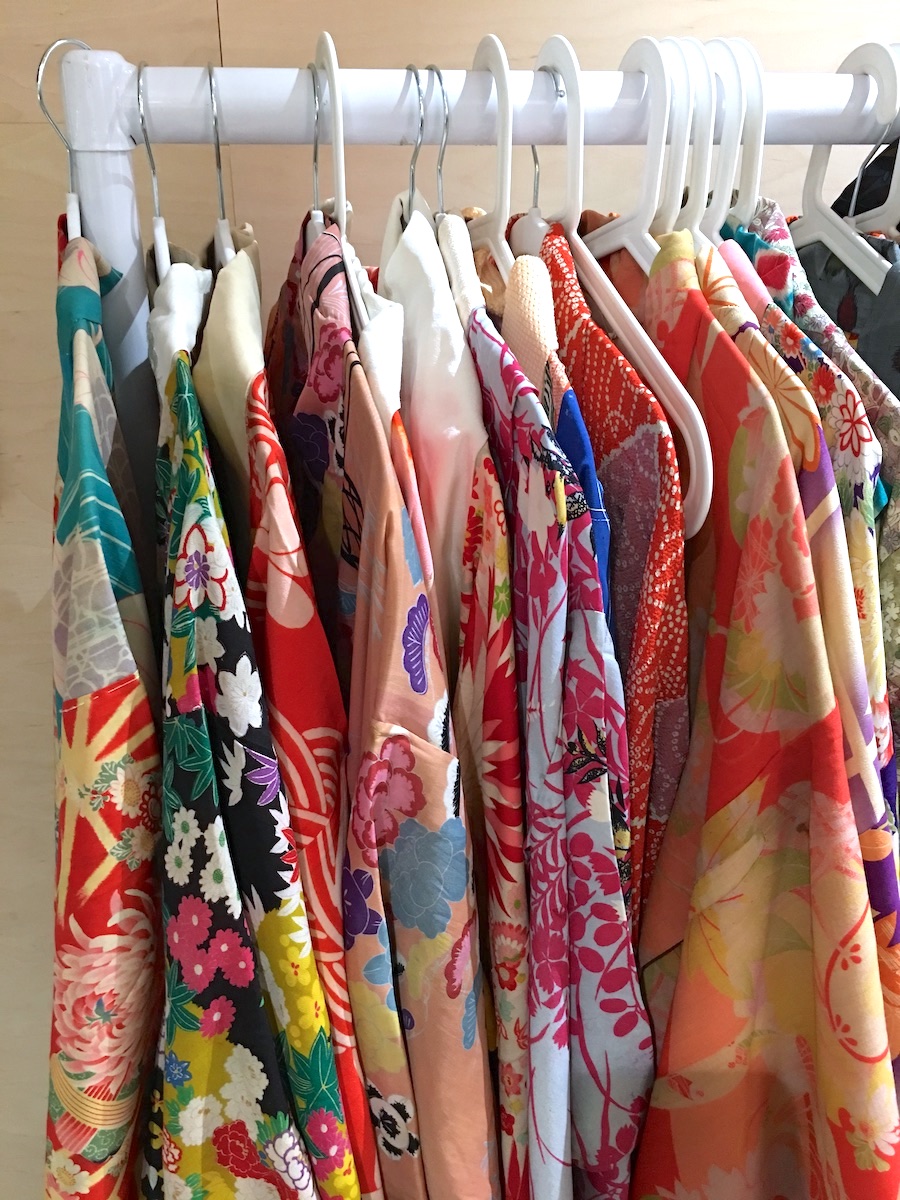
Furuki Yo-Kimono Vintage focuses mainly on kimono from the Taishō period, a great time for kimono fashion with new innovations and aesthetics emerging out of the forward-looking and democratic social context of the 1920s. Sugawara-san also collects imperial and samurai families’ wartime propaganda kimono, as well as Japanese folk workwear and textiles. I highly recommend a visit to anyone with an interest in kimono culture, to have a browse through the collection and a chat with the friendly and very knowledgable Sugawara-san!

All images © Carolin Becke

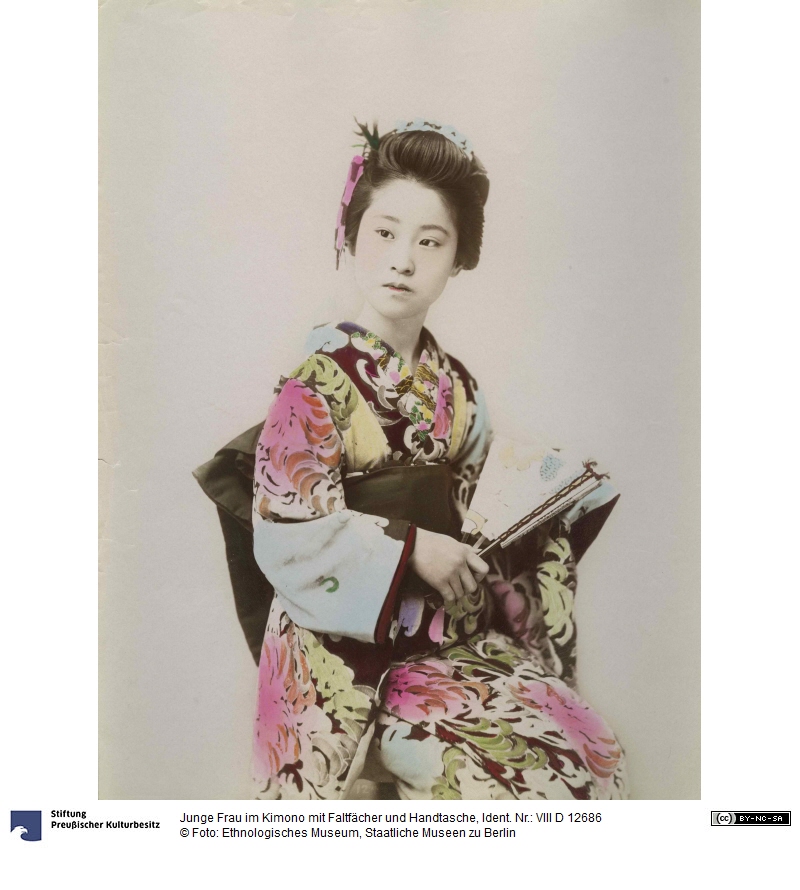
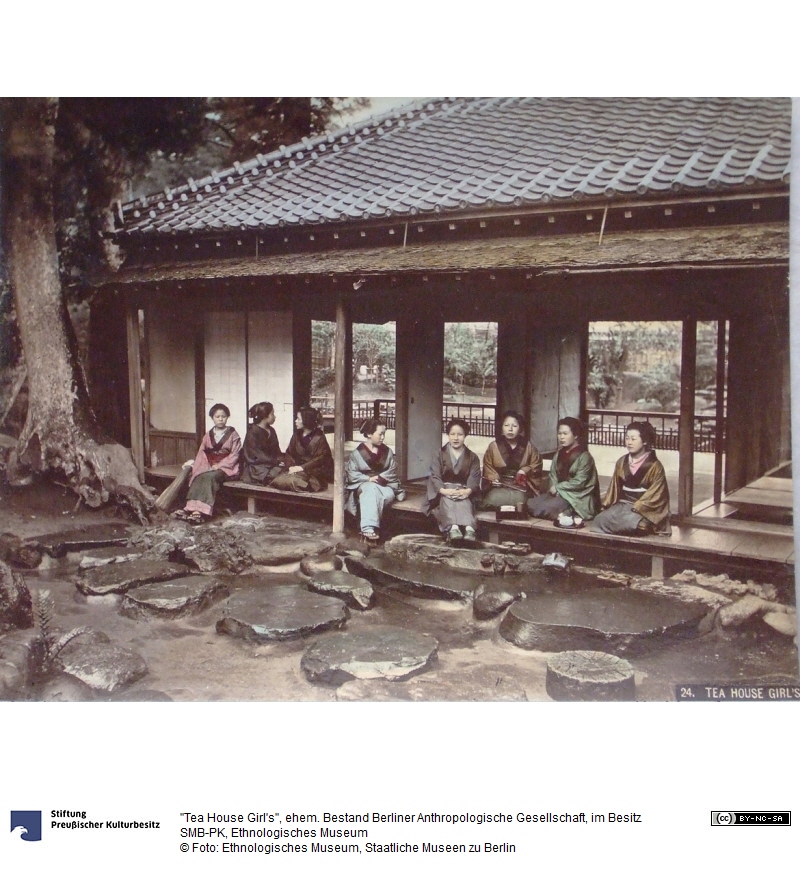
Museum für Asiatische Kunst: Kimono Photographs

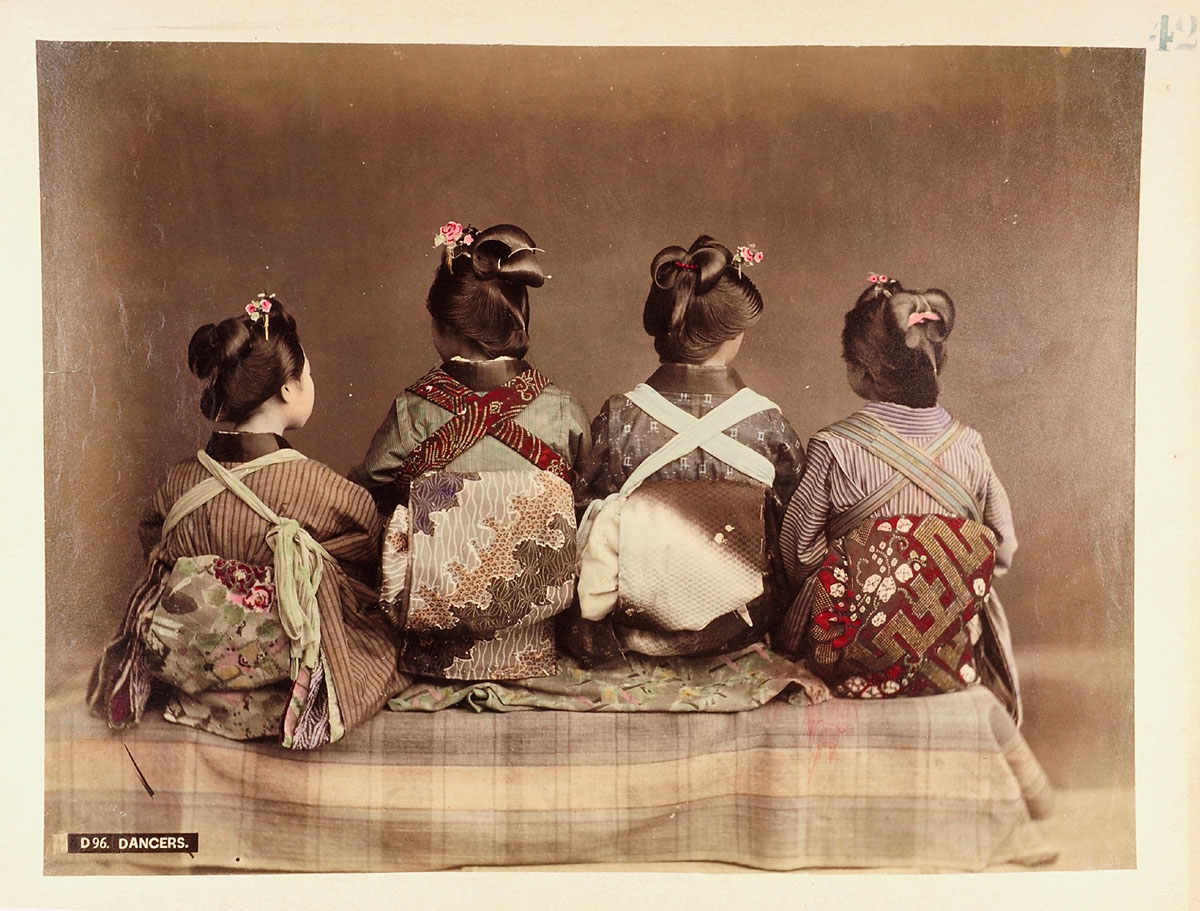
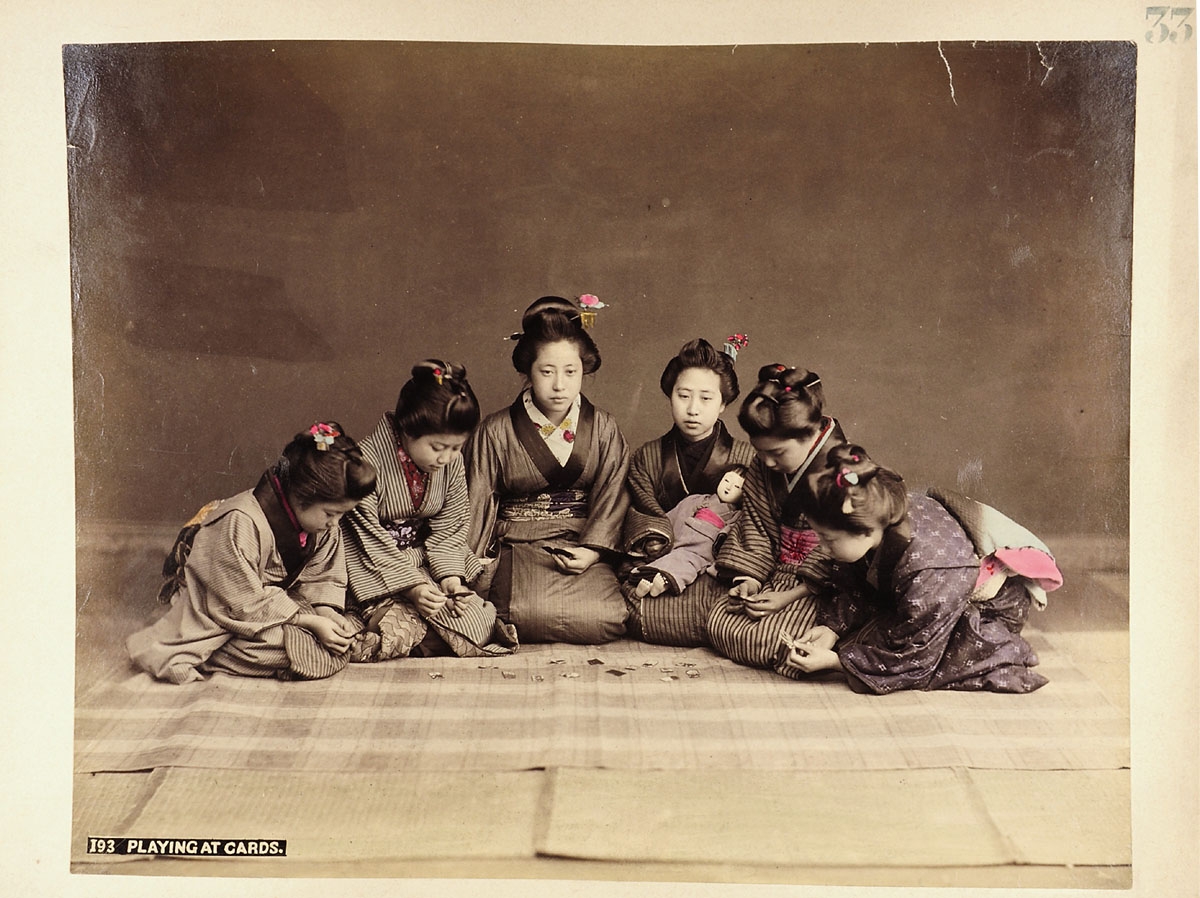
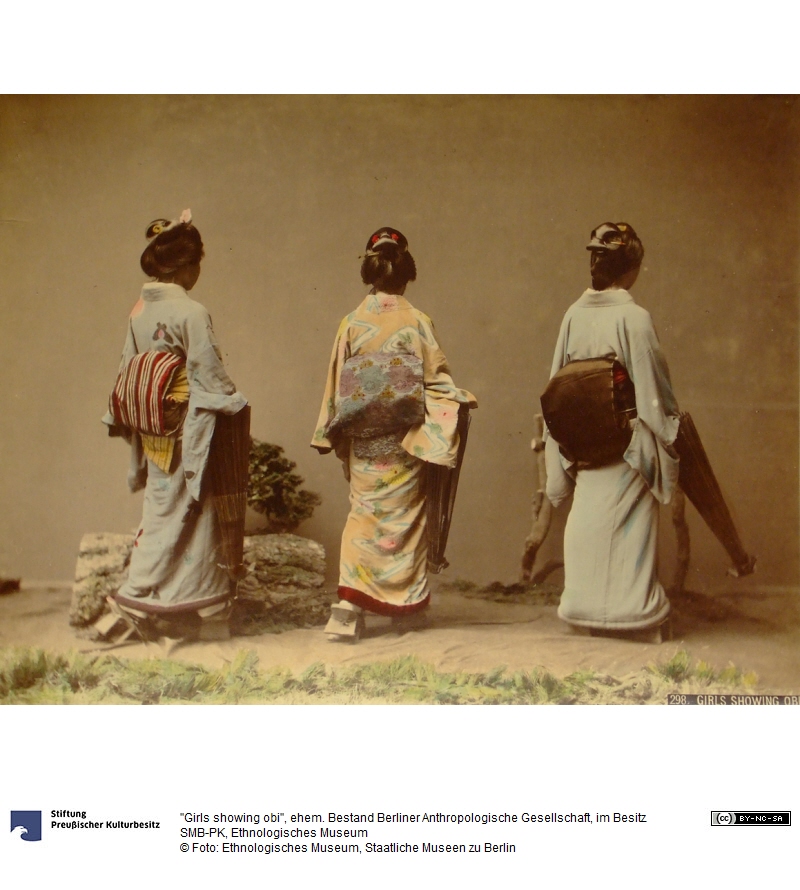
Just a collection of images I found in the online database of the Museum für Asiatische Kunst, Staatliche Museen zu Berlin. Old photographs can be very useful in observing how people in the past have worn and engaged with kimono, and this is something I’d like to further widen my knowledge on in a potential future research project. Until then, I’m just collecting these images here on my blog.

Bingata 紅型: Kimono from Okinawa

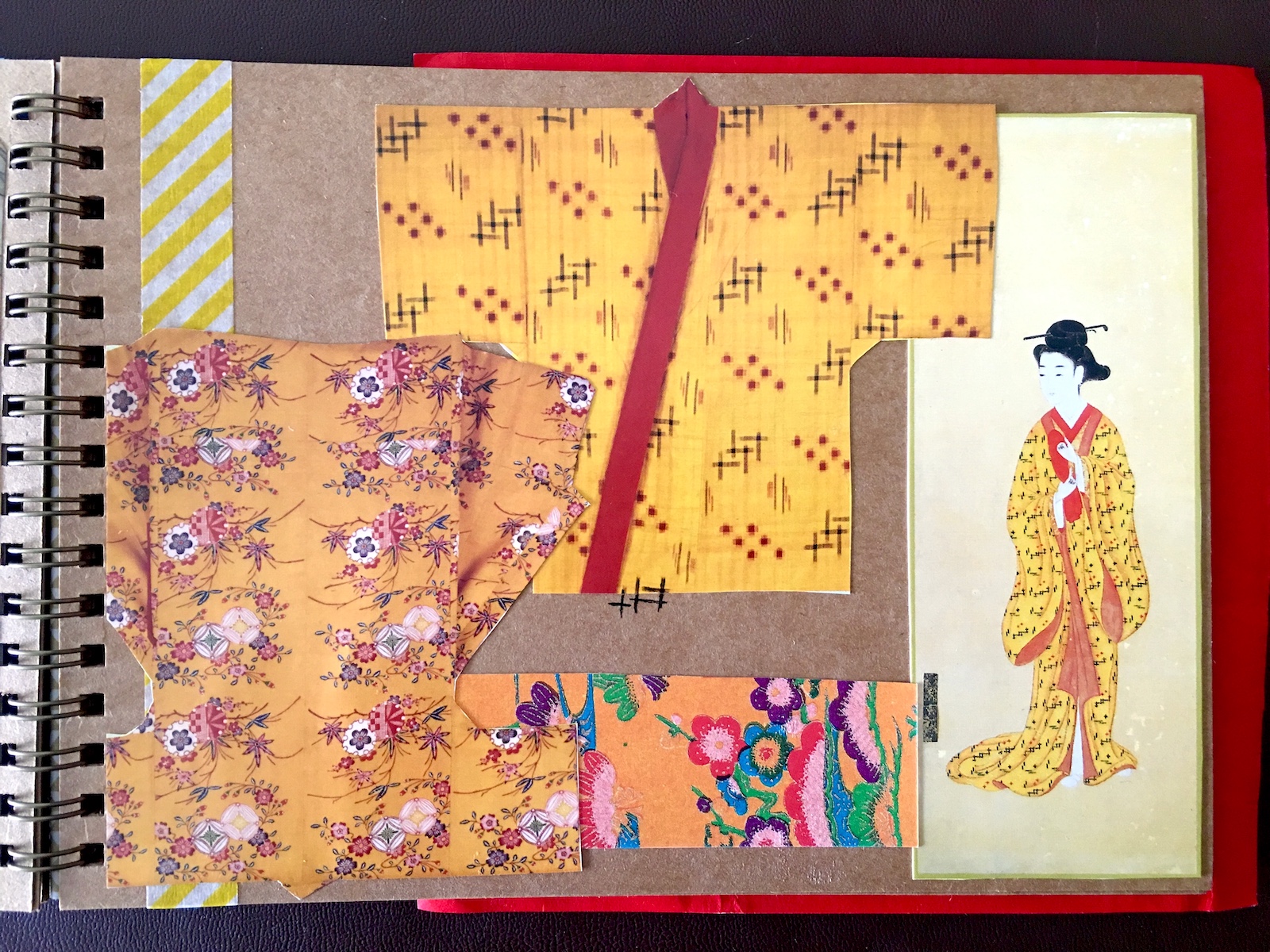
One of the hobbies I have pursued since being quite young is scrapbooking. I love to visually capture holidays or special occassions in the form of collages, and can’t get enough of stationary goods in general.
The two pages below are from the scrapbook I worked on during my 6-month period of fieldwork I conducted in Japan in 2018. It was the first time I visited the most southern island of Japan, Okinawa, and was immediately captivated by the bright colours and bold patterns of so-called bingata (紅型) kimono.

All images © Carolin Becke

Minami-za: ‘Kyary Kabuki Kabuki’ きゃりーかぶきかぶき

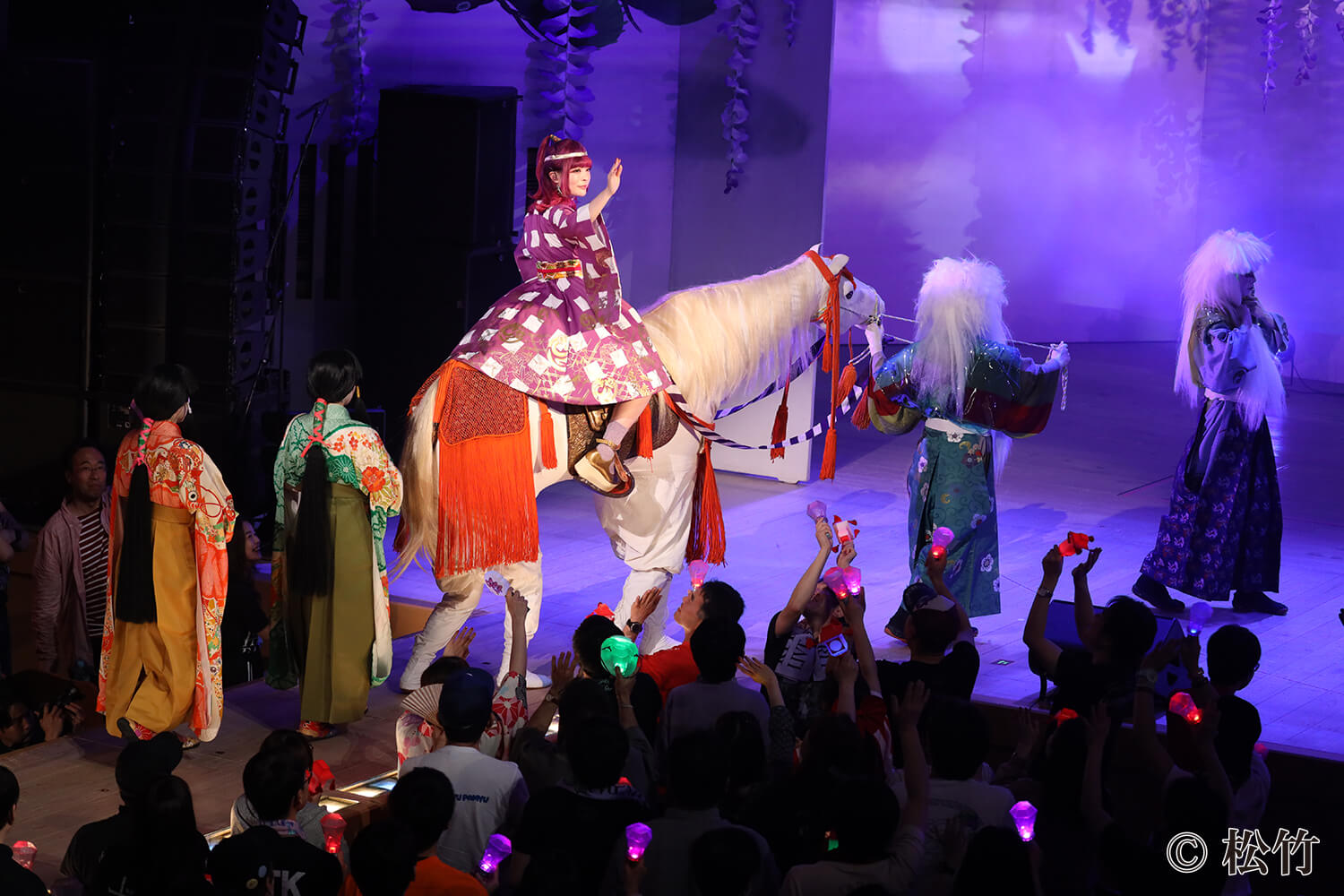
Japanese pop artist Kyary Pamyu Pamyu (きゃりーぱみゅぱみゅ) who is known for her visual and musical style blending historical Japanese and more contemporary kawaii elements performed at the legendary kabuki theatre Minami-za (南座) in Kyoto yesterday. The venue was errected during the Edo period in 1610 at a time when kabuki performances enjoyed increasing popularity among the growing middle class. The art form itself is famous for only allowing men acting in male and female roles on stage.

The artist hence somewhat broke conventions when performing songs from her latest album ‘Japamyu’ (じゃぱみゅ) in front of a traditional kabuki background screen during this one-time performance titled ‘Kyary Kabuki Kabuki’ (きゃりーかぶきかぶき). The singer herself was dressed in a Heian period-inspired kimono with her background dancers, female and male, donning conventional kabuki costume and make-up. Having received a proper training in the art of kabuki performance, the choreography incorporated the mie (見得) pose and roppo (六方) walk, as well as props such as so-called sensu (扇子) hand fans and sturdy bangasa (番傘) umbrellas.

Source: Rolling Stone Japan
Images are ©️松竹

gofuku-shō 呉服商: Drapery Stores

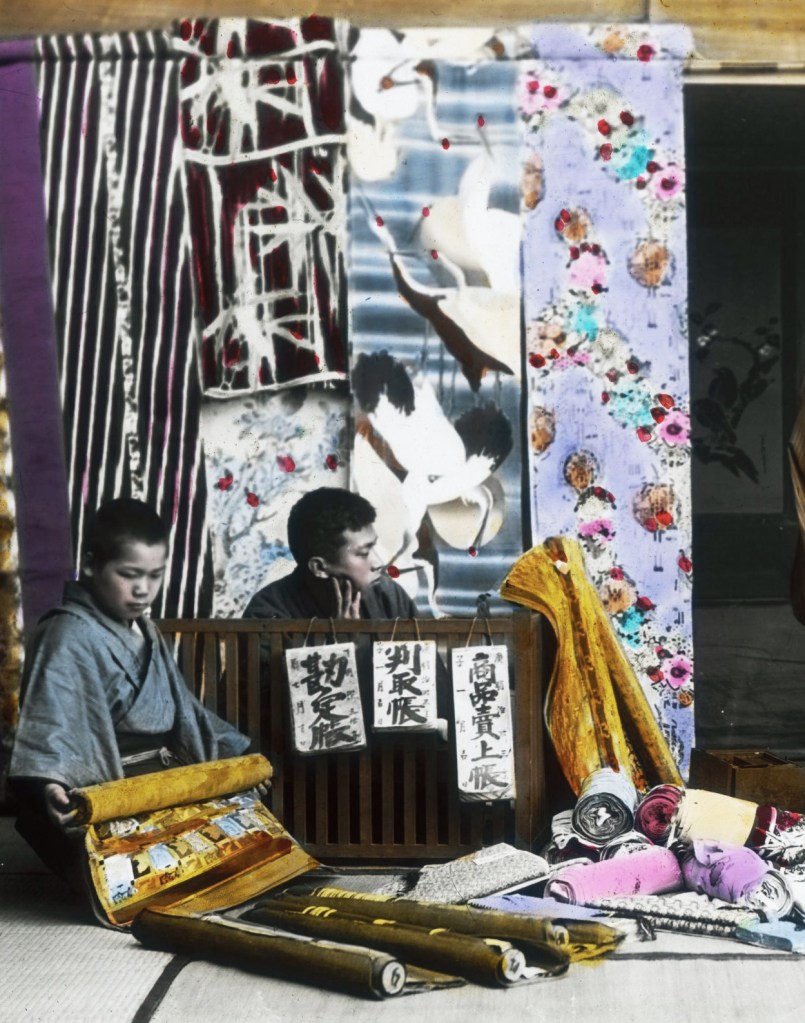
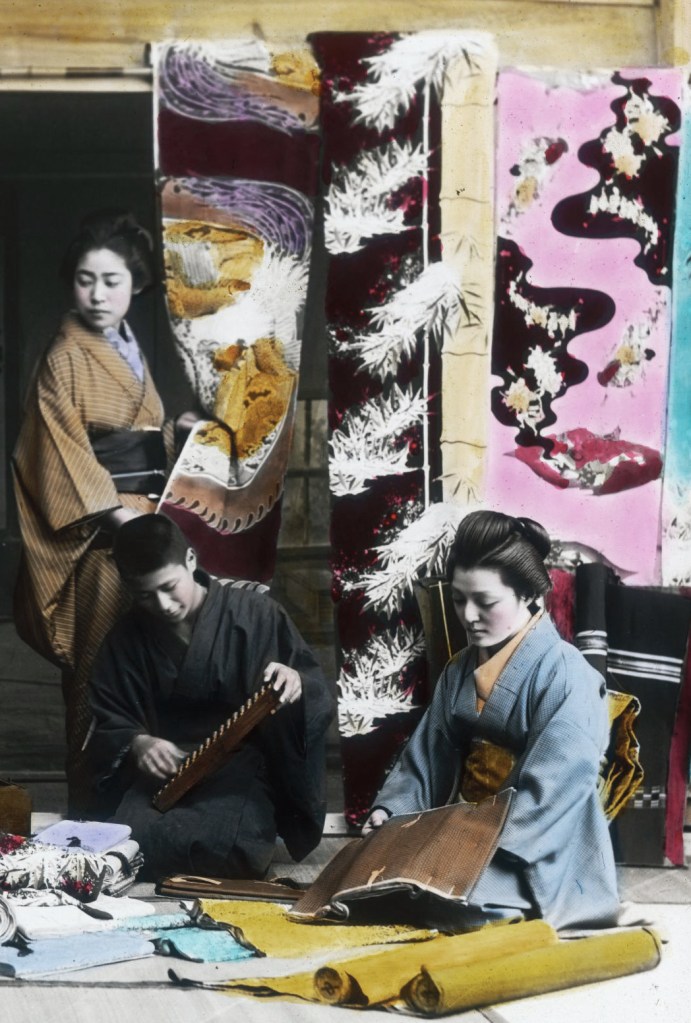
These images by Kobe-based photographer Teijiro Takagi (高木庭次郎) depict a so-called gofuku-shō (呉服商), a drapery store, during the Meiji (1868-1912) or Taishō period (1912-26). Panels of fabric are rolled out on the floor and hung up on the background, with customers examining the pieces of cloth they would like to have turned into kimono. Made from single bolts of cloth in a two-dimensional, flat manner, kimono are relatively simple garments to sew. Gofuku-shō did not just sell kimono fabric, but also orchestrated the extensive network, which included spinners, weavers, dyers, embroiderers, specialist thread suppliers, stencil makers and designers, involved in the creation of the individually commissioned garments₁. Some of Japan’s famous department stores such as Mitsukoshi originally started their business activities as gofuku-shō.

(₁) ‘Making Kimono’, Victoria and Albert Museum.

Shunshō Katsukawa (勝川春章), ‘The Cultivation of Silkworms’, (1767-1768).
© Victoria and Albert Museum, London.

Toyohara Chikanobu: ‘Female Student with Umbrella’

This ukiyo-e woodblock print from the Meiji period (1868-1912) depicts a young female student presumably heading to one of her lessons. In a very fashionable manner, she is combining a checkered buttoned shirt with a cherryblossom-patterned kimono, showing off the undergarment’s band collar and sleeves with rounded cuffs. The black laced umbrella additionally confirms the young woman’s position as one of the fashion leaders of the era.

Toyohara Chikanobu (楊洲周延),「真美人 十四 洋傘をさす女学生」(Meiji 30, 1897).
© Ōta Memorial Museum of Art (太田記念美術館), Tokyo.

一 ichi

Just thought that I should would like to start blogging again, so here we go. Expect to mainly find images of kimono and other clothing / costumes related content accompanied by semi-academic short texts.

To get things started, here is a picture of me and my friend wearing hakama in Kyoto in 2018. We aimed for a Taishō Roman 大正ロマン look, trying to capture the aesthetics of the Taishō period (1912-26) in our chosen kosode / hakama ensemble.

© Carolin Becke